The used film camera market has lost its mind. A Contax T2 costs more than a used car. A Leica M6 will set you back as much as a decent vacation. Scroll eBay for five minutes and you'd think every 35mm camera ever made is a collector's item. But here's the thing — some of the best cameras ever built still sell for less than a nice dinner. You just need to know where to look and what to look for.
These are the best 35mm film cameras you can buy for under $100 in 2026, all tested, all reliable, and all capable of producing images that have nothing to apologize for.
Some of the best cameras ever built still sell for less than a nice dinner. You just need to know where to look and what to look for.
How we evaluate: the picks below are ranked on documented reliability records, repair costs, and lens ecosystem prices, with market prices checked against eBay listings and serviced-dealer inventory from KEH, Kamerastore, and Brooklyn Film Camera in July 2026.
Canon AE-1 — The One Everyone Starts With (~$60–90)
The Canon AE-1 is the gateway drug of film photography, and for good reason. It was one of the first SLRs to feature a microprocessor, which enabled its signature Program mode — set the aperture, and the camera picks the shutter speed. That makes it approachable for someone who hasn't fully wrapped their head around exposure yet, while still allowing full manual control when you're ready.
The real advantage of the AE-1 is the Canon FD lens ecosystem. FD lenses are sharp, plentiful, and dirt cheap compared to their Nikon or Leica equivalents. A 50mm f/1.8 FD runs about $30, and a 28mm f/2.8 isn't much more. You can build a complete kit — body plus two or three lenses — for the price of a single modern autofocus lens.
Watch out for: The “Canon squeal” — a high-pitched whine when you fire the shutter, caused by dried lubricant in the mirror damper. It's common but doesn't affect image quality. A CLA (clean, lubricate, adjust) from a repair tech fixes it, usually for $50–80.
Pentax K1000 — Pure Mechanical Simplicity (~$50–80)
The K1000 is the camera that photography schools used for decades to teach exposure. There's a reason for that: it does almost nothing automatically. No program mode, no aperture priority, no auto-anything except a basic match-needle light meter. You set the shutter speed, you set the aperture, you focus, you shoot. Everything that happens is your decision.
That sounds limiting, but it's actually liberating. The K1000 forces you to understand the exposure triangle in a way that no automatic camera can. If you want to go fully manual without relying on the built-in meter, a phone-based light meter paired with the K1000 is an excellent setup. And because the shutter is fully mechanical, it works without batteries. The meter needs a single LR44 cell, but if that dies mid-roll, the camera keeps shooting. Try that with an electronic SLR.
Pentax K-mount lenses are also excellent and affordable. The SMC Pentax-M 50mm f/1.7 is one of the sharpest normal lenses of its era, and it rarely costs more than $40.
Track this in the app: Film Roll Tracker
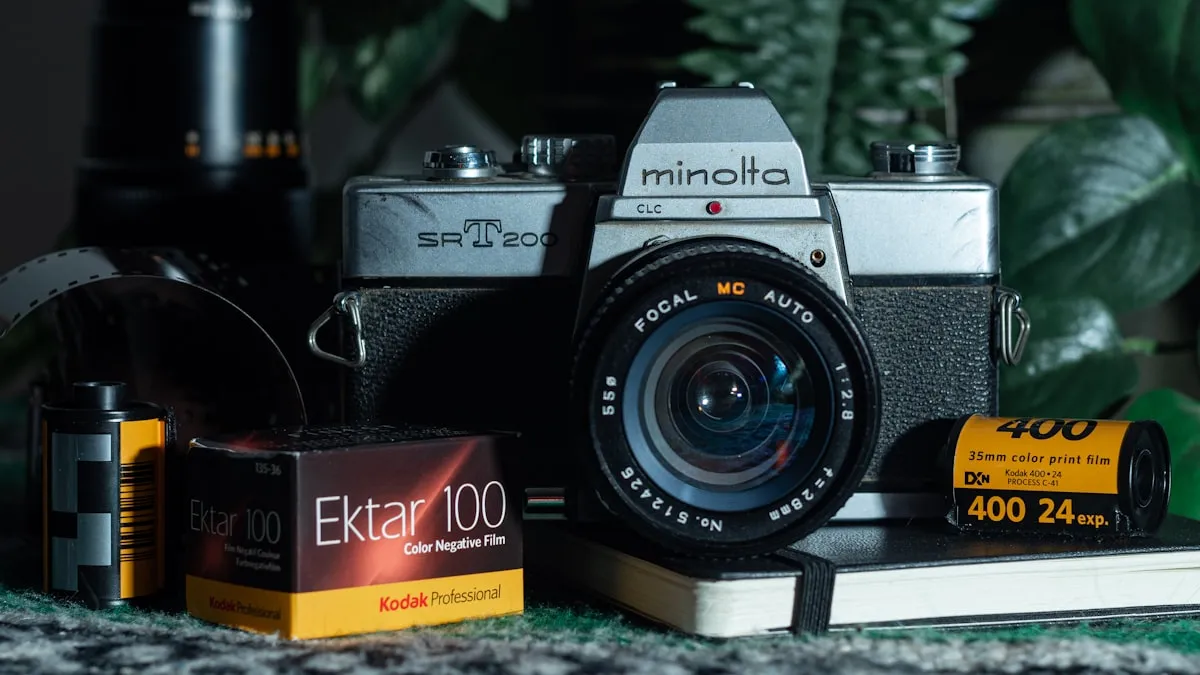
Minolta X-700 — The Underrated Bargain (~$40–70)
The X-700 might be the best value on this list. Minolta never achieved the brand cachet of Canon or Nikon, which means their cameras sell for less despite being just as capable. The X-700 offers Program mode, aperture-priority auto, and full manual — three shooting modes in a body that routinely sells for half the price of an AE-1.
The metering system is excellent. Minolta's center-weighted meter is accurate and predictable, and the viewfinder is bright and easy to read. But the real hidden gem is the MD lens system. Minolta MD lenses are among the sharpest manual focus lenses ever made, and because nobody's hoarding them the way they hoard Nikon glass, prices remain reasonable. A Minolta MD 50mm f/1.7 goes for $20–35. The MD 45mm f/2 “pancake” is one of the smallest SLR lenses ever produced.
Olympus OM-10 — Small and Light (~$40–60)
Olympus designed the OM system specifically to be smaller and lighter than competing SLRs, and the difference is immediately noticeable. The OM-10 feels more like a large rangefinder than a typical SLR. If you're planning to carry a camera all day — on hikes, on trips, through city streets — that reduced weight adds up fast.
Out of the box, the OM-10 shoots in aperture-priority auto only. You set the aperture, the camera selects the shutter speed based on its metering. For full manual control, you need a separate Manual Adapter that plugs into the side of the body — they're about $15–25 and worth grabbing. The Zuiko lenses are superb, particularly the 50mm f/1.8, which is compact, sharp, and can be found for under $30.
Nikon FE — Built to Last Generations (~$60–90)
If build quality is your priority, the Nikon FE is hard to beat. The body is dense, solid, and assembled with tolerances that make modern consumer electronics feel disposable. The shutter curtain is a titanium honeycomb pattern. The film advance has a satisfying mechanical precision that never gets old.
The FE shoots in aperture-priority auto and full manual. Its through-the-lens metering is reliable, and the match-needle display in the viewfinder is intuitive. But the FE's biggest advantage might be the lens mount: Nikon F-mount. Any AI or AI-S Nikon lens from the past five decades will mount and meter correctly. That means access to some of the finest optics in 35mm photography history — the 50mm f/1.4 AI-S, the 105mm f/2.5, the 28mm f/2.8. The lens ecosystem alone justifies choosing Nikon.
Also consider: The Nikon FM, which is the fully mechanical sibling. Same body, same build, but the shutter fires without batteries. It typically runs $10–20 more than the FE.
Point-and-Shoot Options (~$30–50)
Not everyone wants a manual SLR. If you prefer to just frame and click, point-and-shoot cameras from the 1990s are still plentiful and affordable — as long as you avoid the hyped models. Skip the Olympus MJU II (now $300+) and the Yashica T4 (absurd prices for what it is). Instead, look at cameras like the Canon Sure Shot series or the Olympus Stylus Zoom line.
These cameras have decent autofocus, built-in flash, and zoom lenses that are perfectly adequate for snapshots, travel, and everyday documentation. They're not going to produce the sharpest images you've ever seen, but they'll produce honest ones with zero effort. Load film, point at something interesting, press the button. That's it. If you're wondering how to keep track of what you shot on each roll, our roundup of the best film roll tracking apps covers the options worth considering.
Current Prices (July 2026)
Used camera prices move fast enough that any guide quoting numbers needs a date next to them. We checked every camera in this guide against eBay listings and specialist-dealer inventory in July 2026, and the market has clearly split in two: user-grade bodies sold by individuals, and serviced, warrantied examples from dealers — with a wide and growing gap between them.
| Camera | eBay, tested user-grade body | Serviced or certified dealers |
|---|---|---|
| Canon AE-1 | $70–130 | $180–375 — Brooklyn Film Camera lists a refurbished AE-1 Program at $375 |
| Pentax K1000 | $60–110 | $188–331 at Kamerastore, depending on grade |
| Minolta X-700 | $40–90 | $100–180 when stocked; certified examples are rare |
| Olympus OM-10 | $30–70 | $80–150 when stocked |
| Nikon FE | $70–130 | $181–391 at Kamerastore |
| 1990s point-and-shoots (Sure Shot, Stylus Zoom) | $20–60 | Rarely stocked by dealers |
All ranges checked July 2026. Three notes on reading the table. First, the eBay figures are for working, film-tested bodies without a lens — add $20–40 for a 50mm prime, and treat untested listings as parts-price gambles. Second, the ranges in this guide's section headings reflect the patient end of the market: auction wins, cosmetic wear, body-only deals. Buy-it-now prices routinely sit above them. Third, the dealer premium buys something real — a checked shutter, fresh seals, a warranty. That is why a certified Pentax K1000 costs $188–331 at Kamerastore as of July 2026 while eBay auctions for the same camera still close under $100.
The AE-1 deserves a specific caveat: it turned 50 in April 2026, and the anniversary attention has not made it cheaper. A 2026 review at ExpertPhotography reports paying £125 — about $160 — for a clean example from a Japanese seller and considering it reasonable. If the AE-1 drifts past your budget, the Minolta X-700 remains the value play: more shooting modes for roughly half the money.
Best 35mm Film Cameras Under $50
Halve the budget and good options remain — as long as you accept the honest caveats that come with them. These picks from the list above genuinely sell under $50 as of July 2026.
Olympus OM-10, body only ($30–50). Working OM-10 bodies regularly clear under $50 because sellers list them without the Manual Adapter. That is fine — aperture-priority is all you need while learning. Confirm the viewfinder LEDs light up, and budget $5 for light seals, because at this age the foam is almost always crumbling.
Minolta X-700 ($40–50, patiently). Auction wins under $50 happen every week. Know the model's one famous weakness first: a failed capacitor that stops the shutter firing entirely. The part costs a few dollars, but the fix is a soldering job most owners outsource. A film-tested example is worth $20 more than an untested one.
Canon Sure Shot series ($20–40). The unhyped 1990s compacts: competent lenses, dependable autofocus, built-in flash. The caveat is final, though — when the electronics die, nobody repairs them. Buy one already film-tested and treat it as a consumable.
Olympus Stylus Zoom line ($25–50). The zoom-lens Stylus models stayed cheap while their prime-lens sibling, the MJU II, shot past $300. The zooms are optically a step down, but they are compact, weather-resistant, and effortless.
One rule applies across this whole tier: at these prices you are often buying listings marked untested, so assume every camera needs a test roll before you trust it with anything that matters.
What to Check When Buying Used
A cheap camera is only a deal if it actually works. Before handing over cash, run through this checklist:
- Shutter speeds: Fire the shutter at each speed and listen. The difference between 1/1000 and 1/60 should be clearly audible. If 1/500 sounds the same as 1/125, the shutter is probably off.
- Light meter: If the camera has one, test it against a known-good meter or a light meter app. Readings should be within half a stop.
- Lens condition: Hold the lens up to a bright light and look through it from both sides. Fungus looks like branching white threads. Haze looks like fog. Minor dust is normal and doesn't affect images. Fungus and heavy haze will.
- Film door seals: Open the back and check the foam strips around the door and hinge. If they're crumbly or missing, you'll get light leaks. Replacement seals cost about $5 and are easy to install yourself.
- Film advance and rewind: Load a sacrificial roll and advance through a few frames. The mechanism should be smooth with consistent tension. If it jams or skips, walk away.
Where to Buy
Local camera stores are the best option when available. You can handle the camera before buying, ask questions, and many shops offer a short return window. Prices might be slightly higher than online, but you're paying for certainty.
eBay is the biggest marketplace but also the riskiest. Buy from sellers with high feedback scores, read the listing carefully, and check every photo for signs of damage. “Untested” or “as-is” listings are gambles — sometimes you win, often you don't.
Reddit r/photomarket and Facebook film photography groups often have better prices than eBay because there are no seller fees. The community tends to be honest about condition, and you can ask for specific photos or test shots before committing.
Don't Forget the Lens
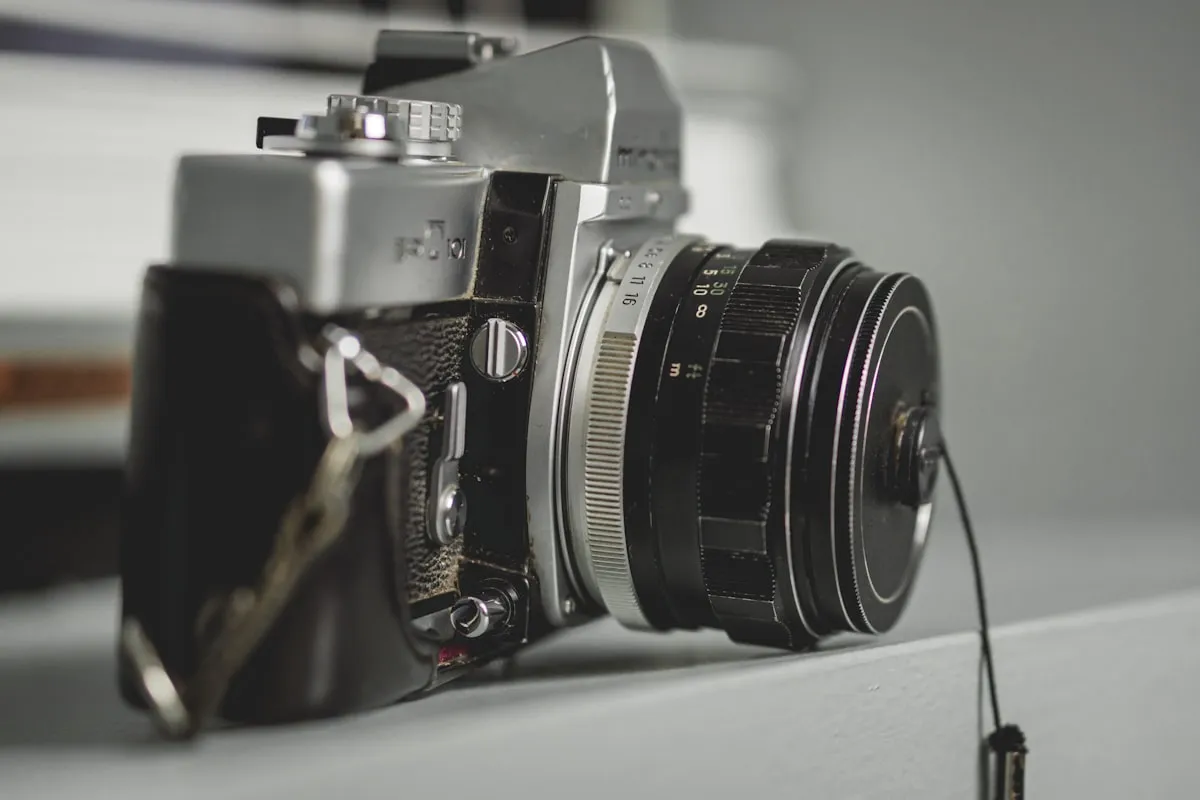
A camera body is a light-tight box with a shutter. The lens is what actually forms the image. A sharp 50mm prime on a $40 body will produce dramatically better photographs than a mediocre zoom on a $200 body. When budgeting, allocate at least as much for glass as for the camera itself.
Start with a 50mm f/1.8 or f/2 — every system has one, and they're universally excellent. Once you know what kind of photography you enjoy, you can add a wide-angle (28mm or 35mm) or a short telephoto (85mm or 135mm) to your kit. The beauty of manual focus lenses is that the good ones were good forty years ago and they're still good today. When you're ready to pick an app for logging your gear and shots, our film app comparison breaks down what each option offers.
Frequently asked questions
Is a $100 film camera worth it in 2026?
Yes, if you buy a user-grade body and add glass separately. As of July 2026, working Pentax K1000, Minolta X-700, and Olympus OM-10 bodies still sell for $30–110 on eBay, and a sharp 50mm prime adds $20–40. That combination produces image quality no disposable or new budget compact can match.
What is the cheapest reliable 35mm camera?
The Olympus OM-10 and Minolta X-700 offer the best price-to-capability ratio in this guide, with working bodies selling for $30–70 as of July 2026. For maximum long-term reliability, the fully mechanical Pentax K1000 costs more but has almost no electronics that can fail.
Is a $100 film camera better than a disposable?
After three or four disposables at $15–20 each plus processing, you have spent more than a used SLR costs. A disposable is a fixed-focus plastic lens locked to one ISO, while a $100 SLR with a 50mm prime gives you focus control, exposure control, dramatically sharper negatives, and decades of reuse.
Track Your Gear with Pellica
Once you start collecting cameras and lenses, keeping track of what you own — and what you've shot with each piece — becomes useful fast. Pellica's gear management lets you catalog every camera body and lens in your collection. When you start a new roll in the film roll tracker, you assign it to a specific camera and lens combo, so every frame is linked to the exact equipment that produced it.
Over time, that data tells you which cameras you actually reach for and which ones sit on the shelf. It shows you which lenses produce the results you like best. And when you eventually sell or trade a body, you have a complete record of every roll that went through it. Find a lab near you to develop your first test roll, and start building your shooting history from day one.