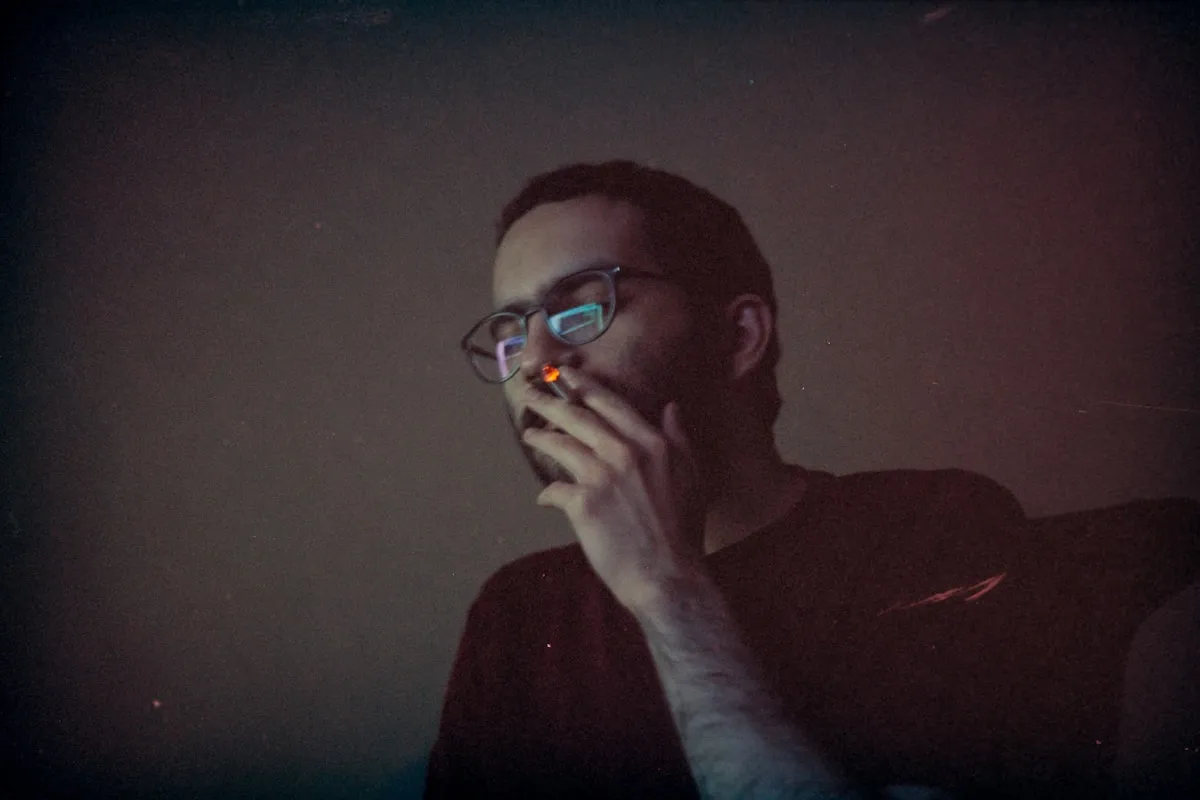
Film portraits have a quality that's difficult to replicate digitally. Part of it is halation — the subtle glow that occurs when light passes through the emulsion and bounces off the film base, softening highlights around a subject's hair or shoulders. Part of it is the organic grain structure, which breaks up skin texture in a way that feels natural rather than clinical. And part of it is how different emulsions render skin tones — warm, cool, rosy, golden — each film stock imposing its own personality on the human face.
Picking the right film for portraits isn't about finding a single “best” stock. It's about matching the film's character to the mood you're after. Here's what the main contenders look like in practice, and when to reach for each one.
Picking the right film for portraits isn't about finding a single “best” stock. It's about matching the film's character to the mood you're after.
Color Portrait Films
Kodak Portra 400 — The Standard for a Reason
Portra 400 dominates portrait photography because it does the hardest thing well: it makes skin look like skin. Tones are warm without being orange, detail is preserved without being harsh, and the colors sit in a natural range that flatters virtually every complexion. Shoot it in open shade, golden hour, overcast light, even harsh midday sun — Portra handles all of it.
The exposure latitude is famously generous. Overexpose by one stop and you get creamy, pastel-like tones with lifted shadows — the signature “Portra look” that dominates Instagram. Push it to two stops over and the image gets dreamy without falling apart. This forgiveness is invaluable for portraits, where you're focused on your subject's expression and can't always nail exposure to the frame.
Best for: Everything. Outdoor portraits, indoor available light, wedding coverage, editorial work. If you only shoot one portrait film, this is the one.
Kodak Portra 160 — Studio Precision
Portra 160 trades the versatility of its faster sibling for finer grain and slightly more color saturation. The slower speed means you need better light — direct sun, studio strobes, or at minimum bright open shade. But when the light is there, Portra 160 produces remarkably detailed negatives with a smoothness that Portra 400 can't quite match.
Skin tones lean a touch warmer and more saturated than Portra 400. Colors feel richer overall. It's a studio and golden hour film — pair it with a window light setup or catch a subject in the last hour before sunset and the results are exceptional. Less forgiving than Portra 400 on exposure, so meter carefully. A reliable light meter app for film pays dividends with this stock.
Best for: Studio portraits, controlled lighting, golden hour sessions where you want the finest grain possible.
Kodak Portra 800 — When the Light Fades
Portra 800 exists for the situations where Portra 400 runs out of speed. Indoor receptions, evening sessions, overcast winter days where the light barely qualifies as daylight. The grain is noticeably heavier than its slower siblings, but it retains that same Portra skin tone rendering — warm, natural, flattering.
Some photographers actually prefer the heavier grain for portraits. It adds a tactile, intimate quality to close-up headshots that finer-grained stocks lack. A tight crop of someone's face on Portra 800 has a texture and presence that feels physical in a way smooth digital files never quite achieve.
Best for: Low-light portraits, indoor events, overcast days. When you need speed without sacrificing skin tone accuracy.
Fuji Pro 400H — The One That Got Away
Fuji discontinued Pro 400H in 2021, and the portrait photography community is still mourning. Where Portra renders skin warm and golden, Pro 400H leaned cooler with a distinctive green-shifted midtone palette. Skin looked porcelain-smooth, shadows carried a subtle teal cast, and the overall rendering felt ethereal — almost like the subject was underwater in the best possible way.
Expired rolls still circulate at inflated prices. If you find a refrigerated brick for anything close to reasonable, grab it. Nothing currently in production replicates the Pro 400H look. Some photographers approximate it by scanning Portra 400 and shifting the color temperature in post, but it's never quite the same.
Kodak Ektar 100 — Bold and Punchy
Ektar is the sharpest, finest-grained color negative film Kodak makes. Colors are vivid and highly saturated — reds pop, blues go deep, and greens feel electric. For fashion and editorial portraits where you want a bold, graphic quality, Ektar delivers. The grain is almost invisible at normal print sizes.
The catch is that Ektar doesn't flatter skin the way Portra does. The high saturation can exaggerate redness and uneven tones, making blemishes more visible. It's less forgiving with exposure, too — underexpose by even a stop and skin starts looking muddy. Use it intentionally, with controlled lighting and careful metering, and the results can be striking. Shoot it casually and you'll likely be disappointed.
Best for: Fashion, editorial, stylized portraits where saturated color is part of the concept.
Want a deliberately vintage cast instead? LomoChrome Classicolor keeps skin looking natural while pushing everything warm and faded — a niche but interesting portrait option.
Black & White Portrait Films
Ilford HP5 Plus — Smooth and Forgiving
HP5 is the B&W equivalent of Portra 400 in terms of versatility and forgiveness. The tonal range is long and smooth, with gentle transitions between highlights and shadows that suit faces well. Skin looks clean, eyes retain detail in the catchlights, and the grain structure is fine enough to be present without dominating.
HP5 pushes beautifully to 800 or 1600, picking up more contrast and grain as you go — which can actually enhance the mood of a portrait session. It's also one of the easiest films to develop at home if you ever decide to start processing your own B&W.
Best for: General B&W portraiture, documentary, available light. A safe and excellent first choice.
Kodak Tri-X 400 — Contrast and Character
Tri-X renders portraits with more punch than HP5. Shadows go darker, highlights glow harder, and the grain has a slightly more angular, gritty quality. The result is a portrait style that feels journalistic and immediate — think Richard Avedon's editorial work or the candid portraits of Bruce Gilden.
The higher inherent contrast means Tri-X rewards directional light. A single window, a streetlight, a shaft of sun through a doorway — situations where the light has shape. In flat, even lighting, Tri-X can look a bit lifeless. Give it something to work with and it'll repay you with images that have real presence.
Best for: Editorial portraits, street portraiture, any session with strong directional light.
Ilford FP4 Plus — Fine Grain for Studio Work
At ISO 125, FP4 Plus is a slow film that demands good light. In return, it delivers exceptionally fine grain and a smooth, extended tonal range. For studio headshots where you control every variable — lighting, background, subject position — FP4 produces negatives with almost medium-format levels of detail in a 35mm frame.
Best for: Studio portraits, controlled lighting setups, any situation where maximum detail and minimal grain are the priority.
Ilford Delta 3200 — Intimate and Moody
Delta 3200 is the film you reach for when the light barely exists. Concert venues, dimly lit bars, late-night sessions with a single lamp. The grain is heavy and pronounced, but in the context of a portrait, that grain creates intimacy. It feels like you're seeing something private, something not meant for a polished presentation.
The actual native speed is closer to ISO 1000 — the 3200 rating is more of a push-process suggestion. Many photographers rate it at 1600 and develop normally for a slightly more controlled look. Either way, the images have a raw, emotional quality that no other film stock quite matches.
Best for: Low-light portraits, atmospheric indoor sessions, concert and event photography.
Track this in the app: Film Roll Tracker
Best Black & White Film for Portraits
For black and white portraiture the decision usually comes down to three stocks: Kodak Tri-X 400, Ilford HP5 Plus, and Ilford Delta 100. They split cleanly by what they do to skin. Nice Film Club's skin-tone breakdown and Shoot Film Club's 2025 black and white comparison land on the same split most portrait shooters describe in practice.
Tri-X renders skin with the most character and the most contrast. Its grain is pronounced and slightly angular, and it favours directional light — the gritty, journalistic look that Tony Wodarck's Tri-X 400 guide calls its signature. Skin picks up texture rather than smoothing over it, which suits weathered faces, editorial work, and street portraits more than glamour.
HP5 Plus is the gentler, more forgiving option. The Phoblographer's long-running HP5 review keeps returning to the same point: it renders skin cleanly across a wide, soft tonal range with less inherent contrast than Tri-X. The grain is finer and rounder. If you want flattering, low-drama skin in mixed light, HP5 is the safer 400-speed choice, and it pushes to 800 or 1600 when the light drops.
Delta 100 is the fine-grain specialist. At ISO 100 it needs more light than the two 400-speed films, but in exchange it delivers the smoothest skin and the most detail — approaching medium-format cleanliness in a 35mm frame. For controlled studio headshots where you want tonality without visible grain, Delta 100 beats both faster stocks. It is the modern T-grain answer to the classic Tri-X and HP5 texture.
For low light, none of the three keep up. That is where Ilford Delta 3200 comes in: rated up to 3200, with a native speed nearer ISO 1000, it trades clean skin for heavy, atmospheric grain that reads as intimacy in a close-up. Concert portraits, single-lamp interiors, and late-night sessions are its territory. The short version: HP5 Plus for most work, Tri-X for contrast and character, Delta 100 for maximum smoothness in the studio, and Delta 3200 when the light runs out.
Professional Portrait Film
The reason working portrait and wedding photographers converge on Kodak's Portra line is consistency: the same warm, accurate skin rendering across 160, 400, and 800, so a shoot that moves from window light to an evening reception holds one look. Portra 400 is the workhorse for its exposure latitude, Portra 160 the studio and golden-hour choice for its finer grain and richer colour, and Portra 800 the low-light option that keeps Portra skin tones when the light collapses. For available-light indoor and evening sessions specifically, our best ISO 800 color film guide covers how Portra 800 stacks up against the other high-speed stocks.
Cost is the trade-off, and it is worth quoting current numbers. As of July 2026, Analogue Wonderland lists a single 35mm roll of Portra 160 at £18.00, Portra 400 at £23.00 (about £17.80 per roll bought as a five-pack), and Portra 800 at £20.00 — roughly double the price of a comparable black and white roll. One naming change matters here: in March 2026 Kodak began rebranding the Portra line as Ektacolor Pro, with the same emulsions and speeds distributed directly by Eastman Kodak and slightly lower US pricing — Ektacolor Pro 160 starting near $16.99, per PetaPixel's March 24, 2026 report. If you see “Ektacolor Pro 400” on a shelf, it is the film formerly sold as Portra 400.
That premium buys predictability. When a client is paying for the session, a stock that renders skin correctly on the first pass — with a stop of latitude to spare — is worth more than the few pounds saved on a cheaper emulsion. That is the whole argument for shooting professional colour negative.
Portrait Film Comparison: 9 Stocks at a Glance
Prices below are for a single 35mm 36-exposure roll at Analogue Wonderland as of July 2026; the skin-tone and grain notes summarise the sources cited throughout this guide.
| Stock | Color / B&W | Skin tones | Grain | Price/roll (Jul 2026) | Best for |
|---|---|---|---|---|---|
| Kodak Portra 400 | Color | Warm, natural, flattering | Moderate | £23.00 | Everything — the default portrait film |
| Kodak Portra 160 | Color | Warm, slightly richer | Very fine | £18.00 | Studio and golden-hour work |
| Kodak Portra 800 | Color | Warm, natural | Heavier | £20.00 | Low light, indoor events |
| Kodak Ektar 100 | Color | Punchy, less forgiving | Ultra-fine | £20.00 | Fashion and editorial, controlled light |
| Ilford HP5 Plus | B&W | Clean, soft, forgiving | Moderate | £11.49 | General B&W portraiture |
| Kodak Tri-X 400 | B&W | Characterful, higher contrast | Pronounced | £10.95 | Editorial and street portraits |
| Ilford FP4 Plus | B&W | Smooth, detailed | Very fine | £11.49 | Studio headshots at ISO 125 |
| Ilford Delta 100 | B&W | Smoothest, most detail | Very fine | £13.95 | Fine-detail studio portraits |
| Ilford Delta 3200 | B&W | Raw, atmospheric | Heavy | £15.49 | Low-light and moody sessions |
Fuji Pro 400H, covered above, is left out of the table because it was discontinued in 2021 and now trades only on the used market, where prices vary too widely to quote.
Exposure Tips for Film Portraits
Overexpose color negative by one stop. Rate Portra 400 at ISO 200, or Portra 160 at ISO 100 — our film ISO guide explains how re-rating film speed works. The extra light fills in skin shadows, reduces visible grain, and produces that smooth, luminous quality that defines the best film portraits. This advice applies to color negative only — don't overexpose slide film or B&W the same way.
Meter for the skin, not the scene. Your camera's meter sees the whole frame and averages everything together. If your subject is standing in front of a bright window or a dark wall, the meter will be fooled. Walk up close, meter off their face, lock that reading, then recompose. Or use spot metering if your camera has it. A dedicated light meter with incident mode is even better — point it at the subject from their position, facing back toward the camera, and it reads the light falling on them rather than reflecting off them.
Lens Choice Matters
An 85mm lens on 35mm film gives you the classic portrait perspective — slight compression that flattens features in a flattering way, comfortable working distance from your subject, and beautiful background separation when shot wide open. If you can only have one portrait lens, this is the focal length to get.
A 50mm works beautifully for environmental portraits and tighter compositions. It renders perspective more naturally, which can feel more intimate and less “studio.” Many of the most iconic film portraits in history were shot at 50mm. The 135mm is another strong choice for tight headshots, though working distance gets long enough that you start losing the ability to direct your subject conversationally.
Frequently asked questions
What film do professionals use for portraits?
Most professional portrait and wedding photographers shoot Kodak's Portra line: Portra 400 as the everyday stock, Portra 160 for studio and golden-hour work, and Portra 800 for low light. All three render skin warm and accurately with generous exposure latitude. In 2026 Kodak began rebranding these emulsions as Ektacolor Pro, keeping the same speeds and formulas.
What is the best black and white film for portraits?
Ilford HP5 Plus is the most versatile choice for its clean, forgiving skin rendering, with Kodak Tri-X 400 when you want more contrast and grain character, and Ilford Delta 100 for the finest grain and smoothest skin in controlled studio light. For very low light, Ilford Delta 3200 trades clean tones for atmospheric grain.
Portra 160 vs 400 for portraits?
Portra 400 is the more versatile pick: a full stop faster, with famous exposure latitude that handles shade, overcast, and evening light. Portra 160 has finer grain and slightly richer, warmer colour but needs more light, which makes it a studio and golden-hour film. As of July 2026 both cost roughly £18 to £23 per 35mm roll at Analogue Wonderland.
Track What Works with Pellica
The fastest way to develop a personal portrait style on film is to track the variables that matter. Which stock, which lens, what exposure, what light. Pellica's film roll tracker logs all of this per frame, so when your scans come back and one portrait stands out, you know exactly what produced it.
After a few portrait sessions, you'll have enough data to see clear patterns — which film and lens combination gives you the skin tones you prefer, how much overexposure produces the look you want, whether you gravitate toward the warmth of Portra or the contrast of Tri-X. That kind of self-knowledge is what separates someone who takes nice pictures from someone who consistently creates the images they envision. Use the lab finder to locate a quality lab that handles portraits well, because scan quality matters as much as the film you choose.