
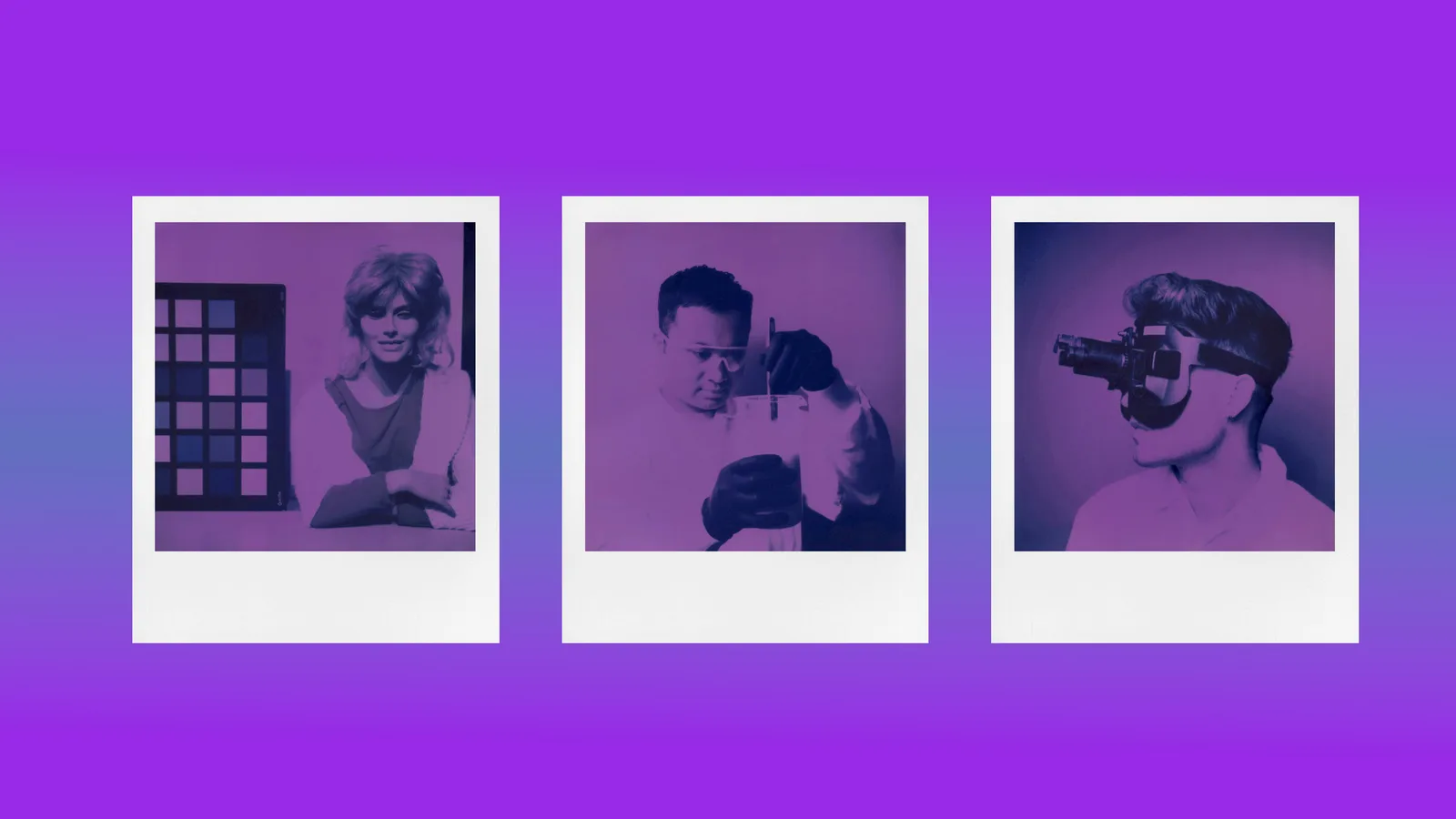
On May 28, 2026, Polaroid added a third color to a series that began with a mistake. The new film is Reclaimed Purple 600, and it does exactly what the name says: every frame comes out a deep, essentially monochromatic purple, on ISO 640 instant film built from leftover chemistry pulled from Polaroid's last remaining factory in Enschede, the Netherlands. A single pack of 8 exposures runs $18.99 USD or £16.99 GBP, with Triple Pack and Five Pack options, and it launched as a Polaroid “Member Exclusive” with preorders landing at retailers like B&H under manufacturer number 006616.
This is not a film engineered for color accuracy. It is an experiment Polaroid decided to bottle and sell — a limited edition with an undisclosed production run and a look you cannot get any other way. Shoot it, and you are shooting something that may never come back.
Reclaimed Purple isn't trying to look like anything — it's waste chemistry given a second life, and a look you can't replicate.
What ‘Reclaimed’ Actually Means
Most film names describe the result. “Reclaimed” describes the source. The series is built from reclaimed materials and leftover chemistry pulled from the production lines at Polaroid's Enschede factory — the company frames it as “giving waste a second life.” Instead of disposing of chemical byproducts and surplus components from normal film manufacturing, Polaroid turns them into a sellable emulsion.
That origin shapes how these films behave. They are not the product of a clean-sheet R&D program aimed at a target palette. They are what happens when you take the chemistry you already have, push it in an unexpected direction, and accept the result as the point rather than a flaw. The purple is the feature, not a defect to correct.
The Accidental Chemistry Behind the Color
The whole series traces back to a single accident. According to Polaroid, chemist Brian Slaghuis discovered Reclaimed Blue while testing a chemical called TBHQ — one of more than 200 chemicals run through during film R&D. The blue cast wasn't the goal of that test; it was a surprise that became a 2023 product, Reclaimed Blue 600.
From there, the lineage reads like a set of controlled experiments layered on top of that first accident:
- Reclaimed Blue 600 (2023). The original, born from testing TBHQ. The blue that started the series.
- Reclaimed Green 600 (2024). Made by adding a yellow Duochrome dye to the existing Blue chemistry — blue plus yellow, shifting the whole frame toward green.
- Reclaimed Purple 600 (2026). The new release, made by combining the Reclaimed Blue chemistry with Acid Red dye. Blue plus red lands on purple.
The result is essentially monochromatic — one dominant hue across the whole image rather than accurate, full-spectrum color. Be clear on that before you load a pack. You are not getting a faithful scene tinted purple; you are getting a scene translated into purple, with whatever tonal separation a single-color emulsion can provide. Polaroid itself describes these as experimental, not engineered for accuracy.
Track this in the app: Film Roll Tracker
The Specs That Matter When You Shoot It
Reclaimed Purple is 600 Film, which makes it more flexible than the name suggests. It works in classic Polaroid 600 cameras and in i-Type bodies — the Polaroid Now, Now+, I-2, and Flip — as well as the Polaroid Lab. Here is what you are working with:
- Format. 600 Film, compatible with 600 and i-Type cameras plus the Polaroid Lab.
- Speed. ISO 640. Rate it at 640 and meter accordingly.
- Image area. 79 x 79 mm (3.1 x 3.1 in), the familiar square inside the classic white frame.
- Finish. Glossy.
- Exposures. 8 per pack.
- Develop time. Roughly 10–15 minutes to settle, and worth shielding from light as it develops.
As with any 600 or i-Type pack, the cartridge carries the battery that powers the camera for that set of frames — standard background, not a feature unique to this film. What is unique is the chemistry, and an experimental, monochromatic emulsion rewards a little bracketing. Polaroid film leans toward overexposure forgiveness, but with a color cast this strong, small changes in light read very differently from frame to frame.
Why This One Is Worth Documenting
Plenty of instant film is a known quantity. You can buy color 600 today and the same color 600 next year, and it behaves the same way. Reclaimed Purple is the opposite kind of stock. It is a limited edition with an undisclosed production quantity, made from leftover chemistry that, by definition, is finite. The series has already shown that each entry is its own one-off — Blue, then Green, now Purple, each from a different combination — with no promise any of them returns.
That makes every pack a closing window. Eight frames of a film that may never be reissued is exactly the kind of thing you want a record of: which body you used, what you pointed it at, how the light fell, and how each frame turned out once the purple settled. If you are still building your instinct for how different emulsions behave, our guide to the best film stocks for beginners is a steadier place to start — but a stock like this is a reminder that the analog revival is increasingly driven by experimental, limited runs you have to catch while they exist.
How to Shoot Your Eight Frames
Because the look is monochromatic and experimental, subject choice does more work than usual. High-contrast scenes — backlit figures, strong shapes, simple compositions — survive the single-color translation better than busy, color-dependent ones, since the film can't lean on hue separation to keep elements distinct. Skin, foliage, and skies all shift in ways you can't fully predict until you see them.
Treat the pack like a deliberate roll, not a casual one. With only 8 frames and no second chance at this exact chemistry, decide in advance what you are testing — a portrait, a landscape, a backlit shot, a flat overcast scene — and note your exposure and conditions for each. That way the surprises become data instead of luck, and you finish the pack knowing what Reclaimed Purple does rather than guessing.
Log Every Roll, Whatever You Shoot
A film you can only shoot once deserves a record that outlasts the pack. Pellica's film roll tracker lets you log every roll and frame with full exposure data, film stock, camera body, and personal notes. The built-in light meter helps you nail exposure at ISO 640, and the lab finder connects you with development services wherever you shoot.
Some films you can always buy again. This one, you document while you can.