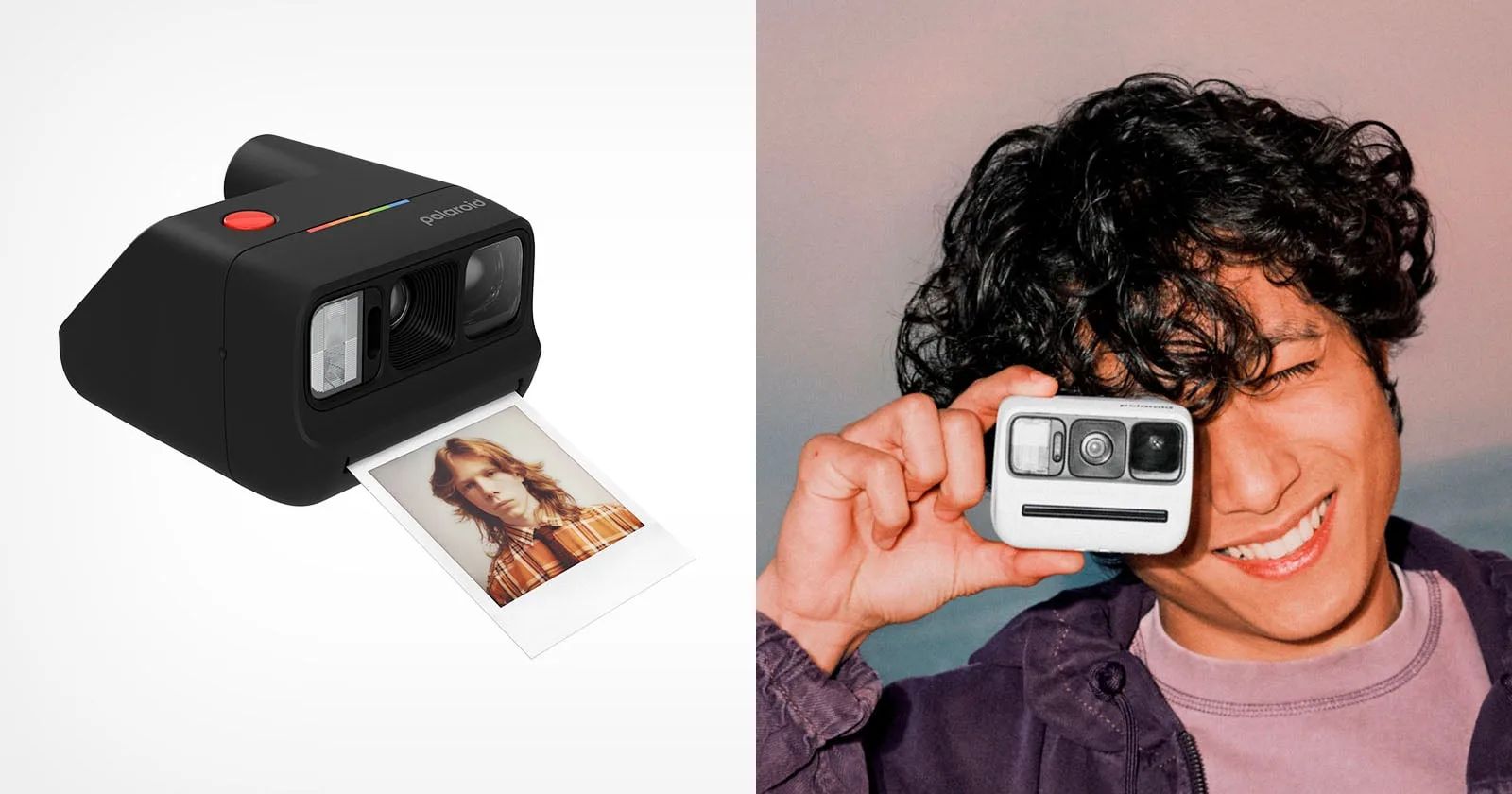
On June 2, 2026, Polaroid launched the Go Generation 3 at $89.99 — still the smallest analog instant camera in the world, and for the first time one whose lens and flash reviewers actually praise. About three weeks later, Fujifilm's Instax Mini 13 reached US shelves at $93.95. Two new pocket instant cameras, five dollars apart, landing in the same month.
That five-dollar gap is why this comparison is worth doing properly. The sticker prices are nearly identical, the marketing photos look interchangeable, and the two systems could hardly be more different once you look at the film economics, the image size, and what each camera lets you control.
The cameras are five dollars apart. The film is not: 100 shots cost about $137 on Polaroid Go film and about $79 on Instax Mini, at July 2026 US prices.
What the Go Gen 3 Actually Fixes
The first two Go generations had a reputation problem: charming size, soft results. Polaroid addressed both complaints head-on. According to PetaPixel's launch coverage, the Gen 3 gets a new 63.75mm lens — roughly a 42mm full-frame equivalent, up from the ~34mm equivalent of earlier models — with dual f/14.4 and f/32 apertures, plus a proper Xenon flash instead of the flat LED units most modern compacts use.
Digital Camera World's review calls it "the brand's best Go yet," crediting the longer lens and reworked exposure system for far more consistent results, especially outdoors. The body measures 106.5 x 83.8 x 64.6 mm and weighs 251.9 g without film, charges over USB-C, and manages around 120 shots per charge from its built-in 750 mAh battery. Double exposure mode, a self-timer, a selfie mirror, and a flash override all carry over, and it ships in five colors.
It shoots Polaroid Go film only — a 47 x 46 mm square image inside a 66.6 x 53.9 mm frame, rated at ASA 640. That square format is the most Polaroid thing about it, and the chemistry keeps the brand's signature unpredictability, which Polaroid has been leaning into elsewhere too — witness the Reclaimed Purple 600 experiment from May.
The Instax Side: Mini 13, Mini 12, and the Evo
Fujifilm announced the Instax Mini 13 on March 16, 2026 at $93.95, with availability from late June 2026. It is an evolution, not a revolution: the headline additions over the Mini 12 are dual self-timers (2 or 10 seconds), a rounder body, and an angle-adjustment wedge for hands-free shots. The core recipe is unchanged — a 60mm f/12.7 lens, fully automatic exposure, automatic flash, close-up mode with parallax correction, and two AA batteries good for roughly 100 shots, per Fujifilm's spec sheet.
The Mini 12 stays on sale alongside it, and that matters for buyers: its street price regularly dips below $70 as of early 2026, according to PixInstant's March 2026 review, for what is functionally the same camera minus the timer. Both print the classic credit-card Instax Mini frame with a 62 x 46 mm image on ISO 800 film that develops in about 90 seconds.
There is also a third path: the Instax Mini Evo, a $199.95 hybrid with a digital sensor and a built-in Instax printer. You preview every shot on a screen and only print the keepers — which changes the film math entirely, since a misfire costs nothing.
Scale is the quiet advantage here. Fujifilm sold its 100 millionth Instax camera in 2024, and that volume is what keeps Mini film cheap and available everywhere — a dynamic we unpacked in our look at Instax's 100 million milestone.
Track this in the app: Film Roll Tracker
Side by Side: The Numbers That Matter
Prices are US figures as of July 2026, from manufacturer stores and launch coverage.
| Polaroid Go Gen 3 | Instax Mini 13 | Instax Mini 12 | |
|---|---|---|---|
| Camera price | $89.99 | $93.95 | ~$79 MSRP, often under $70 |
| Image area | 47 x 46 mm (square) | 62 x 46 mm | 62 x 46 mm |
| Film cost per shot | ~$1.37 (Polaroid store) | ~$0.79 | ~$0.79 |
| Film pack | $21.99 double pack, 16 shots | $15–20 twin pack, 20 shots | $15–20 twin pack, 20 shots |
| Film speed | ASA 640 | ISO 800 | ISO 800 |
| Exposure control | Auto, dual aperture f/14.4–f/32, 1/500–1 s, flash override | Fully automatic | Fully automatic |
| Flash | Xenon, with override | Automatic, adjustable output | Always-on automatic |
| Power | USB-C rechargeable, ~120 shots | 2x AA, ~100 shots | 2x AA, ~100 shots |
| Size, weight | 106.5 x 83.8 x 64.6 mm, 252 g | 105.5 x 124.7 x 67.6 mm, 327 g | Similar to Mini 13 |
| Extras | Double exposure, self-timer, selfie mirror | Dual self-timer, close-up mode, selfie mirror | Close-up mode, selfie mirror |
Two physical differences stand out. The Go Gen 3 is about 75 g lighter and 40 mm shorter than the Mini 13 — genuinely pocketable rather than bag-portable. But the Instax Mini frame gives you roughly 32% more image area per shot: 2,852 mm² against the Go's 2,162 mm².
The Film Math Nobody Prints on the Box
Instant cameras are razors; film is the blades. As of July 2026, Polaroid's US store lists the Go Color Film Double Pack at $21.99 for 16 photos — about $1.37 per shot, though retail double packs have been spotted closer to $1.24 per shot in Digital Camera World's June 2026 math. Instax Mini twin packs of 20 typically run $15–20 at US retailers, landing between $0.75 and $1.00 per frame, with $0.79 the figure most reviewers use.
Run that forward and the gap compounds. At July 2026 prices, 100 shots cost about $137 on Go film versus about $79 on Instax Mini — a $58 difference that repeats every hundred frames. Shoot a pack a month for a year and the Polaroid system quietly costs an extra $100 or more, dwarfing the $4 you saved on the camera.
The counterargument is qualitative. Go film is smaller and dearer, but it is real Polaroid chemistry: square, slow to develop, tonally unpredictable in ways many photographers consider the entire point. Instax is consistent, fast, and cheap — and to some eyes, characterless. Neither view is wrong; they are just different reasons to shoot instant film.
Verdict: Which One for Which Photographer
If pocketability is the reason you will actually carry a camera, the Go Gen 3 is the pick — nothing analog is smaller, the new lens finally makes the images worth keeping, and USB-C charging beats hunting for AAs. It is also the only camera here with double exposures and a flash you can switch off.
If you are buying a first instant camera, a gift, or a party camera, the Instax Mini 13 is the safer default: bigger prints, cheaper film, 90-second development, and exposure automation that just works. If the self-timer does not matter to you, the Mini 12 does the same job for $20 less as of July 2026.
If the per-shot cost genuinely bothers you, the Mini Evo's preview-then-print workflow is the honest answer, at a $199.95 entry price. And if instant is not the format you settle on at all, our hub on the best new film cameras of 2026 covers the wider field, from half-frame to premium point-and-shoots.
Frequently asked questions
Is the Polaroid Go Gen 3 cheaper than the Instax Mini 13?
The camera is, marginally: $89.99 versus $93.95 at launch in June 2026. The film reverses that — Polaroid Go film costs about $1.37 per shot from Polaroid's US store as of July 2026, versus roughly $0.79 per shot for Instax Mini, so Instax is cheaper to own within a few packs.
Can the Polaroid Go Gen 3 use regular Polaroid 600 or i-Type film?
No. It only accepts Polaroid Go film, a smaller format with a 47 x 46 mm square image rated at ASA 640, sold in 16-shot double packs. Standard 600 and i-Type packs are physically too large for the camera.
Which camera takes better photos, the Go Gen 3 or an Instax Mini?
Reviewers in June 2026 found the Instax Mini more consistent thanks to ISO 800 film and reliable auto exposure, while the Go Gen 3 produces a larger share of keepers than earlier Gos but keeps Polaroid's variable, moodier look. Consistency favors Instax; character favors Polaroid.
Track Every Pack, Whatever You Choose
Instant film has no negatives and no contact sheets — once a pack is gone, the frame on the table is the only record you have. That makes note-keeping more valuable, not less: which camera, which film batch, what light, how far the flash reached. Sixteen Go frames at $1.37 each deserve at least that much.
Pellica's film roll tracker logs instant packs the same way it logs 35mm rolls — every frame with settings, GPS, weather, and notes, so you learn what your camera does instead of guessing. And because both the Go Gen 3 and the Instax Minis are fully automatic, the built-in light meter is the fastest way to check whether a scene sits inside their exposure range before you spend a frame on it. The free tier is enough to start.
The best instant camera is the one whose film you can afford to keep feeding. Now you have the math.