
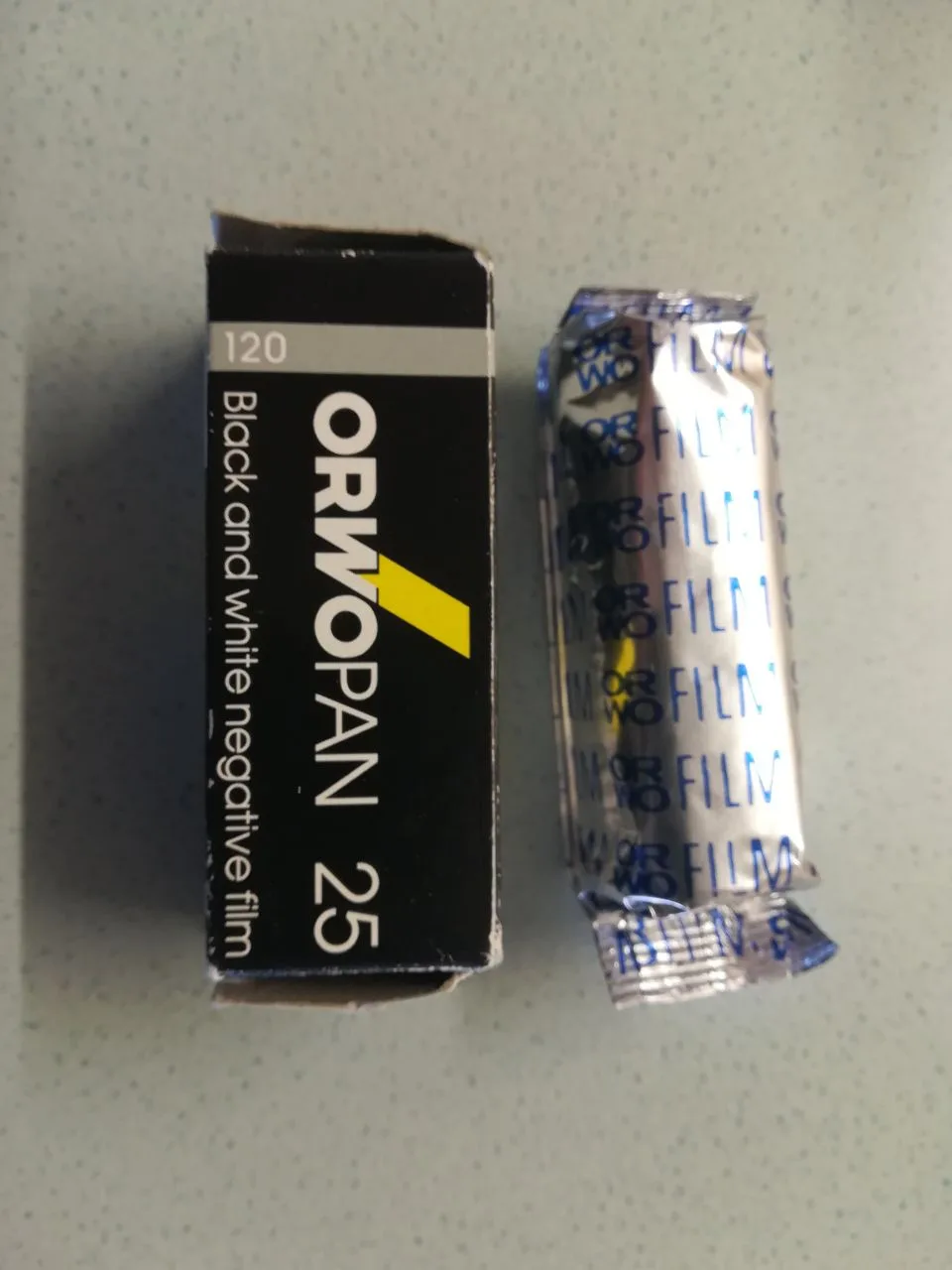
On 22 July 2026, a German company you have probably not heard of bought two other German companies you have probably not heard of. Kosmo Foto reported the deal: Optik Oldschool, through co-founder Chris Vandebroek, took ownership of InovisCoat and FilmoTec from the British businessman Jake Seal. Terms were not disclosed. Talks had been running since summer 2025.
This is the least glamorous kind of film news and one of the most consequential. Here is why.
New film stocks make headlines. Coating lines decide whether there can be new film stocks at all.
What Was Actually Bought
Two very different assets.
InovisCoat is a coating facility in Monheim. Coating is the physical process of laying photographic emulsion onto a base in precise layers, and it is the step that almost nobody can do. InovisCoat does it for third parties — including Lomography.
FilmoTec sits in Wolfen, in the Bitterfeld region, and was spun out of ORWO, the East German film manufacturer. It sells film under the Original Wolfen name.
Together they represent something rarer than a brand: working capacity. Wolfen has been a centre of film manufacturing since long before the digital era, and the expertise attached to a coating line is not the kind that can be rebuilt from documentation once the people leave.
Why a Coating Line Is the Bottleneck
Most of the film news in any given year is about emulsions, packaging and formats. Almost none of it is about coating, because coating is invisible when it works.
The number of facilities in the world that can coat photographic film to a usable standard is small enough to list. Building a new one is a capital project measured in years, not months, and the market that would justify it does not exist. This is the structural reason behind a pattern we have written about before in film supply chain fragility: a single plant going quiet does not remove one product, it removes everyone who depended on that plant.
That is what makes a third-party coater like InovisCoat different from a brand. When a company that coats for others changes hands, every customer of that line has a stake in what the new owner does next — including, in this case, Lomography.
What Optik Oldschool Says It Will Do
The company framed the purchase in preservation terms rather than growth terms. In its statement, this is about "preserving one of Europe's most important centres of photographic film production," and about protecting "knowledge, safeguard jobs and preserve decades of expertise" rather than relocating manufacturing abroad.
Read that carefully: the explicit alternative being ruled out is moving production out of Germany. That is the scenario the analogue community worries about when a specialist plant changes owners, and the new owner addressed it directly.
Statements of intent are not guarantees. But they establish what the buyer will be held to.
Optik Oldschool Was Already a Film Company
This is not a financial buyer. Optik Oldschool has been building a film catalogue:
| Film | Type | Arrived |
|---|---|---|
| Opticolour 200 | Colour negative | June 2025 |
| Santa Color 100 and 800 | Colour negative | Acquired from Camera Rescue, Finland |
| OptiMono 100 | Black and white | July 2026 |
We covered Opticolour 200's move into large format earlier this year. A company that sells film buying the plant that can coat it is vertical integration, and in a market this small, vertical integration is mostly a survival strategy: it removes the risk of your supplier deciding you are not worth a production run.
What This Does and Does Not Tell You
It does not mean new films are coming. Nothing in the announcement promises new products, and a coating line does not produce a catalogue on its own.
It does not mean prices will fall. Owning your own coating capacity removes a margin, but it also means carrying the fixed cost of a plant. Which of those dominates is not knowable from outside.
It does mean the capacity stays in Europe, for now. That is the substance. A coating plant with an owner who sells film has a reason to keep running. A coating plant owned by someone with no film business does not necessarily.
For anyone whose shooting depends on small European manufacturers continuing to exist, that is the part worth noting.
Why It Is Worth Paying Attention to Boring News
The film market has a habit of surprising people who only follow product launches. Stocks vanish with little warning because something upstream stopped, and the warning signs are usually in ownership changes, plant closures and quiet capacity decisions rather than in announcements.
If you shoot a film from a small manufacturer, the practical response is unglamorous: know which of your stocks come from single-source plants, and keep enough of a record of your own usage that you can tell the difference between a film you love and a film you happen to have shot a lot of. Our guide to storing film properly covers the stockpiling side. Pellica covers the other half: what you actually shoot, so a discontinuation notice tells you how much it will really cost you.