
Film prices have gone one direction for a decade. In September 2026, in one country, they went the other way.
Kosmo Foto reports that Eastman Kodak's newly self-distributed films are arriving in UK shops around 20% cheaper than the versions they replace. This is not a promotion or a clearance. It is a lower wholesale price working its way onto shelves.
Nothing about the film changed. What changed is how many companies stand between the factory and the shop.
The Actual Numbers
| Product | Before | Now | Change |
|---|---|---|---|
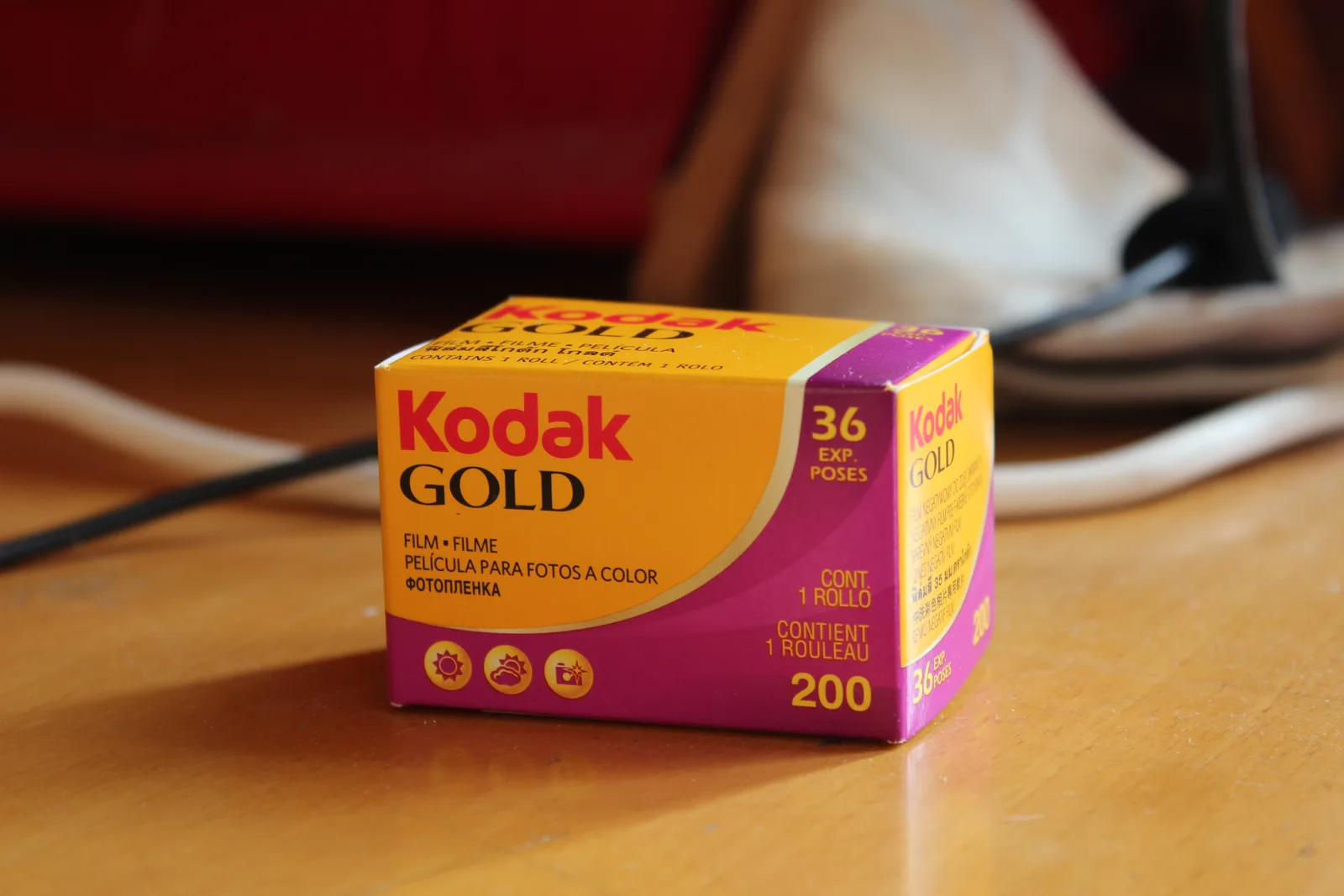
| Kodak Gold 200, 35mm, 36 exp. | £12 | £10 | −£2 |
| Kodak Gold 200, 120, five-pack | £51 | £39.99 | −£11.01 |
The 120 five-pack figure comes from 21 Studio Photolab's own listing. Prices have also fallen at Analogue Wonderland, one of the larger UK online retailers, so this is not a single shop discounting stock.
You can tell the new stock apart on the shelf: it ships in a yellow-and-black scheme that differs from the packaging Kodak Alaris used.
Why This Happened
The short version is that a link came out of the chain.
When Eastman Kodak entered bankruptcy protection in 2012, the consumer film business ended up with Kodak Alaris, which held exclusive distribution rights. Film was made by Eastman Kodak in Rochester, then sold through a separate company. Every party in that chain takes a margin.
In 2026 Eastman Kodak began distributing its own film again — the shift we covered in Kodak Is Taking Its Film Back. At the time the open question was whether removing an intermediary would show up in shop prices or simply widen someone's margin.
The UK now has an answer: it reached the shelf.
Before You Assume Your Country Is Next
Three cautions, because a 20% cut in one market is not a global price change.
This is a UK observation. The reports name UK retailers and quote prices in sterling. Nothing in them establishes the same drop in the US, the EU or Japan, and film pricing varies sharply by market for reasons that have nothing to do with the manufacturer — import duties, VAT, distributor structure and freight all differ. Our regional price divide guide covers why the same roll can differ by half across borders.
Old stock and new stock sit side by side. Shops are still selling Alaris-packaged film bought at the old wholesale price. A shelf can hold both at different prices for months. If you want the cheaper one, look at the box.
A wholesale cut is not a promise. Tariffs, currency and raw material costs have all pushed film prices up before, and the Ilford tariff increase showed how quickly an external cost lands on the consumer. Nothing about this drop is locked in.
What It Means If You Shoot Kodak
At £10, Gold 200 lands in a bracket it has not occupied for years. For a colour negative film with Kodak's consistency, that reopens a question a lot of shooters had already closed: whether the cheap budget stocks are actually saving enough to be worth their quirks.
A roll of Gold 200 at £10 against a budget stock at £7 is a £3 gap across 36 frames — about 8p a frame. That is a different calculation from the one people were making at £12, and it is worth redoing with your own numbers rather than inheriting a conclusion from two years ago.
The comparison worth making is not price per roll but cost per frame you actually keep. A cheaper film that produces five usable frames fewer per roll is not cheaper. That figure only exists if you track it — which frames you kept, from which roll, at what price. Pellica records the stock and cost against every frame, so the answer comes from your own shooting rather than from a forum consensus.
The Short Version
Kodak film is roughly 20% cheaper in UK shops because Eastman Kodak cut out a distribution layer and the saving reached the shelf. Gold 200 is £10 in 35mm. The 120 five-pack fell by £11.
Whether this reaches other markets is unknown. If you are in the UK, check the packaging colour before you pay.