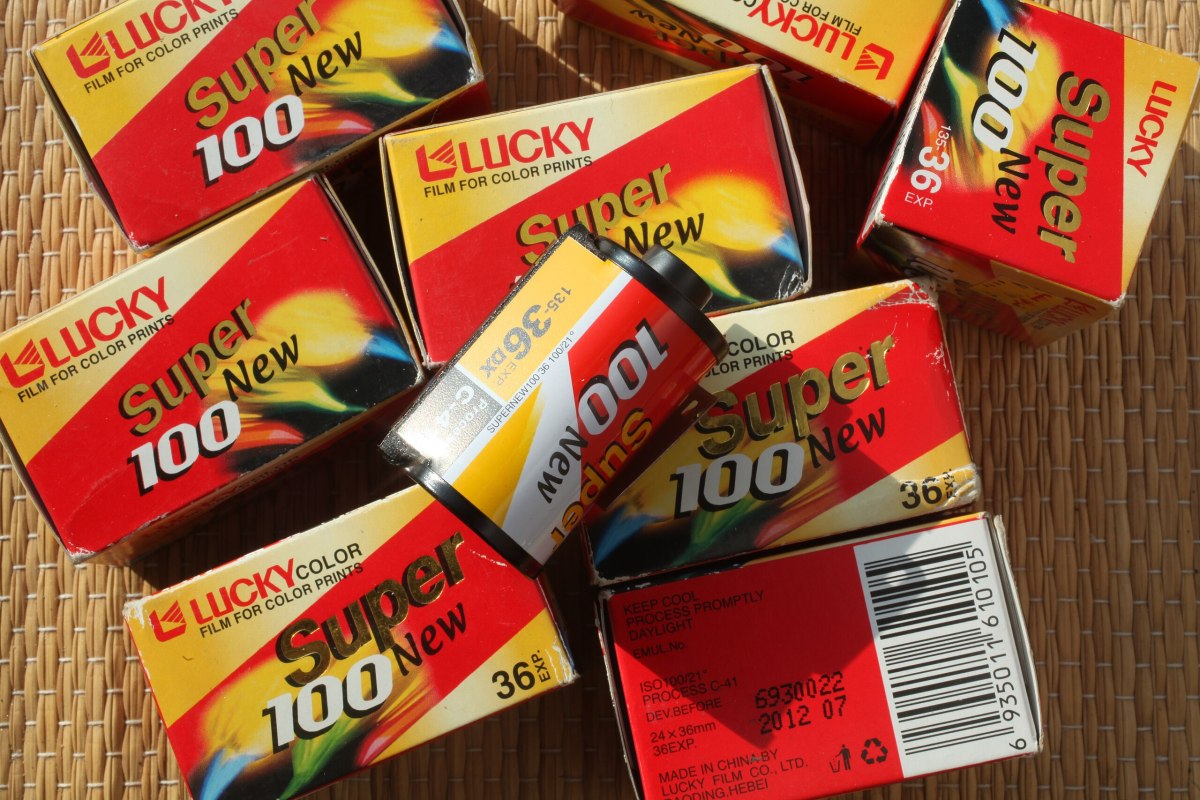
A 36-exposure roll of color film for under eight dollars. In 2026. If that sounds too good to be true, you're not wrong to be skeptical — but Lucky C400 actually delivers. This ISO 400 color negative stock from China's Lucky Film is roughly half the price of Portra 400, and the results are genuinely surprising for what you're paying.
With Kodak and Fuji pushing prices higher every quarter, the film community has been desperate for a viable budget option that doesn't feel like a compromise. Lucky C400 isn't Portra. It doesn't pretend to be. But it's a capable, characterful stock that makes shooting high-volume film affordable again.
Lucky C400 isn't Portra. It doesn't pretend to be. But it's a capable, characterful stock that makes shooting high-volume film affordable again.
The Lucky Film Backstory
Lucky Film has been manufacturing photographic film since 1958, based out of Baoding, China. For decades they were China's largest film producer — the domestic equivalent of Kodak or Fuji. The brand went through some turbulence as digital photography gutted the film market worldwide, and for a while they operated under the “ERA” brand name.
What makes the current Lucky Film operation particularly interesting is the factory itself. The Baoding facility was once a Kodak OEM plant, manufacturing film to Kodak's specifications for the Asian market. That means the equipment, the quality control processes, and a lot of the institutional knowledge trace back to Kodak's own manufacturing standards. The C400 isn't Kodak film by any means, but it comes from a factory that knows how to make film properly.
What the Images Look Like
Lucky C400 has a color palette that sits in its own space. The tones are slightly muted compared to Kodak stocks — less warm, less saturated — with a cooler overall cast that leans faintly green in some lighting conditions. Some photographers describe the look as “cinematic,” and that's fair: the restrained palette feels closer to motion picture film than to the punchy saturation of Ektar or Gold.
Grain is visible at 400 ISO, as you'd expect, but it's pleasant. The structure is organic and relatively uniform — comparable to Fuji Superia rather than the finer grain of Portra. In well-exposed frames, the grain adds texture without overwhelming detail. In underexposed frames, it gets chunky fast, so metering matters (more on that below).
Contrast is moderate. Shadows have decent detail when properly exposed, and highlights hold up well without blowing out harshly. The dynamic range isn't as generous as Portra's legendary latitude, but it's workable. Expect about 2 stops of overexposure tolerance before things start to fall apart — less than Portra, more than bargain-bin stocks of the past.
How It Compares to Kodak Gold and Fuji Superia
The obvious question: how does a $7-10 film stack up against the established budget options?
Against Kodak Gold 200: Gold is warmer, more saturated, and has that distinctly Kodak amber-gold signature. Lucky C400 is cooler and more neutral, with less personality in the color rendering but also less of a “look” imposed on every frame. Gold is ISO 200, so C400 has a full stop of speed advantage for indoor and overcast shooting. Price-wise, Gold has crept up to $12-14 per roll in many markets, making the Lucky a meaningful saving.
Against Fuji Superia 400: This is the closer comparison. Both are ISO 400 color negatives with visible but pleasant grain. Superia's greens and blues are more vivid, while Lucky C400's overall palette is more restrained. Superia has slightly better exposure latitude in most tests. The price gap is smaller here — Superia runs around $10-13 depending on where you buy — but Lucky still comes in cheaper, and its availability is expanding.
Neither Gold nor Superia is a bad choice. But if you're shooting 10+ rolls a month, the cost difference between $7 and $13 per roll adds up to hundreds of dollars a year. That's real money, especially for students and hobbyists.
Where to Buy Lucky C400
Availability is the film's main limitation right now. You won't find Lucky C400 at your local camera shop (not yet, anyway). The primary distribution channels are online retailers like Reflx Lab, and a handful of specialty film shops that import directly. Some sellers on eBay and Etsy carry it as well, though prices and shipping times vary.
Stock fluctuates. Lucky Film is ramping up production, but supply chains for niche photographic products are unpredictable. If you find it in stock and you're curious, grab a 3-pack rather than a single roll. Shipping costs make single-roll purchases less economical, and you'll want more than one roll to form a real opinion.
Shooting Tips
Meter accurately. Lucky C400 doesn't have Portra's generous latitude, so sloppy metering shows. A reliable light meter (or careful use of your camera's built-in meter) will make a noticeable difference in your results.
Overexpose by half a stop. Rating the film at ISO 320 instead of 400 gives shadows a bit more detail and reduces the grain slightly. A full stop of overexposure (rating at 200) works too, but you start to lose some of the film's natural contrast. Half a stop is the sweet spot.
Daylight is where it shines. Like most budget-tier C-41 stocks, Lucky C400 looks its best in natural daylight. Under tungsten or fluorescent lighting, the green cast becomes more pronounced. That's not necessarily a problem if you like the aesthetic, but if you want neutral tones, stick to daylight or overcast conditions.
Process promptly. Budget films can be more sensitive to latent image degradation than premium stocks. Don't let exposed rolls sit in a hot car for weeks. Shoot it, develop it, move on.
Who Should Try Lucky C400
Budget-conscious shooters: If Portra's price tag makes you ration frames, Lucky C400 lets you shoot freely again. Photography improves when you're not doing mental math on every click of the shutter.
High-volume photographers: Street photographers, travel shooters, anyone burning through 5-10 rolls on a good weekend. The per-roll savings compound quickly when volume is high.
Students: Learning exposure, composition, and darkroom technique requires a lot of film. Lucky C400's price point means more practice rolls on the same budget.
The curious: Even if you're loyal to your usual stocks, trying Lucky C400 for a roll or two is worthwhile just to see a different rendering. At $7, the cost of curiosity is low.
Track Your Results with Pellica
When you're testing a new film stock, tracking your exposure data matters more than usual. You're building an understanding of how this specific emulsion responds to different lighting, subjects, and metering approaches. Without that data, all you have is a vague sense of “it looked okay” or “that roll was off.”
Pellica's film roll tracker lets you log each frame with its exposure settings, and the automatic GPS and weather capture gives you context you'd never bother writing down manually. When your Lucky C400 scans come back, import them into the app and match each image to its data. After two or three rolls, you'll know exactly how the film handles overcast light versus direct sun, how much overexposure you can get away with, and whether the green cast bothers you or becomes part of the character you enjoy.
Even better, Pellica makes it easy to compare across stocks. Shoot the same subjects on Lucky C400 and your regular Portra or Superia, then pull up the data side by side. That's how you figure out whether Lucky earns a permanent spot in your rotation or stays as an occasional change of pace. Use the lab finder to locate a C-41 lab that can handle the processing, and you're set.