Why Finding the Right Film Lab Matters
Not all film labs are equal. The lab you choose has a direct impact on your final images — color rendition, grain structure, scan quality, and even the longevity of your negatives. A careless lab can scratch negatives, produce muddy scans, or cut your film at the wrong frames. A great lab treats every roll like it matters, because it does.
Different labs specialize in different processes. Some excel at C-41 color negative but don't touch slide film. Others are known for their hand-processed B&W work or their expertise with ECN-2 motion picture stocks. If you're shooting Kodak Portra or Fuji Superia, most labs will handle your rolls just fine. But if you're running Velvia through E-6 or pushing Tri-X to 1600, you need a lab that knows what it's doing.
Turnaround times and pricing also vary dramatically. A local lab might develop your rolls same-day, while a mail-order lab offers higher-quality scans but takes a week. The best choice depends on what you're shooting, how you're using the images, and how quickly you need them back.
Your negatives deserve a lab that cares. Pellica helps you find one.
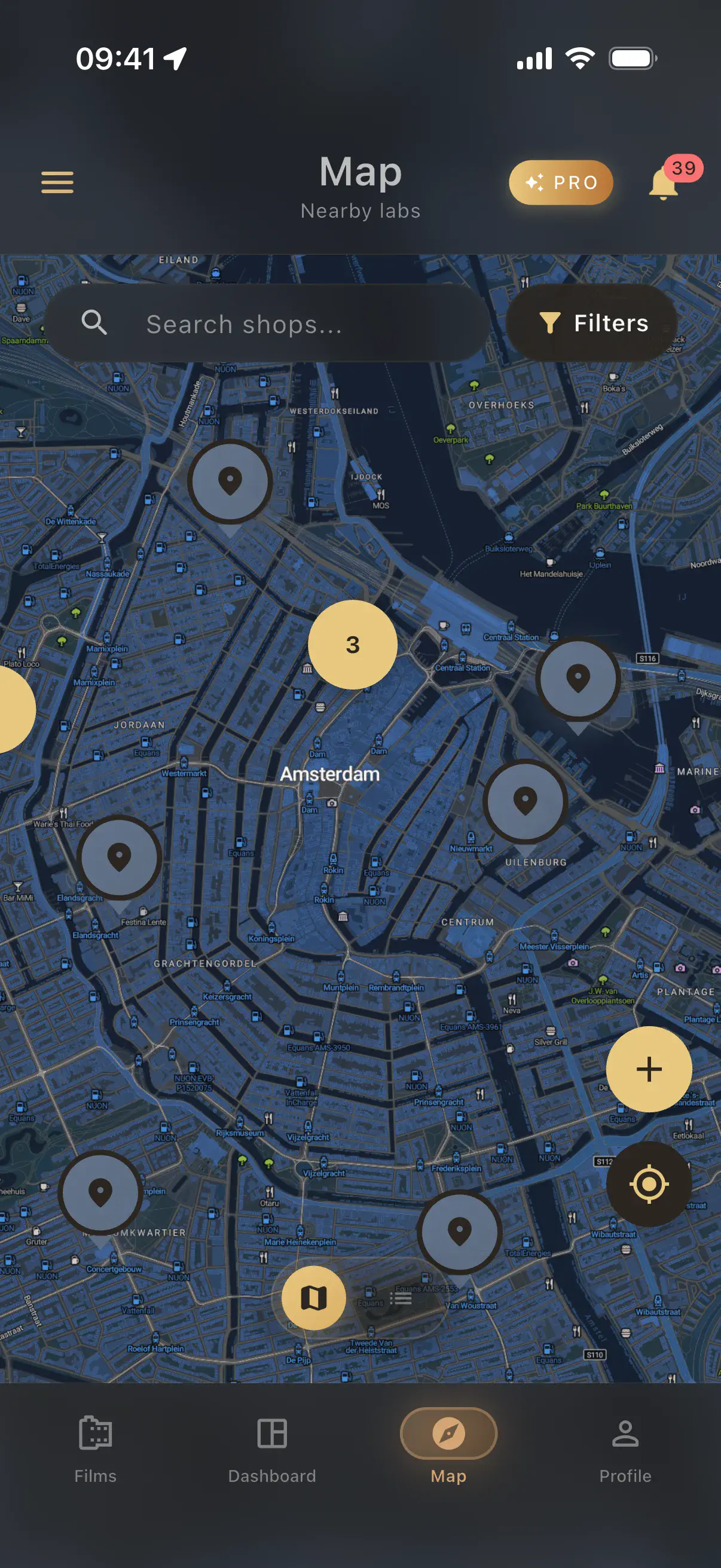
500+ Film Development Labs, One Map
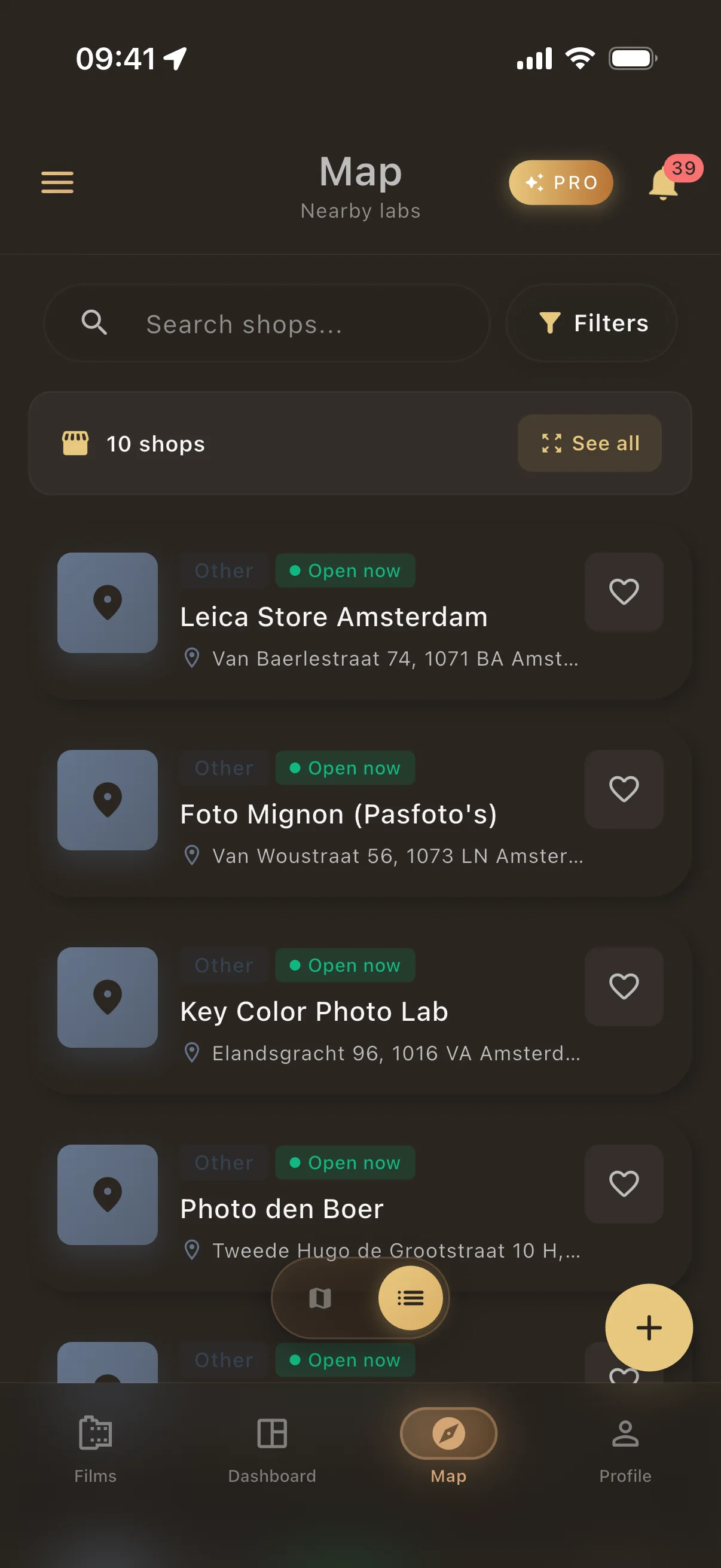
Pellica's lab map is built by the community. Photographers around the world contribute lab listings, add details about services and pricing, and share their experiences. The result is a living database of over 500 film development labs across 40+ countries — from well-known professional labs to small independent shops you'd never find through a generic search engine.
- Search by location — Find labs near you using GPS or search by city, region, or country.
- Filter by process type — C-41, E-6, B&W, ECN-2. See only labs that handle your film.
- Lab details at a glance — Services offered, pricing notes, turnaround times, and community reviews.
- Community-driven — Labs are added and verified by real photographers. No paid placements.
Whether you're at home or traveling, the lab map gives you confidence that your rolls are going somewhere trustworthy.
Film Development Processes Explained
If you're new to film or branching into a new format, understanding development processes helps you choose the right lab — and avoid costly mistakes.
C-41 (Color Negative)
The most common film process. C-41 covers popular stocks like Kodak Portra 400, Kodak Gold 200, Fuji Superia 400, and Kodak ColorPlus 200. Almost every film lab handles C-41, so availability is rarely an issue. It's forgiving with exposure — you can overexpose by a stop or two and still get beautiful results. This makes it an excellent starting point for anyone new to analog photography.
E-6 (Slide / Reversal Film)
E-6 produces positive transparencies — the kind of film you can hold up to the light and see the image directly. Stocks like Fuji Velvia 50, Fuji Provia 100F, and Kodak Ektachrome E100 deliver extraordinary color saturation and fine grain. The tradeoff: E-6 has almost no latitude for exposure error. You need to nail your metering. Fewer labs process E-6, so finding one nearby matters.
B&W (Black and White)
Black-and-white film like Ilford HP5 Plus, Kodak Tri-X 400, and Ilford Delta 3200 can be processed at home or at a lab. Some labs use automated dip-and-dunk machines, while others process by hand for more control. If you're pushing or pulling your film (intentionally over- or underexposing), hand processing lets you adjust development times for the best results. Ask your lab before you drop off a pushed roll.
ECN-2 (Motion Picture Film)
Stocks like CineStill 800T and CineStill 50D are based on Kodak motion picture film, originally designed for the ECN-2 process. Most of these stocks have had the remjet layer removed so they can be processed in standard C-41 chemistry, but a handful of specialized labs still offer true ECN-2 development. If you want the most accurate color rendition from these stocks, ECN-2 processing is worth seeking out.
Knowing which process your film requires is the first step to choosing the right lab. Pellica's map lets you filter by process type, so you always find a lab that can handle exactly what you're shooting.
From Lab Back to Your Film Log
Finding a lab is only part of the workflow. What happens after you drop off your film is just as important for learning and improving as a photographer.
Here's how Pellica connects the lab experience to the rest of your analog process:
- Send your roll to a lab — Track which lab you're using and when you dropped off your roll directly in Pellica.
- When scans come back — Import your developed scans into the app and match each image with the exposure data you logged while shooting.
- Learn from every frame — See the aperture, shutter speed, ISO, and lighting conditions alongside the final result. Over time, you build a personal reference library that makes you a better photographer.
The complete workflow: shoot → log → develop → learn. Pellica is the thread that connects every step.