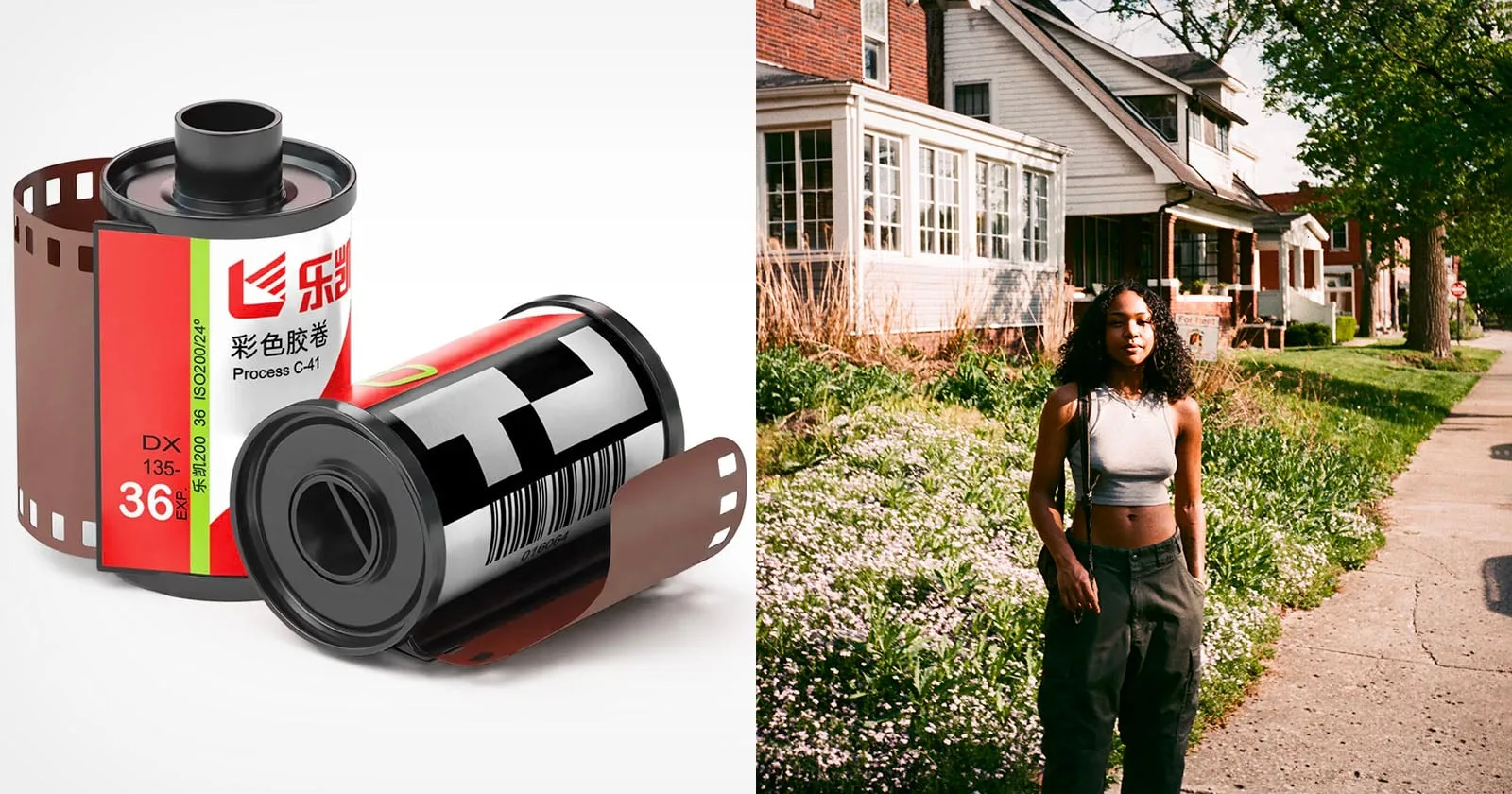
In June 2026, Lucky C200 stopped being a film Americans could only read about. The ISO 200 color negative stock from China's Lucky Film — the same Baoding factory behind the C400 we reviewed in March — reached US retail shelves for the first time, priced between $11.99 and $14.99 per 36-exposure roll, according to PetaPixel's June 2, 2026 report.
That closes a frustrating gap. When analog.cafe published its full review on February 12, 2026, the film was, in the reviewer's words, not yet widely available in the US — buying a roll meant importing from China or gambling on eBay listings. Five months later, at least half a dozen American shops stock it, and a wholesale distributor is feeding more. Here is what the reviews agree on, where the film fits next to its C400 sibling, and where to actually order a roll.
Only five factories in the world can coat color negative film in 2026 — Kodak, Fujifilm, Harman, ORWO, and Lucky. The newest one now ships to US camera shops.
The Fifth Color Film Factory on Earth
Lucky Film has made photographic film in Baoding, China since 1958, and its factory once produced film as a Kodak OEM plant — a backstory we covered in our Lucky C400 review. What makes the company genuinely significant is scarcity: as analog.cafe notes, only five manufacturers in the world can produce color negative film today — Eastman Kodak, Fujifilm, Harman, ORWO, and Lucky. Every new color emulsion is an event, because almost nobody can make one.
C200 is Lucky's ISO 200 entry, sold in both 135 and 120 formats. It launched in China in mid-2025, and according to Reflx Lab's early review, the first production run was capped at 10,000 rolls and sold out almost instantly at its Shanghai debut. Those first rolls carried a telling mark on the sprocket edge: “Lucky 200T,” where the T stands for testing. In China the film sells for about ¥59 — roughly $8 — and that price includes development, scanning, and prints, per 35mmc's October 2025 comparison.
What Lucky C200 Renders Like
Every credible review converges on the same signature: this is a red-forward film. Analog.cafe's tests found saturated reds and greens with subdued blue tones and occasional pink casts, and noted the film is at its best photographing foliage and warm-toned scenes in direct sunlight. Shoot It With Film's review describes strong, clean reds that set it apart from Kodak's warm yellows and Fuji's greens — with the caveat that skin tones can drift red, occasionally toward sunburnt.
The weakness is the other side of the same coin. Because the blue layer is muted and tends to bleed into neutral tones, overcast light, cool light, and underexposure all make frames look dull and grayish. Analog.cafe's practical advice amounts to a cheat code: shoot warm colors in warm light. Tahusa's first-impressions review from September 2025 found the same thing from the flattering end — at sunset, golden tones amplify into oranges and reds that look genuinely striking.
Interestingly, the US launch coverage lands on a calmer verdict. The Find Lab, quoted in PetaPixel's June 2026 article, calls the film red-based but overall neutral, with average saturation, contrast, and grain — positioning it directly alongside Kodak Gold and Fujifilm 200 as an everyday stock.
Track this in the app: Film Roll Tracker
Grain, Latitude, and the 200T Caveat
On grain, the reviews disagree at the margins but agree on the neighborhood. Analog.cafe found C200 grainier than Kodak's ISO 200 films (Gold and ColorPlus) yet smoother than ORWO 200 or the Harman Phoenix stocks. 35mmc's side-by-side put its grain and exposure latitude roughly on par with ColorPlus, while Harman Phoenix II came out grainier with less latitude than the Lucky. If you shoot 120, analog.cafe suggests medium format is the smarter choice for cleaner images.
Dynamic range is where the budget shows. Shoot It With Film found highlights blow out faster than on Kodak stocks and shadows get crunchy when underexposed, so high-contrast scenes need care — keep the important parts of your frame out of the extremes, and if re-rating or metering strategy is new to you, our film ISO guide covers the fundamentals.
One honest caveat: the hand-coated 200T test batch had documented quality issues — tiny white and blue dots and occasional banding, reported by both Tahusa and 35mmc in late 2025. Lucky said the defects would disappear once production moved to machine coating, and PetaPixel's June 2026 coverage of the US retail batch makes no mention of them. Still, if your first roll shows specks, you are seeing a known early-batch artifact, not your camera failing.
Lucky C200 vs Lucky C400 vs Kodak's Budget Stocks
| Film | ISO | US street price, July 2026 (36 exp) | Palette | Grain |
|---|---|---|---|---|
| Lucky C200 | 200 | $9.99–$14.99 | Saturated reds and greens, subdued blues | Near ColorPlus; grainier than Gold |
| Lucky C400 | 400 | ~$7–10 | Cooler, muted, cinematic | Organic, Superia-like |
| Kodak Gold 200 | 200 | ~$9–13 | Warm amber-gold, saturated | Fine, classic |
| Kodak ColorPlus 200 | 200 | ~$8–11 | Warm, lower contrast | Moderate |
The two Luckys are more different than the shared brand suggests. C400 renders cool and restrained — the look we called cinematic in our full C400 review — while C200 is warmer, punchier, and more saturated in the reds and greens. C400 also gives you a full extra stop for overcast days and indoor light, and it is currently the cheaper of the two in the US. If you shoot mostly sunny daylight, C200 plays to its strengths; if your light is unpredictable, C400 is the safer roll.
Against Kodak, the price case is thinner than the hype suggests. At $11.99–$14.99, a roll of C200 costs about the same as Kodak Gold from most US retailers — the meaningful savings only appear at Reflx Lab's $9.99, or if street prices fall as distribution matures. 35mmc's reviewer argued the film needs to reach roughly $7 a roll to become a serious everyday contender against Kodak. For the wider budget landscape, our film prices guide tracks what every stock really costs in 2026, and if you are choosing a first color film, start with our beginner film stock guide.
Where to Buy Lucky C200 in the US
As of early July 2026, these are the verified options, with prices from PetaPixel's June 2, 2026 report:
- Reflx Lab — $9.99 plus shipping; ships from China, so allow extra transit time.
- The Find Lab (Salt Lake City) — $11.99.
- Dirt Cheap Film (Pennsylvania) — $12.95.
- Stewarts Photo — $12.99.
- Midwest Photo — $14.99; its wholesale arm, MPEX Distribution, supplies the stock to other specialty retailers, which is why availability keeps widening.
- Also listed by Legacy Photo Lab, Woodward Camera, and dubblefilm's US store, plus the usual rotating eBay sellers.
Distribution still runs through specialty shops rather than the big national houses. One thing to know before you order: PetaPixel reports that an early-2025 dispute over official North American distribution rights — with sites like LuckyFilm.net claiming distributor status — remains unresolved, and neither of those claimed distributors actually sells the new C200. Midwest Photo confirmed it sources directly from China Lucky. Stick to established retailers.
Development is standard C-41, so any lab can run it, though two quirks from analog.cafe's testing are worth knowing: the negatives come out of the tank looking milky white before drying down to a normal orange mask, and the strong reddish mask can confuse automated scanner inversion — one reader's lab scans only came out right after a rescan. If you digitize at home, a dedicated conversion tool helps; we compare the current options in our negative inversion apps guide.
Frequently asked questions
Where can I buy Lucky C200 in the US?
As of July 2026, US specialty retailers stock it: The Find Lab at $11.99, Dirt Cheap Film at $12.95, Stewarts Photo at $12.99, and Midwest Photo at $14.99 per 36-exposure roll, per PetaPixel's June 2, 2026 report. Reflx Lab ships from China at $9.99 plus shipping.
What is the difference between Lucky C200 and Lucky C400?
C200 is ISO 200 with a warm, red-forward palette of saturated reds and greens; C400 is ISO 400 with a cooler, more muted, cinematic look. C400 gives you an extra stop of speed and currently costs slightly less in the US, around $7–10 per roll.
Is Lucky C200 good for beginners?
Yes, with one caveat: it has less exposure latitude than Kodak Gold, so highlights clip faster and underexposed shadows turn muddy. Meter carefully and shoot it in daylight, where reviewers agree it performs best.
Log Your First Rolls Before You Judge It
A new emulsion rewards discipline more than any familiar stock does. Lucky C200 behaves unlike the Kodak and Fuji films most of us learned on — the red bias, the narrow latitude, the daylight dependence — and the only way to learn its behavior is to record what you did frame by frame and compare it against what came back from the lab.
Pellica's film roll tracker logs every frame with exposure settings, GPS, and weather, then matches your scans back to that data — so after two rolls you will know exactly how C200 handles your light, not just how it handled a reviewer's. Because the film punishes sloppy exposure, the built-in light meter earns its place on a stock like this, and the lab finder will point you to a C-41 lab that can develop it anywhere.
Five factories in the world can make color film, and one of them just started selling to American shops at under $12 a roll. That alone makes Lucky C200 worth a place in your next order — and worth documenting properly when you shoot it.