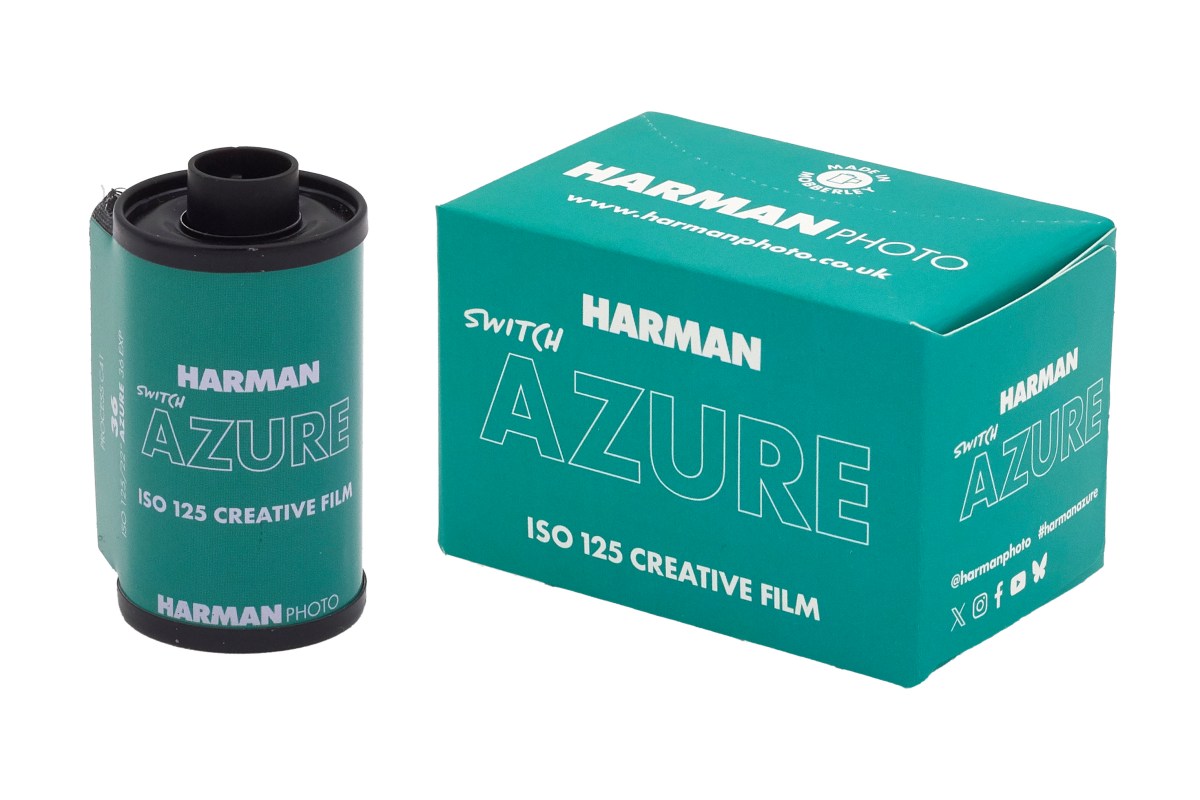
Harman just dropped the third film in their Switch line, and this one turns your warm tones ice cold. Switch Azure 125 is a color-swapping C-41 film that flips your color palette: blues become orange and amber, yellows shift to azure blue, and reds land somewhere in purple territory. It's not subtle, it's not realistic, and that's entirely the point.
If you've shot the original Switch or Switch Viola, you already know the vibe. Azure takes the same rearranged-coupler-layer concept and pushes it in a new chromatic direction. If you haven't tried any Switch film yet, this might be the most interesting entry point — the color inversions are striking enough to make even mundane subjects look otherworldly.
Switch Azure flips your color palette: blues become orange and amber, yellows shift to azure blue, and reds land somewhere in purple territory. It's not subtle, and that's entirely the point.
How the Color Swap Actually Works
Standard color negative film has three light-sensitive layers, each paired with a color coupler that produces the corresponding dye during development. Red-sensitive layer makes cyan dye, green-sensitive makes magenta, blue-sensitive makes yellow. That's how you get realistic colors after inversion during printing or scanning.
Harman's Switch films rearrange which coupler sits in which layer. The light still hits the same sensitivity layers, but the dye that forms is “wrong” — a warm subject triggers a cool dye, and vice versa. With Azure specifically, the rearrangement is tuned so that yellow and warm tones produce the namesake azure blue, while cool blues swing to warm amber. The result is a full-spectrum color inversion that varies depending on the actual colors in your scene.
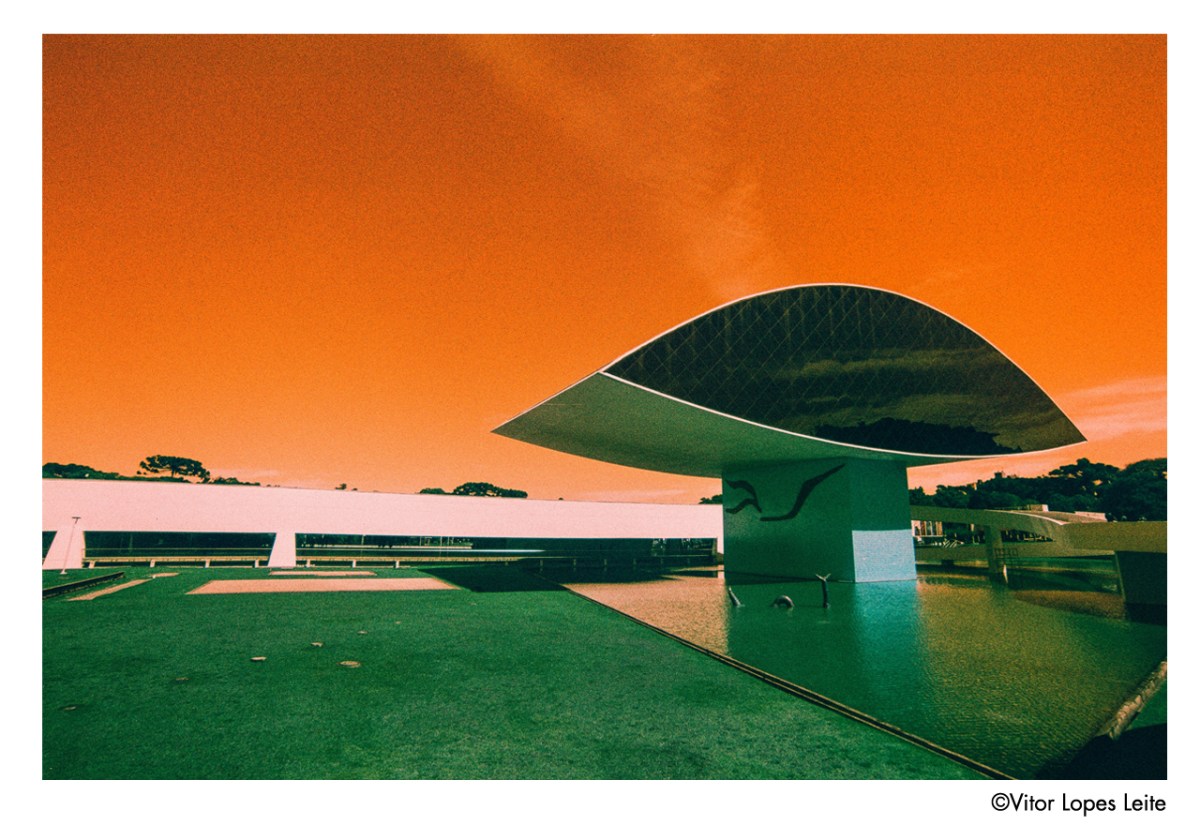
Because this happens at the emulsion level, no two scenes look the same. A golden-hour landscape that would normally be all warm tones becomes a surreal blue-and-purple dreamscape. A scene that's already cool — overcast sky, blue walls, ocean — shifts toward amber and fire tones. You're essentially composing with an inverted color wheel, which is disorienting at first and addictive after a roll or two.
The Switch Line So Far
Harman — the company behind Ilford, which has been making legendary black-and-white stocks for decades — launched the Switch line as a creative color experiment. The original Switch (sometimes called Switch OG) was the proof of concept: a general color-swap film that scrambled the palette in unpredictable ways. Switch Viola followed, emphasizing violet and magenta shifts, particularly in greens and skin tones.
Azure is the third release, and the naming convention tells you what to expect: the dominant shifted tone is a cool, saturated blue that appears where you'd normally see warm yellows and golds. Each Switch variant produces a distinctly different look from the same type of scene, which gives you a reason to collect all three if experimental photography is your thing.
Shooting Tips for Switch Azure 125
At ISO 125, Azure needs decent light. This isn't a film you want to take into dim interiors or shoot handheld after sunset. Bright overcast, open shade, and direct sunlight are where it performs best. Think of it as a daytime film — similar shooting conditions to Ektar 100 or Portra 160.
Overexpose by half a stop to a full stop. Like most C-41 stocks, Switch Azure handles overexposure better than underexposure. Slightly generous exposure gives the color couplers more to work with, which tends to produce richer, more saturated color shifts. Underexposed frames can look muddy, and the color inversions become less defined.
Subject choice matters more than usual with this film. Look for scenes with strong, identifiable colors — the swap is most dramatic when there's a clear dominant hue. A field of sunflowers, a sunset over water, a red brick building against blue sky. Neutral or desaturated scenes (grey cityscapes, foggy mornings) won't give the film much to work with and the results can feel flat.
Use a light meter to nail the exposure. With a creative stock like this, you want the technical side dialed in so the color shifts do the heavy lifting. Getting the exposure wrong adds an unwanted variable to an already unpredictable process.
Processing: Standard C-41
One of the best things about the Switch line is that it uses standard C-41 chemistry. You don't need a specialty lab or a custom process. Any lab that develops regular color negative film can handle Switch Azure. Drop it off the same way you would Portra or Gold.
When scanning, your lab might be confused by the inverted colors and try to “correct” them. It's worth mentioning that the film is intentionally color-shifted so they don't normalize the scan and flatten the effect. If you scan at home, disable any automatic color correction and work from the raw inversion.
Who Is This Film For?
Switch Azure is not a general-purpose stock. You wouldn't load it for a wedding or a client portrait session (unless that client specifically wants to look like a character from a sci-fi film). This is a creative tool, full stop.
It's perfect for experimental photographers who get bored shooting the same Portra-Gold-HP5 rotation. It's great for Lomography fans who enjoy unpredictability. It's a solid choice for art projects, zines, and personal work where you want images that look distinctly different from anything shot digitally or on conventional film. At around $15-17 per roll for 35mm (36 exposures), it's priced in line with other specialty stocks — not cheap, but reasonable for something you're shooting intentionally rather than burning through daily.
Switch Azure is also available in 120 format, which is worth trying if you shoot medium format. The larger negative area gives the color shifts more room to breathe, and the results on 120 can be genuinely stunning.
Track Your Experiments with Pellica
Creative stocks like Switch Azure reward careful tracking more than almost any other film. The color shifts vary dramatically depending on your subject, the lighting conditions, and your exposure. What looks incredible in late-afternoon sun might look completely different under overcast sky — and without notes, you won't remember which was which three weeks later when your scans arrive.
With Pellica, you can log each frame as you shoot, capturing the exposure settings, lighting conditions, and subject notes. The app's automatic GPS and weather data becomes especially useful here — knowing whether a frame was shot in direct sun or shade explains a lot about why the color inversion looks the way it does. Use the film roll tracker to build a reference library of which conditions produce the color shifts you like best. Over a few rolls, you'll start predicting results instead of guessing, which is the difference between randomness and creative control.
And when it's time to develop your Switch Azure rolls, the lab finder will point you to C-41 labs nearby so you're not hunting around for processing.