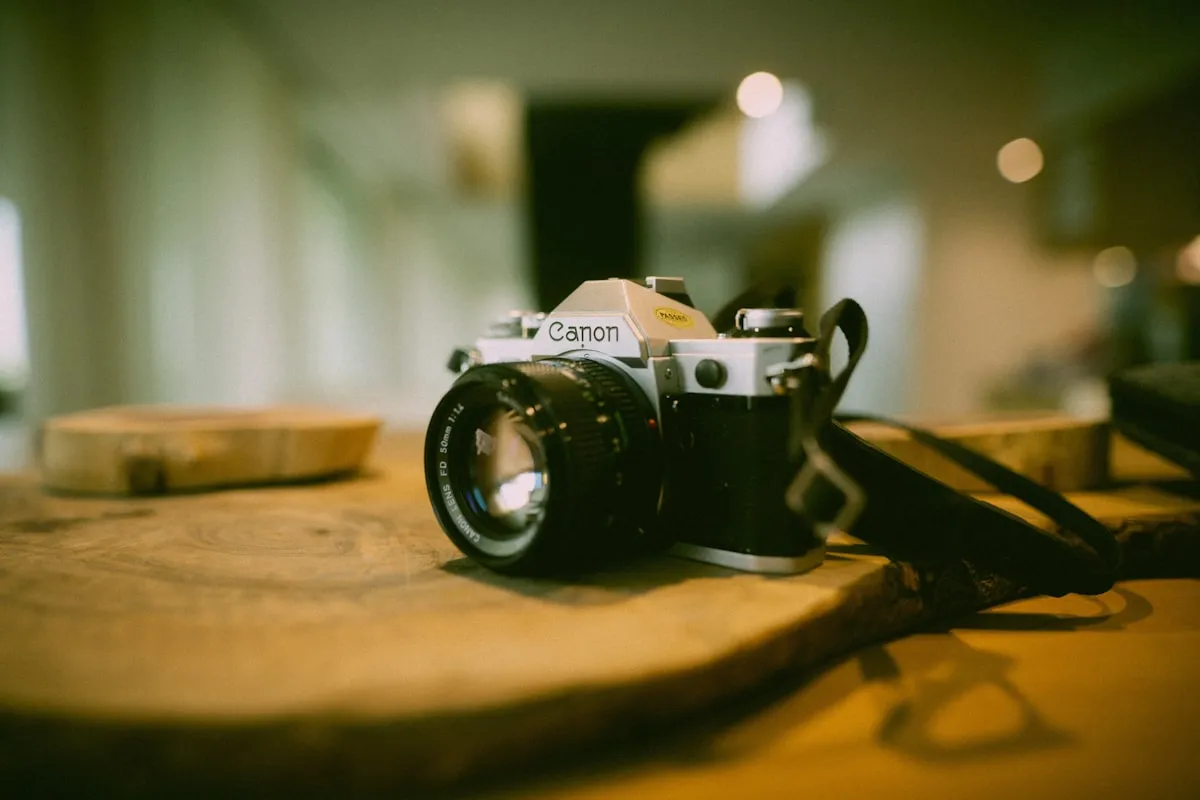
The film vs digital debate has been going for over two decades now, and most of it generates more heat than light. Partisans on both sides talk past each other — digital shooters pointing to specs, film shooters pointing to vibes. This article isn't about declaring a winner. It's about laying out the genuine, measurable, and experiential differences so you can make informed decisions about which medium to use and when.
Because the honest answer is that film and digital are different tools, and many serious photographers use both. Understanding why requires looking past the surface-level arguments.
Image Quality: What the Specs Actually Tell You
On raw resolution, digital wins decisively. A modern full-frame sensor delivers 45-60 megapixels of clean, sharp data. 35mm film, even fine-grain stocks like Ektar 100, resolves the equivalent of roughly 15-20 megapixels when drum-scanned at professional quality. Medium format film closes the gap, and large format exceeds digital, but comparing format-for-format, digital captures more detail.
High-ISO performance isn't even a contest. Modern digital cameras produce clean images at ISO 6400, 12800, even 25600. Film grain at ISO 3200 is aggressive and shadow detail falls apart. If you need to shoot in low light without flash, digital gives you several extra stops of usable sensitivity.
But resolution and high-ISO aren't the whole picture. Film's grain structure adds a texture that many viewers find more pleasing than the clinical smoothness of digital. And film's color rendition — its baked-in color science — produces images that often look finished straight out of the scanner. More on that below.
Color Science: Decades of Chemistry vs. Post-Processing
Here's where film has an advantage that digital struggles to replicate. Every film stock has a color profile that was developed, tested, and refined over years — sometimes decades. Kodak Portra's skin tones didn't happen by accident. Fuji Velvia's saturated greens and blues were engineered through thousands of iterations of coupler chemistry. Kodak Gold's warm, nostalgic palette is the result of deliberate design choices baked into the emulsion.
Digital sensors, by contrast, capture a neutral, linear representation of the scene. The colors you see in a raw file are flat and lifeless until you apply processing — a camera profile, white balance adjustment, tone curve, color grading. Every digital image requires decisions about what it should look like. That's powerful if you enjoy editing, but it's also time-consuming and requires skill.
Film gives you a look for free. Load Portra, shoot, develop, scan. The colors are there. You can still adjust in post, but the starting point is already beautiful. This is why so many digital photographers spend hours trying to replicate film color profiles in Lightroom — the aesthetic is genuinely desirable, and it's hard to fake convincingly.
Film gives you a look for free. The colors are baked in by decades of chemical engineering. Digital gives you infinite control, but demands you make every aesthetic decision yourself.
The Shooting Experience
This is where the conversation gets less about technology and more about psychology. A roll of 35mm film gives you 36 frames. No more. There's no “delete” button, no instant review on the back of the camera, no chimping after every shot to check the histogram. You compose, meter, focus, and commit. Then you move on to the next frame.
That constraint changes how you shoot. Photographers who switch from digital to film consistently report that they become more deliberate, more present, and more thoughtful about composition. When every frame costs money and can't be reviewed until the roll is developed, you learn to trust your eye and your meter. You stop spraying and praying. Many find that this intentionality carries back into their digital work too.
Digital's strength is freedom. You can shoot 500 frames in an afternoon, experiment with exposure and composition at zero marginal cost, bracket exposures, and try creative techniques without worrying about wasting film. For learning technical skills quickly, digital's instant feedback loop is hard to beat.
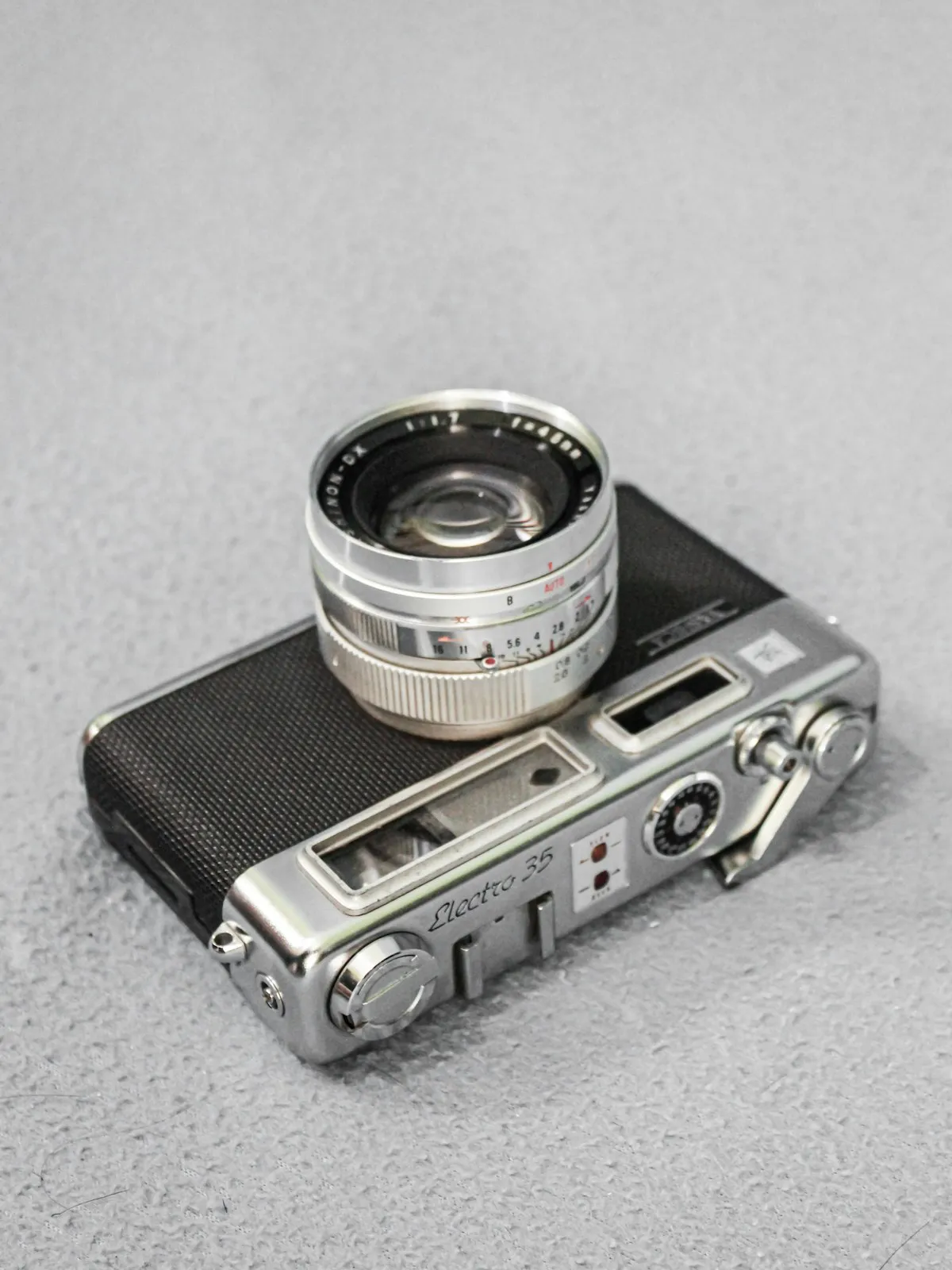
Cost: The Math Is More Nuanced Than You Think
The per-image cost argument is straightforward: digital is essentially free after the initial gear purchase. Film costs $15-25 per roll when you factor in the film itself ($8-16), development ($8-12), and scans ($5-15 for high-res). At 36 exposures per roll, that's roughly $0.40-0.70 per frame. Shoot ten rolls a month and you're spending $150-250 on materials alone.
But the full financial picture is more complex. Digital camera bodies depreciate rapidly — a $2,500 mirrorless body loses half its value within two to three years as new models launch. Film cameras, particularly mechanical ones, hold their value remarkably well. A Nikon FM2 purchased for $300 will sell for $300 (or more) in five years. A Leica M6 has appreciated in value over the past decade. Your film camera is an asset; your digital camera is a depreciating tool.
There's also the hidden cost of digital post-processing: software subscriptions (Lightroom, Capture One), storage for massive raw files, and the hours spent editing. Film's workflow is front-loaded in cost but lean on time. Digital's workflow is cheap in materials but expensive in hours.
Dynamic Range: Different Strengths in Different Directions
Dynamic range is often cited as a digital advantage, and in total measured stops, that's technically true for modern sensors. But the way each medium distributes that range is fundamentally different, and this matters more than the total number.
Film handles highlight overexposure gracefully. Color negative film has a smooth, gradual rolloff in the highlights — as a scene gets brighter, the film compresses the tones rather than clipping them abruptly. A bright window in a Portra shot retains detail and transitions smoothly into pure white. Overexpose Portra by two or even three stops and you still get usable, often beautiful, images.
Digital sensors are linear until they clip. When a highlight hits the sensor's ceiling, it goes to pure white instantly — no rolloff, no transition, just a hard wall. Blown highlights on digital look harsh and unrecoverable. This is why digital photographers are trained to “expose to the right” but never clip.
In the shadows, the situation reverses. Digital sensors recover shadow detail remarkably well — you can underexpose a modern raw file by three or four stops and pull usable detail out of the darkness. Film shadows get grainy and lose detail quickly. Underexposed film negatives are thin, noisy, and often unsalvageable.
The practical takeaway: film favors overexposure, digital favors underexposure. Expose accordingly.
Workflow: Front-Loaded vs. Back-Loaded Effort
Film's workflow is simple by necessity. You shoot, drop the roll at a lab (or develop at home), get your scans back, and the images are largely done. The color science is baked in. You might do minor adjustments — a slight crop, a dust spot removal — but the heavy lifting happened in the emulsion. A roll of 36 frames might need 15 minutes of post-processing.
Digital's workflow starts after the shutter clicks. Import raw files, cull the rejects (from those 500 frames you shot), apply a base profile, adjust white balance, tweak exposure, add color grading, sharpen, export. For a professional shoot, post-processing can take longer than the shoot itself. Even personal work often involves an hour or more in front of a screen per session.
Neither workflow is objectively better. Some photographers love the control and precision of digital editing. Others prefer to spend their time shooting rather than sitting at a computer. Know which type you are before investing heavily in either direction.
The Hybrid Approach
Plenty of working photographers shoot both film and digital, choosing the medium based on the project. Commercial work with tight deadlines and client demands? Digital. A personal project about your neighborhood? Film. A wedding? Digital for the ceremony (can't miss the moment), film for the portraits (the look is worth it).
Shooting both also makes you a more versatile photographer. The discipline of film improves your digital composition. The technical fluency of digital helps you understand exposure theory that applies to film. They reinforce each other in ways that sticking to one medium can't replicate.
The Real Reason People Shoot Film
If you evaluate film purely on technical specifications, digital wins most categories. Higher resolution, better low-light performance, instant review, zero per-frame cost, faster workflow from capture to delivery. On paper, there's no rational reason to shoot film in 2026.
And yet film sales have grown every year for the past decade. New film stocks are being released. Pentax built a new film camera. Young photographers who grew up with smartphones are buying SLRs from the 1970s. Something is going on that specs can't explain.
That something is the experience. Film photography is tactile — you load a physical roll, advance the lever, hear the shutter mechanism. It's finite — 36 frames forces you to slow down and be present. It's delayed — the gap between shooting and seeing creates anticipation that instant review has eliminated. And the results have a character that's genuinely different from digital, not because of any single technical factor, but because of all of them together: the grain, the color science, the highlight rolloff, the subtle imperfections.
Film photography isn't about rejecting technology. It's about choosing a process that changes how you see, think, and create. The output matters, but so does the journey to get there.
Make the Most of Your Analog Process
Shooting film comes with a learning curve — exposure, metering, choosing the right stock for the conditions, finding a reliable lab. Pellica is built to smooth that curve without removing the analog soul that makes film rewarding. Use the film roll tracker to log every roll and frame, so when your scans come back you can see exactly what settings produced each image. The built-in light meter helps you nail exposure when your camera's meter is unreliable or absent. And when it's time to develop, the lab finder connects you with quality labs nearby.
Film or digital, the goal is the same: making photographs you care about. Understanding the real differences between the two helps you choose the right tool for each moment. And if film is part of your practice, tracking your process turns every roll into a learning experience — building the kind of intuition that only comes from paying attention to what works and what doesn't.