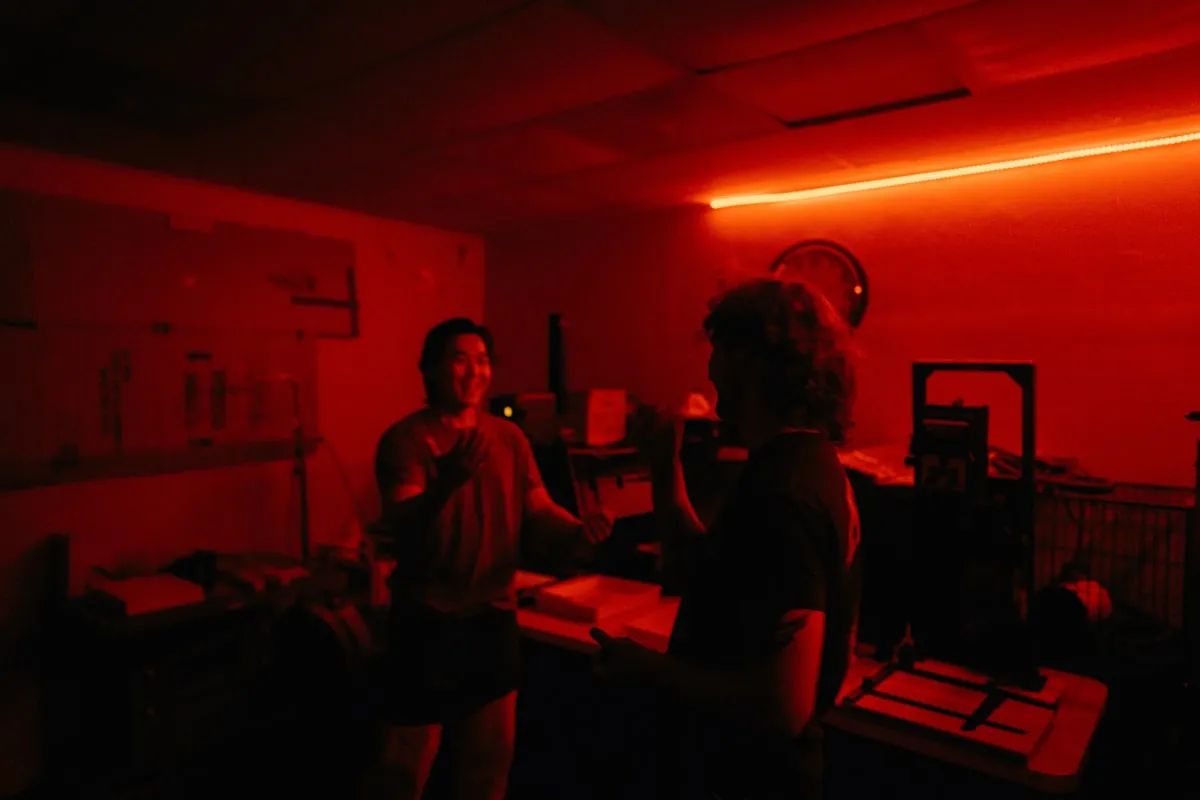
Sending film to a lab is convenient, but it adds up fast. At $10-15 per roll for develop-and-scan, a weekend of shooting can cost you $40-60 before you even see your images. Home developing cuts that cost by 50-70%, gets your negatives back the same day, and gives you full control over the process. It's also deeply satisfying — watching an image appear on a strip of film you processed yourself connects you to photography in a way that dropping off a roll at the counter never will.
This guide covers everything you need to get started: equipment, chemicals, step-by-step process for both black & white and C-41 color, common mistakes, and a realistic cost breakdown.
Watching an image appear on a strip of film you processed yourself connects you to photography in a way that dropping off a roll at the counter never will.
Why Develop at Home
The financial argument is straightforward. After the initial equipment investment of $50-80, each roll costs roughly $1-2 to develop at home. Compare that to $10-15 per roll at a lab, and the math works in your favor after just five or six rolls. If you shoot regularly — say four rolls a month — you save $400-500 a year.
Turnaround time matters too. Labs take anywhere from two days to two weeks depending on your location and their backlog. At home, you can shoot in the morning and have dry negatives by evening. That tight feedback loop accelerates learning dramatically, especially when you're using a film roll tracker to match your exposure data with results.
There's also creative control. Want to push Tri-X two stops for contrasty street shots? Just extend the development time. Want softer contrast from your HP5? Pull it a stop and develop accordingly. Labs offer push/pull processing, but it costs extra and you can't fine-tune the way you can at home.
Equipment You'll Need
The startup kit is simpler than most people expect. Here's everything, with approximate prices:
- Developing tank and reels ($20-35): The Paterson Universal Tank is the standard. It holds one or two 35mm reels and has a light-tight lid that lets you pour chemicals in and out without exposing the film. The auto-load reels are beginner-friendly — you feed the film in and it ratchets into place.
- Changing bag ($15-25): A light-tight fabric bag with arm holes for loading film onto reels in complete darkness. A windowless bathroom works too, but a changing bag is more reliable and portable.
- Thermometer ($5-15): Essential for accurate temperature readings, especially for C-41. Digital probe thermometers from kitchen supply stores are accurate and cheap.
- Measuring cylinders ($5-10): A 600ml and a 1000ml graduated cylinder will cover most needs.
- Chemical kit ($15-30): For B&W: developer, stop bath, and fixer. For C-41: an all-in-one kit like CineStill Cs41.
- Film clips ($3-5): For hanging film to dry. Weighted clips at the bottom prevent curling.
- Wetting agent ($5-8): Photo-Flo or equivalent. A few drops in the final rinse prevent water spots. One bottle lasts years.
Total startup cost: roughly $50-80. Most of this equipment lasts indefinitely — the only recurring cost is chemicals, which work out to $1-2 per roll.
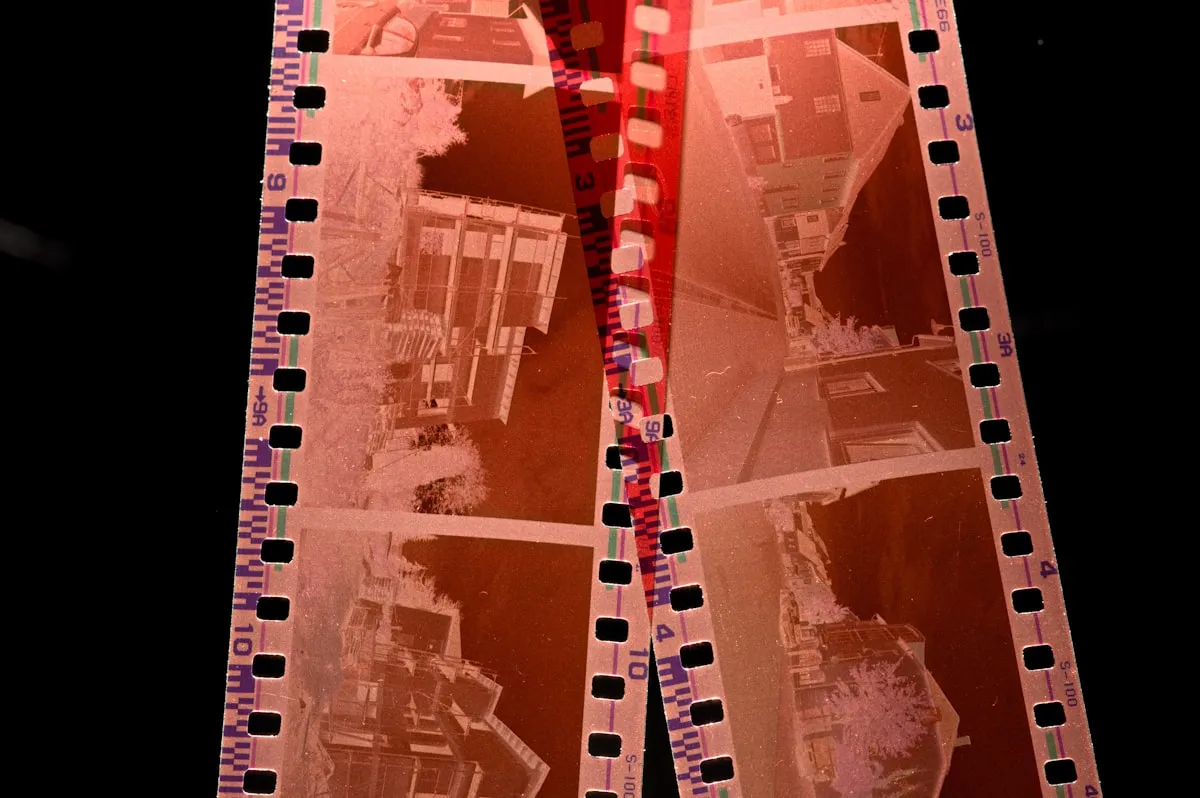
Black & White Developing: Step by Step
B&W is the easiest place to start. The chemicals are forgiving, the temperature requirements are relaxed (typically 20°C/68°F with some tolerance), and the process is straightforward.
1. Load the Film (Total Darkness)
Inside your changing bag, open the film canister (a bottle opener pries the cap off 35mm canisters), pull out the film, and feed it onto the developing reel. Once loaded, place the reel in the tank and secure the light-tight lid. From this point on, you can work in normal light. Practice with a sacrificial roll in daylight first to get comfortable with the reel mechanism.
2. Developer (5-12 Minutes)
Mix your developer to the correct dilution and temperature. Popular B&W developers include Kodak D-76, Ilford ID-11, HC-110, and Rodinal — each produces a different grain and contrast character. Pour the developer into the tank, start your timer. Agitate continuously for the first 30 seconds, then for 10 seconds every minute. When time is up, pour the developer out.
3. Stop Bath (30-60 Seconds)
Pour in stop bath (dilute acetic acid) to halt development immediately. Agitate continuously, then pour out. Plain water works in a pinch for B&W, but dedicated stop bath is cheap and more reliable.
4. Fixer (3-5 Minutes)
Fixer removes unexposed silver halide, making the image permanent and the film safe to view in light. Don't shortchange this step — underfixing leaves a milky residue on the negatives.
5. Wash and Dry
Rinse the film in running water for 5-10 minutes. The Ilford method is efficient: fill the tank, invert 5 times, drain; fill again, invert 10 times, drain; fill again, invert 20 times, drain. Add a few drops of wetting agent to clean water for a final soak, then hang the film to dry with clips in a dust-free space. Drying takes 2-4 hours. Once dry, cut into strips and store in archival sleeves.
C-41 Color Developing at Home
C-41 follows the same basic workflow as B&W, with one critical difference: temperature control. C-41 chemistry must be held at 38°C (100°F) with minimal deviation — a couple of degrees off and your colors shift noticeably. This sounds intimidating, but it's manageable with a simple water bath.
Fill a basin with water at 39-40°C and place your chemical bottles in it to bring them to temperature. Monitor with your thermometer. The developing time is typically 3.5 minutes — much shorter than most B&W processes.
CineStill Cs41 Simplified Kit is the beginner-friendly option: a two-bath process (developer and blix) that handles 16-24 rolls. Tetenal Colortec C-41 is a three-bath kit with slightly better color accuracy for those who want more control. Both are widely available and cost $1.50-2.50 per roll.
Common Mistakes to Avoid
- Inconsistent temperature: Less critical for B&W but essential for C-41. Use a water bath and check temperature before each pour. Don't guess.
- Over-agitation: Agitating too aggressively creates uneven development and surge marks along the sprocket holes. Gentle inversions — not cocktail-shaker violence.
- Under-fixing: Purple or milky negatives mean insufficient fixing time. You can re-fix after the fact, but it's better to fix for the full recommended time. When in doubt, add an extra minute.
- Drying dust: Specks on wet film bond permanently to the emulsion. Running a hot shower before hanging settles airborne particles.
- Touching the emulsion: Handle film by the edges only. Fingerprints on wet emulsion are permanent and heartbreaking.
Cost Breakdown: Home vs. Lab
For someone shooting four rolls of B&W per month: lab processing at $12 average per roll runs $576/year. Home processing costs roughly $70 in startup equipment (one-time), then $1.50/roll in chemicals — about $72/year after the first year. Add a flatbed scanner ($100-200 one-time) and the math still works heavily in your favor. The initial investment pays for itself by roll 8-10. After that, every roll is pocket change.
When to Use a Lab Instead
Home developing isn't always the right call. E-6 slide film (Velvia, Provia, Ektachrome) requires extremely tight temperature tolerances that most home setups can't reliably maintain. Irreplaceable shots — weddings, once-in-a-lifetime trips — deserve the peace of mind of professional handling. And lab-grade Noritsu or Frontier scanners produce results that consumer flatbeds struggle to match.
Use Pellica's lab finder to discover well-reviewed labs near you for the rolls that deserve professional treatment.
Track Your Development Process
Home developing adds variables to your photography: developer choice, dilution, time, temperature, agitation pattern. Tracking these alongside your exposure data lets you see how your process affects the final image. A film roll tracker keeps everything organized — film stock, camera, exposure settings per frame, and development notes all linked together.
After a few rolls, you'll start dialing in your preferred combinations. Maybe HC-110 at dilution B gives you the contrast you like with Tri-X, or maybe you prefer the smoother tones of D-76 for portraits on HP5. Use Pellica's light meter to nail exposure in the field, track your development recipe at home, and build a personal reference library that makes every roll more predictable than the last.