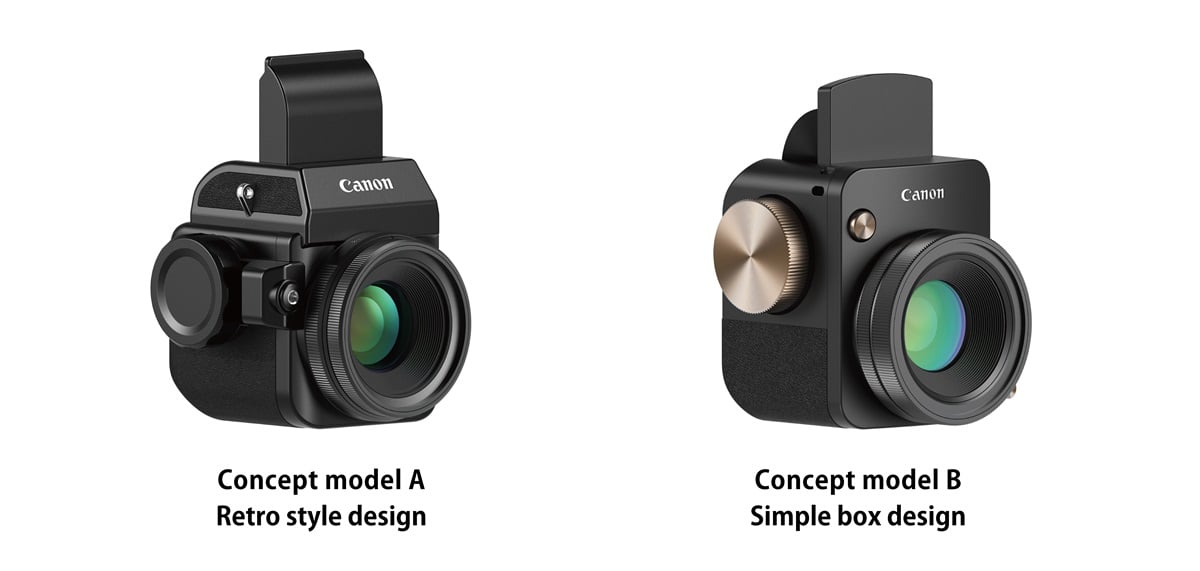
Canon showed up to CP+ 2026 in Yokohama with something nobody expected: an analog concept camera. Not a retro-styled mirrorless with vintage knobs, not a film simulation mode — an actual concept device built around the idea that less technology might produce better photographs. It's a box-style camera with a waist-level viewfinder, a deliberately low-resolution 6-megapixel sensor, and no rear screen at all. Canon is calling it a “slow photography” device, and depending on who you ask, it's either a genuine glimpse at the future or a beautifully designed marketing exercise.
Canon built a concept camera with a 6-megapixel sensor and no rear screen. They're calling it a “slow photography” device — and the film community is paying attention.
What the Camera Actually Looks Like
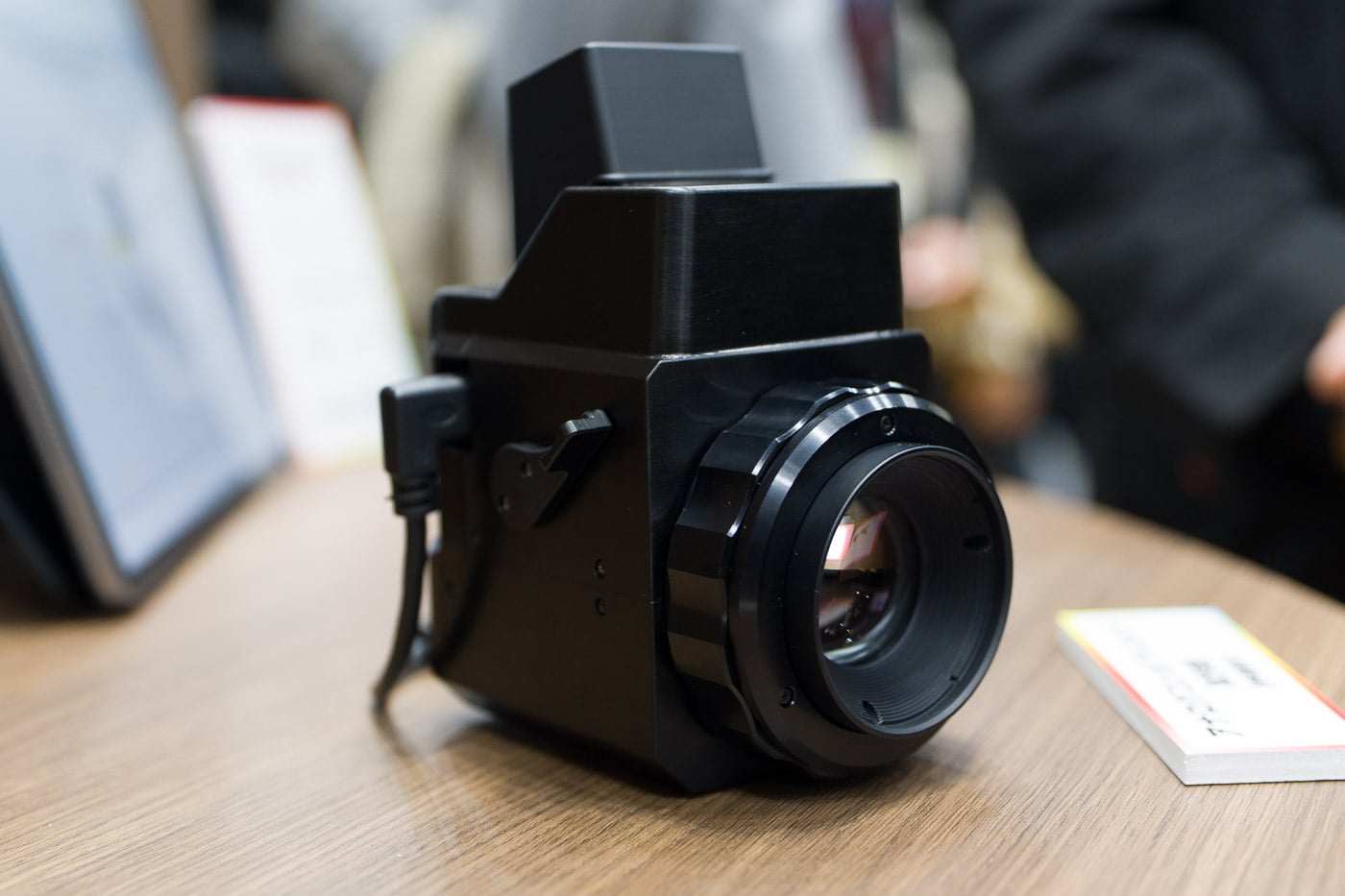
The design is striking. It's a compact box body — think Hasselblad 500 proportions scaled down to something pocketable. The top features a waist-level optical viewfinder that flips open, so you shoot by looking down into the camera rather than pressing it to your face. There are no dials or buttons cluttering the exterior beyond the essentials: a shutter release, an aperture ring, and a power switch.
The back of the camera is completely blank. No LCD, no EVF eyepiece, no menu button. You compose through the waist-level finder, set your exposure, and press the shutter. That's it. You don't see the image until you transfer it to a computer or phone. Canon designed this absence intentionally — without a screen to review images, there's no temptation to chimp after every shot, no deleting and reshooting, no pixel-peeping in the field.
The “Slow Photography” Philosophy
Canon's pitch is straightforward: modern cameras are too capable for their own good. A current mirrorless body shoots 40 frames per second, autofocuses on specific eyeballs, and lets you review, edit, and share before the moment is even over. That's extraordinary technology, but it can reduce photography to a reflex — point, burst, pick the best one later.
The concept camera reverses that. With a single-shot shutter, no autofocus (or at minimum, manual-focus-first design), and no rear screen, the photographer has to be present. You meter the light, set the exposure, compose carefully through the finder, and commit to the frame. Sound familiar? That's film photography's workflow, reproduced in a digital body.
This isn't a new idea — Leica has been selling simplicity at premium prices for years, and Fujifilm's X100 series proved that constraints sell. What's notable is Canon, the world's largest camera manufacturer, acknowledging that the analog shooting experience has value worth preserving. Even in concept form, that signals something about where the industry sees demand heading.
6 Megapixels — Why Less Might Be More
The 6-megapixel sensor is the spec that's generating the most debate. Modern Canon sensors push 45–85 megapixels. Six sounds absurd by comparison. But Canon's reasoning is deliberate: a 6MP file produces images around 3000 x 2000 pixels, which is enough for a sharp 10x15-inch print and more than sufficient for any screen. What it doesn't do is invite obsessive cropping and detail extraction. You frame the shot at capture or you don't get it.
Lower resolution also means smaller file sizes, less processing overhead, and a rendering quality that naturally resembles scanned film. Fine detail gets smoothed slightly. Grain-like noise appears at higher ISOs. Colors can be tuned to feel more organic. Several photographers who handled the concept at CP+ reported that the output “felt like film” in a way that no software filter achieves — because the constraint is baked into the hardware itself.
Whether 6MP is the right number or a provocation designed to start conversations is an open question. But the principle holds: not every photograph needs to resolve individual eyelashes.
Will Canon Actually Make It?
Canon has been explicit that this is a concept only. No price, no release date, no production commitment. CP+ is full of concept products that never reach shelves — companies use the show to test reactions and gauge interest. Canon is watching how people respond.
The community reaction has been genuinely split. Photographers who shoot film or crave simplicity are excited — finally, a major manufacturer validating the experience they already love. Skeptics point out that Canon has a long history of concept-stage products that go nowhere, and that a deliberately limited camera is a tough sell when the R-series mirrorless lineup already prints money.
The Fujifilm X100VI provides an interesting reference point. That camera proved that a relatively simple, fixed-lens design with strong aesthetics can generate enormous demand — demand Fuji still can't fully meet. Canon may be testing whether a similar hype cycle is possible with an even more minimal product. If the concept generates enough buzz, a production version (likely with more practical compromises, perhaps 12–16MP and an optional rear display) isn't out of the question.
What This Means for Film Photography
Canon building a digital camera designed to feel analog is the strongest validation film photography has received from a major manufacturer in years. It says that the analog experience — slow, intentional, limited — isn't just a nostalgic niche. It's a genuine market force that even Canon feels pressure to address.
For film shooters, the takeaway is simple: the aesthetic and philosophy you already practice aren't going anywhere. If anything, the growing interest in “analog feel” digital products expands the audience for actual analog photography. People who start with a slow digital camera may eventually pick up a film body, and they'll find a thriving ecosystem of labs, stocks, and community waiting for them.
Whether Canon produces this camera or not, the conversation it started matters. Every photographer — digital, film, or both — benefits when the industry acknowledges that faster and more isn't always better.
Track Your Process, Whatever You Shoot
The Canon concept camera and a 1970s SLR loaded with Tri-X have something in common: neither lets you review images in the field. That delayed feedback is the whole point — but it also means you need a way to remember what you did. What aperture, what shutter speed, what you were trying to achieve with each frame.
Pellica's film roll tracker captures that data as you shoot — exposure settings, GPS location, weather, and notes — so when your scans arrive (or when you finally transfer those 6MP files to your laptop), every image has context. The built-in light meter helps you nail exposure whether you're using a screen-less digital concept or a fully mechanical film camera. And the lab finder connects you with development services when your rolls are ready.
Intentional photography starts with paying attention to what you do. Tracking is how you turn that attention into lasting improvement.