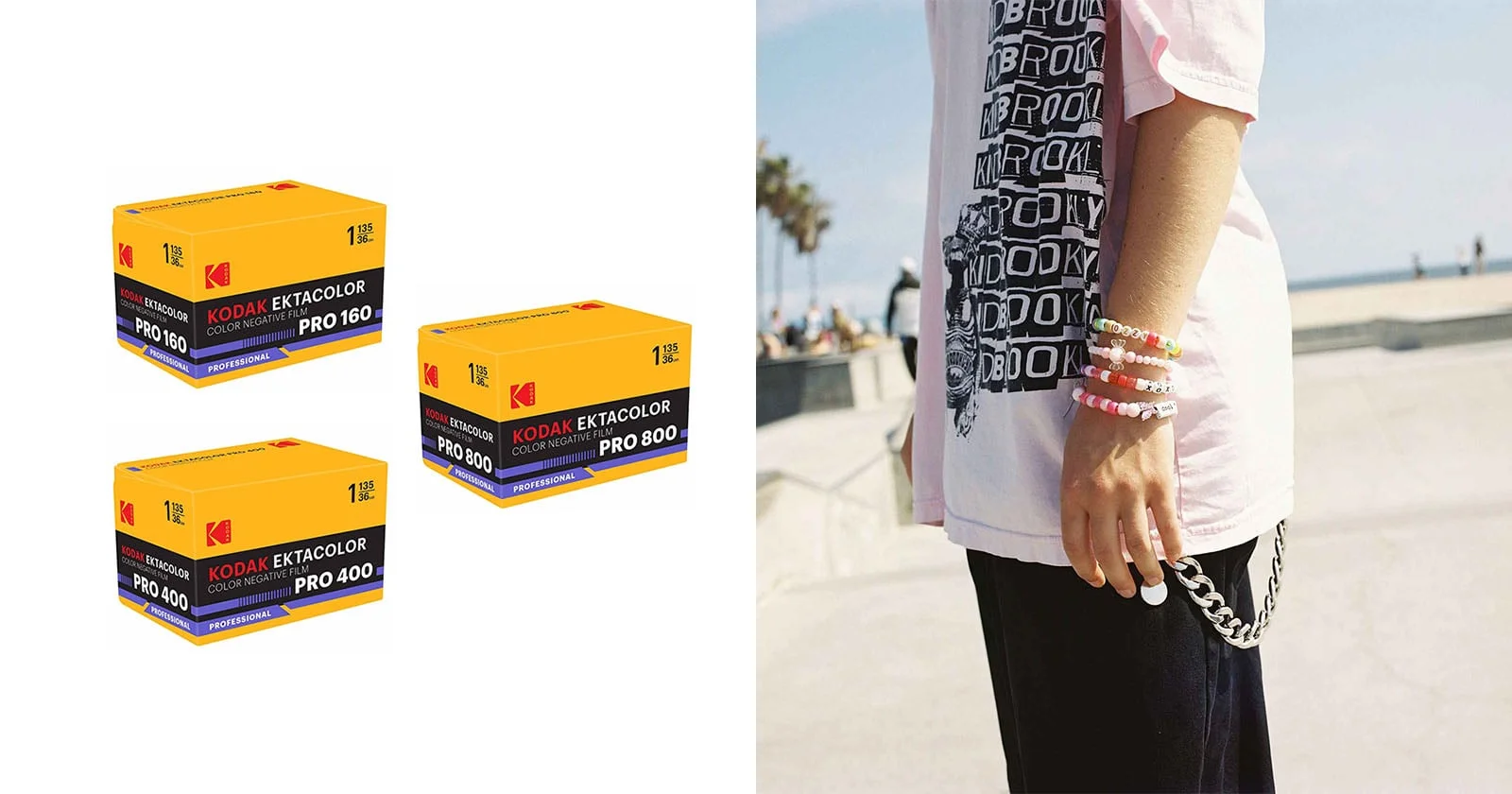
On March 24, 2026, Eastman Kodak made an announcement that sent the film photography community into a frenzy: Portra is dead. So is T-Max. Or rather, the names are dead. The emulsions live on under new branding — Ektacolor Pro and Ektapan — as Kodak completes the biggest rebrand in the history of photographic film. If you shoot Kodak professional stocks, the boxes on your shelf are about to look very different.
This is not a reformulation. It is not a discontinuation. It is a rename — the final chapter of Eastman Kodak's systematic effort to reclaim its entire film lineup from Kodak Alaris and reestablish direct ownership of the brand. But the choice of names is anything but arbitrary, and the implications go beyond what is printed on the packaging.
Portra and T-Max are gone as names. The emulsions remain identical — now called Ektacolor Pro and Ektapan, historic Kodak names revived after decades in the archive.
What Changed: The Full Mapping
The rebrand covers all remaining Kodak professional film stocks that were still distributed by Kodak Alaris. Here is the complete old-to-new mapping:
- Portra 160 becomes Ektacolor Pro 160
- Portra 400 becomes Ektacolor Pro 400
- Portra 800 becomes Ektacolor Pro 800
- T-Max 100 becomes Ektapan 100
- T-Max 400 becomes Ektapan 400
- T-Max P3200 becomes Ektapan P3200
These are the last Kodak films to transition away from Kodak Alaris distribution. Every other stock — Gold, UltraMax, Ektar, Tri-X, Ektachrome, and the Kodacolor line — had already moved to direct Eastman Kodak distribution between September 2025 and February 2026. Portra and T-Max were the final holdouts.
Why the Rename: The Kodak Alaris Separation
To understand why Kodak would rename its most recognizable professional stocks, you need to understand the corporate split. When Eastman Kodak filed for bankruptcy in 2012, its consumer imaging division was spun off into Kodak Alaris, a UK-based entity that took over packaging, marketing, and global distribution of Kodak-branded film. Eastman Kodak kept the factories in Rochester. Alaris kept the customer-facing brand.
The names “Portra” and “T-Max” belong to that Alaris era. They were trademarked, marketed, and built into the professional photography lexicon under Alaris's stewardship. As Eastman Kodak reclaims direct distribution, it is also reclaiming naming rights — and choosing to reach further back into its own history rather than carry forward brands associated with the post-bankruptcy period.
The pattern has been consistent. Kodacolor, Gold, UltraMax, Ektar, Tri-X, and Ektachrome all received new vintage-inspired packaging when they transitioned. The Portra and T-Max lines are simply the last to go through the process — and their rebrand is the most dramatic because the names are changing entirely, not just the box design.
The Heritage: Ektacolor and Ektapan
Eastman Kodak did not invent these names for 2026. Both Ektacolor and Ektapan are historic Kodak brands with deep roots in the company's photographic legacy.
Ektacolor dates back to 1947, when Kodak introduced Ektacolor Sheet Film as one of its first professional color negative materials. Over the following decades, the Ektacolor name appeared on color negative films, photographic papers, and chemical processing kits. It was the professional color brand before Portra existed — and in many markets, it was synonymous with studio and commercial photography through the 1970s and 1980s.
Ektapan has a shorter but equally significant history. Introduced in 1963, Ektapan 4162 was a fine-grain, medium-speed black and white sheet film designed for professional studio work and commercial reproduction. It was known for exceptional tonal range and smooth gradation — qualities that map directly onto what T-Max is valued for today. Reviving the Ektapan name for the T-Max emulsions is a deliberate nod to that lineage.
For photographers old enough to remember these names, the rebrand carries genuine nostalgic weight. For everyone else, it is a history lesson printed on a film box — and a signal that Eastman Kodak views its pre-bankruptcy identity as the one worth preserving.
Should You Worry? Same Emulsion, Different Box
The question on every Portra shooter's mind: will the film actually be the same? Eastman Kodak has stated explicitly that the emulsions are unchanged. Ektacolor Pro 400 is Portra 400 with a different name and new packaging. The manufacturing process, the chemical formula, and the Rochester production facility are identical.
This is consistent with how every other stock in the transition has been handled. When Gold 200 moved to direct Eastman Kodak distribution, the only change was the box. When Tri-X got new packaging, the film inside remained the same emulsion it has been for decades. There is no reason to believe the professional stocks will be treated differently.
That said, the community reaction has been mixed. Some photographers are confused by the name change and worry it signals deeper alterations. Others are nostalgic for the Ektacolor and Ektapan names and welcome the return to pre-Alaris branding. A vocal minority is simply annoyed at having to learn new product names for stocks they have been buying for years. All of these reactions are understandable. But the technical reality is straightforward: same emulsion, different label.
The real question worth watching is whether the formula stays the same long-term. Kodak now has complete vertical control — manufacturing, branding, and distribution all under one roof. That gives them the freedom to tweak emulsions without coordinating with a distribution partner. Whether that freedom leads to improvements, cost-driven reformulations, or no changes at all is something only time will reveal. For now, what is inside the box has not changed.
What Happens to Existing Portra and T-Max Stock
Kodak Alaris-branded Portra and T-Max will continue to appear on shelves until existing inventory is sold through. Retailers will gradually transition to the new Ektacolor Pro and Ektapan packaging as they restock. There is no recall and no expiration concern — a roll of Portra 400 manufactured last month and a roll of Ektacolor Pro 400 manufactured next month will produce identical results.
If you are the type of photographer who keeps empty film boxes (and many analog shooters do), this is a transition worth documenting. The Portra name has been in use since 1998 — twenty-eight years of one of the most recognized names in photography. Its final production run under the Portra label will eventually become a collector's footnote.
Track Your Rolls, Whatever the Box Says
Whether your roll says Portra 400 or Ektacolor Pro 400, the film inside produces the same results. What matters is how you expose it, where you develop it, and what you learn from each roll. A name change does not change your process — but it is a good reminder to keep track of what you shoot.
Pellica's film roll tracker lets you log every detail per frame as you shoot — film stock, exposure settings, camera body, and notes. As Kodak's lineup transitions, having a record of your rolls helps you compare results across the rebrand. The built-in light meter helps nail exposure on every frame, and the lab finder connects you with development services near you.
Names change. Emulsions evolve. Your notes are what stay.