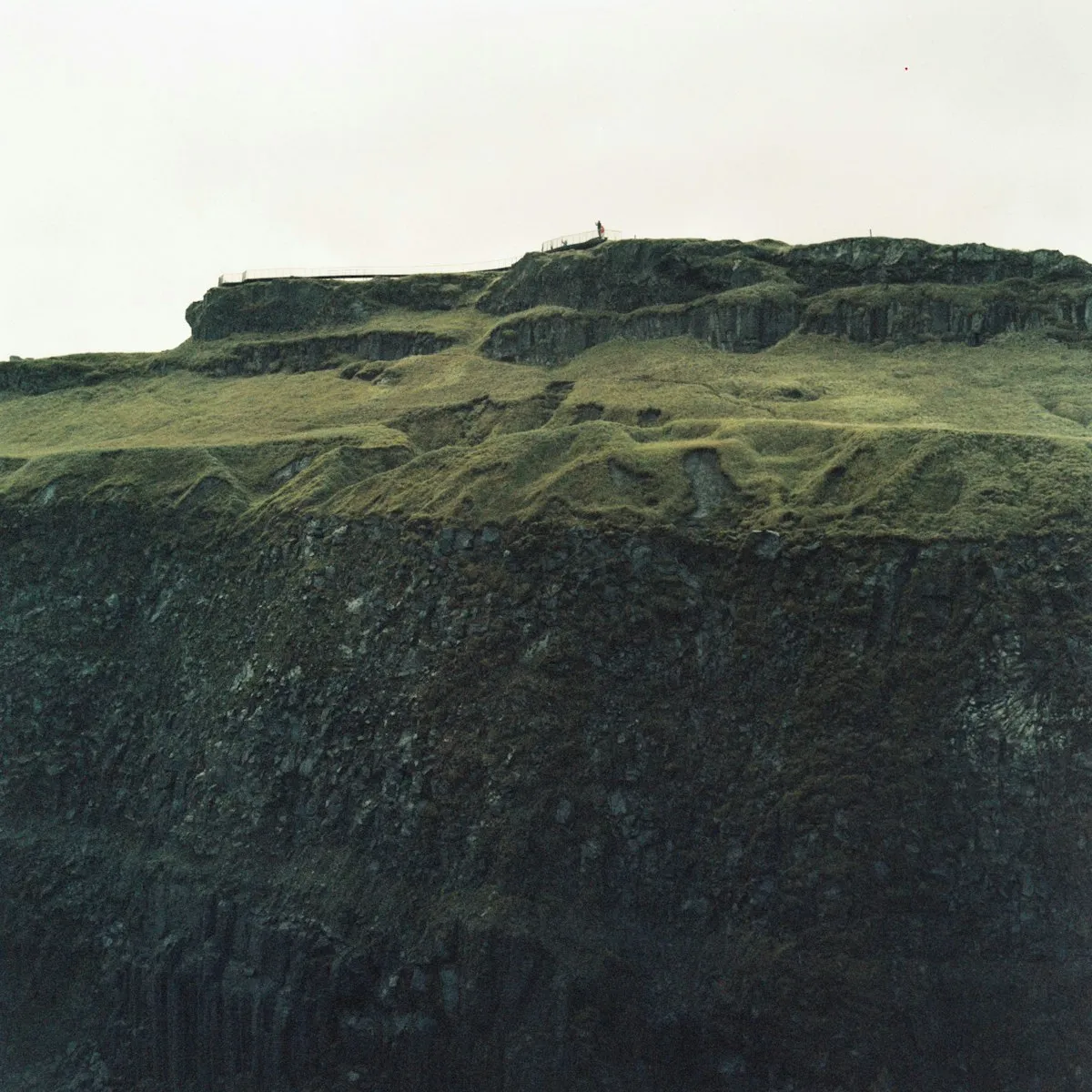
The first time you hold a medium format negative up to the light, you understand immediately why people deal with the weight, the cost, and the twelve-frame-per-roll math. The negative is enormous. A 6x7 frame dwarfs a 35mm slide — roughly four times the surface area — and the detail, tonal smoothness, and sense of depth are visible to the naked eye before you even put it on a scanner.
But 35mm isn't going anywhere. It's portable, affordable, and fast to shoot. Choosing between the two formats isn't about which is “better” — it's about what you're shooting, how you want to work, and what tradeoffs you're willing to accept.
Choosing between the two formats isn't about which is “better” — it's about what you're shooting, how you want to work, and what tradeoffs you're willing to accept.
The Basics: Negative Size
A standard 35mm frame measures 24x36mm. Medium format — also called 120 film, after the Kodak designation — uses a wider roll that produces significantly larger negatives. The exact frame size depends on the camera:
- 6x4.5 (645): The smallest medium format frame. Roughly 2.7x the area of 35mm. Gives you 15–16 frames per roll.
- 6x6: Square format. About 3.6x the area of 35mm. 12 frames per roll. The Hasselblad and Yashica TLR format.
- 6x7: The “ideal format” according to Pentax, who built an entire camera system around it. About 4.5x the area of 35mm. 10 frames per roll.
- 6x9: Panoramic by medium format standards. Nearly 6x the area of 35mm. Only 8 frames per roll.
More negative area means more light-gathering surface, finer perceived grain, smoother tonal transitions, and more detail. The physics are simple. The practical implications are significant.
The Medium Format “Look”
Beyond raw resolution, medium format has a visual quality that photographers describe as “3D pop” or “depth.” At equivalent framing, medium format lenses produce shallower depth of field because the longer focal lengths needed to cover the larger negative have inherently thinner planes of focus. A 110mm lens on 6x7 gives roughly the same field of view as a 50mm on 35mm — but the depth of field at f/2.8 is dramatically shallower.
The tonal gradations are smoother, too. Where 35mm grain can feel textured and present, medium format grain is finer relative to the image detail, so tonal transitions look continuous rather than stippled. Shadows roll off into darkness gradually. Highlights glow rather than clip. The overall impression is one of smoothness and presence — images that feel like they occupy physical space.
This is why medium format remains the preferred choice for high-end portrait, fashion, and landscape photography. The combination of shallow focus, smooth tonality, and resolving power produces images that hold up at very large print sizes and have a visual gravity that 35mm rarely achieves.
Cost Comparison
A roll of 120 Portra 400 costs roughly the same as a roll of 35mm Portra 400 — around $12–15 depending on the retailer. But that 120 roll gives you 10 to 16 frames instead of 36. Your per-frame cost is two to three times higher on medium format before you even factor in processing, which labs sometimes charge more for in 120.
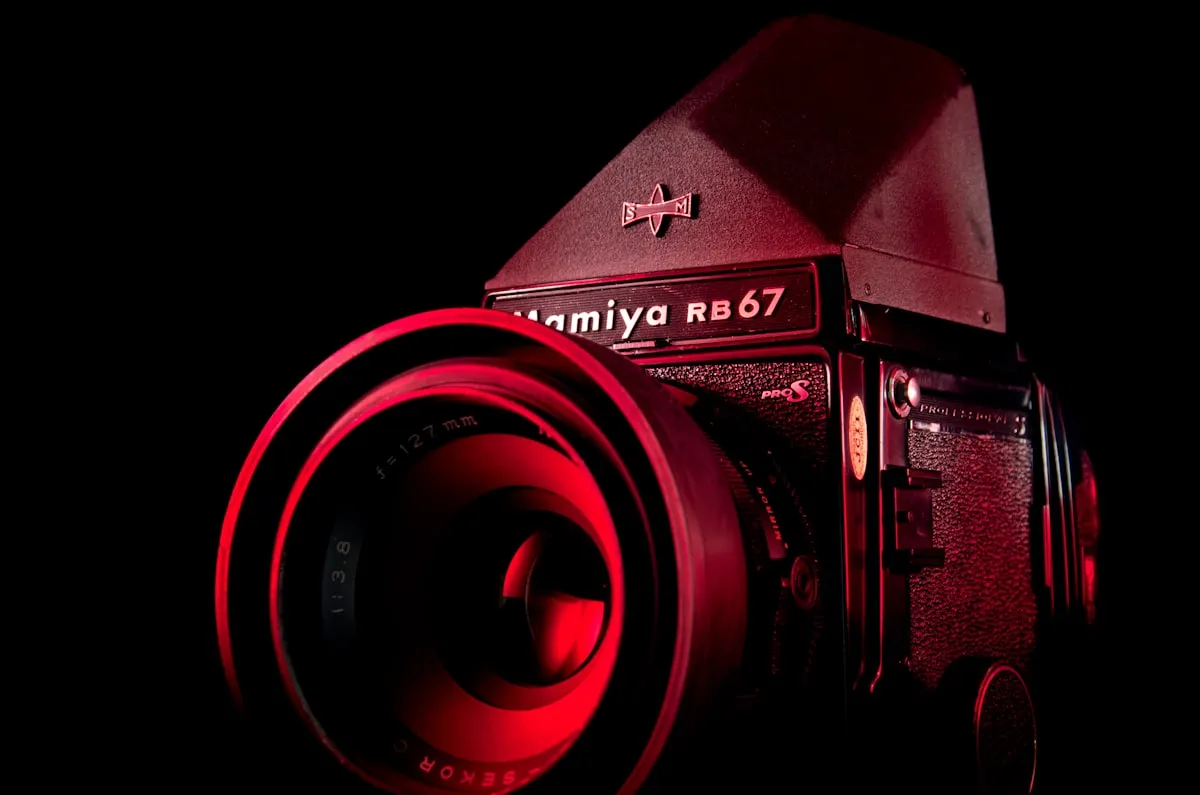
Cameras are a different equation. Some medium format bodies are surprisingly affordable on the used market. A working Mamiya RB67 with a lens runs $200–400. A Yashica Mat 124G TLR can be found for $150–250. The Mamiya 645 system starts around $200 for a body and standard lens. These prices rival or undercut popular 35mm cameras that have been inflated by hype.
The expensive end exists too, of course. A clean Hasselblad 500C/M with an 80mm Planar runs $500–1000. The Pentax 67 has jumped to $300–500 for a body as its cult status has grown. And Mamiya 7 rangefinders — if you want medium format portability — now command $1500 and up.
Popular 35mm Cameras
The 35mm ecosystem is massive. A few cameras that consistently appear in serious photographers' bags:
- Canon AE-1: Affordable, reliable, enormous FD lens selection. The default recommendation for a reason.
- Nikon FM2: Fully mechanical, titanium shutter, built to survive decades of professional abuse. Pairs with the entire Nikon AI/AI-S lens catalog.
- Pentax K1000: Pure manual operation. The teaching camera that never stops being useful.
- Leica M6: The rangefinder gold standard. Quiet, precise, absurdly expensive, and nothing else feels like it in your hands.
Popular Medium Format Cameras
Medium format cameras span a wider range of designs. Some quick profiles:
- Mamiya RB67 (~$200–400): A 6x7 studio monster. Rotating back, bellows focusing, enormous bright viewfinder. Weighs about 2.5 kg with lens. Not a walk-around camera — a tripod camera that produces spectacular images.
- Hasselblad 500C/M (~$500–1000): The icon. 6x6 square format, modular system with interchangeable backs, finders, and Zeiss lenses. It's been to the moon. Literally.
- Pentax 67 (~$300–500): A 6x7 SLR that handles like an oversized 35mm camera. The 105mm f/2.4 lens is legendary for portraits. Heavy, loud mirror slap, but the images have a three-dimensional quality that inspires devotion.
- Yashica Mat 124G (~$150–250): A twin-lens reflex that shoots 6x6 squares. Waist-level viewing, quiet leaf shutter, and a surprisingly sharp Yashinon lens. The most affordable entry into medium format.
- Mamiya 645 (~$200–400): The 645 format balances medium format quality with reasonable portability and frame count. Interchangeable lenses, finders, and film backs make it a flexible system.
Weight and Portability
This is where 35mm wins decisively. A Nikon FM2 with a 50mm lens weighs about 700 grams — light enough to carry all day without thinking about it. Throw it in a jacket pocket, sling it over a shoulder, walk for hours.
A Mamiya RB67 with lens weighs nearly 2.5 kilograms. The Pentax 67 is about 1.5 kg body-only. Even the relatively compact Mamiya 645 feels substantial compared to any 35mm SLR. Medium format cameras demand a bag, often a tripod, and a conscious decision to bring them. You don't grab an RB67 on your way out the door the way you grab a Canon AE-1.
When to Shoot 35mm
The 35mm format excels when speed, volume, and portability matter. Street photography, where you need to react in a fraction of a second. Travel, where weight and bulk are direct costs. Documentary work, where 36 frames per roll means fewer reloads during critical moments. Casual everyday shooting, where you want a camera on you at all times without planning around it.
35mm is also the practical choice when you're burning through film. At half the per-frame cost, you can experiment freely — bracket exposures, try unusual angles, shoot through a scene rather than agonizing over each frame. Volume builds skill faster than caution.
When to Shoot Medium Format
Medium format is the right tool when image quality takes priority over everything else. Landscape photography, where you want to resolve fine detail across a wide scene and print large. Studio portraits, where the shallow depth of field and tonal smoothness create images with unmistakable presence. Architecture, where the larger negative captures fine textures and straight lines with authority.
The slower pace of medium format — fewer frames, heavier gear, more deliberate composition — changes how you photograph. With only ten frames on a 6x7 roll, every press of the shutter carries more weight. You look harder, wait longer, and make more intentional decisions. Some photographers find that discipline improves their 35mm work too.
Shooting Both Formats
Plenty of photographers carry both. A 35mm camera for daily life — the walks, the errands, the moments that present themselves without warning. And medium format for projects — the planned portrait session, the weekend landscape trip, the work that you want to look its absolute best.
The two formats complement each other. 35mm keeps you shooting and building instincts. Medium format slows you down and forces precision. Moving between them keeps your photography from settling into autopilot. Some of the most interesting photographers working today shoot 35mm for personal work and medium format for client work, or vice versa.
Track Both Formats with Pellica
Pellica works with any film format — 35mm, 120, 110, large format, whatever you load into a camera. The film roll tracker adjusts frame counts based on the format you select, so a 6x7 roll shows 10 frames while a 35mm roll shows 36. Every frame gets the same per-shot logging: aperture, shutter speed, lens, notes, GPS, weather.
When you shoot both formats, tracking becomes especially valuable. You can compare the same scene shot on 35mm and medium format, see how the same film stock behaves at different negative sizes, and figure out which format your photography actually benefits from most. It's one thing to assume medium format is “better” — it's another to look at your own data and see whether the extra cost and weight translate into images you prefer. Find a lab that processes both 35mm and 120 film, and start building a library that spans formats.