In 1826, a man in Burgundy coated a pewter plate with bitumen of Judea, pointed a camera obscura out his window, and waited. Eight hours later, Nicéphore Niépce had captured the view from his estate in Saint-Loup-de-Varennes — rooftops, a tree, a barn, the faintest outline of sky. It was blurry, crude, and barely legible. It was also the first permanent photograph in history. Two hundred years later, France is throwing a party. The Ministry of Culture has designated September 2026 to September 2027 as the official Bicentenary of Photography — a year-long national program of exhibitions, commissions, and public events celebrating the medium that Niépce invented on French soil.
What Niépce Actually Did
The image is called Point de vue du Gras — “View from the Window at Le Gras.” Niépce spread a light-sensitive layer of bitumen on a polished pewter plate, placed it inside a camera obscura, and exposed it for roughly eight hours of direct sunlight. Where light struck the bitumen, it hardened. Where shadow fell, it remained soft and could be washed away with a solvent of lavender oil and white petroleum. The result was a permanent, fixed image — not a projection, not a fleeting shadow on a wall, but a physical record of light that could be held in one's hands.
Niépce called his process héliographie— sun writing. It was slow, impractical, and required conditions that would make any modern photographer weep. But it worked. For the first time in human history, the world could record itself without a painter's hand. That single plate, now preserved at the Harry Ransom Center in Austin, Texas, is the oldest surviving photograph. Every frame of film you have ever shot descends from it.
The Grand Palais Exhibition
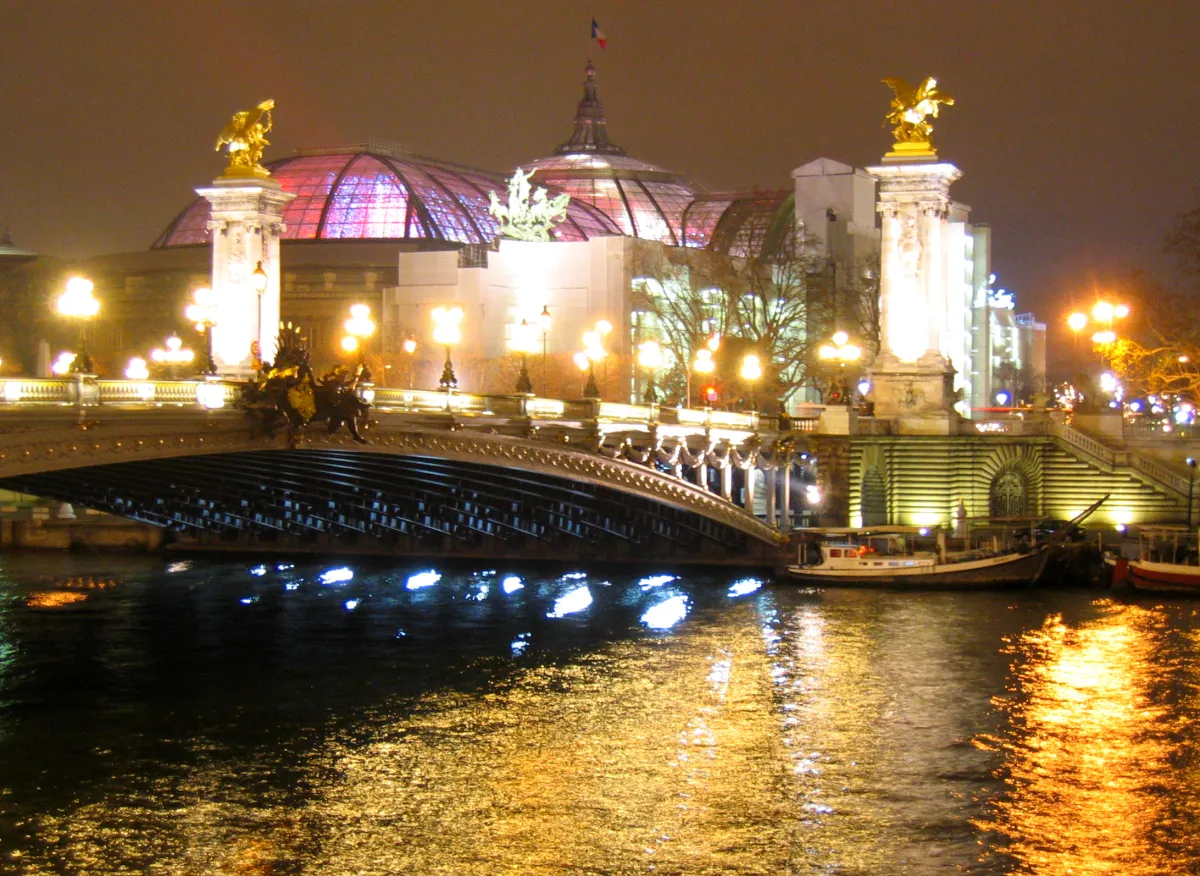
The centrepiece of the bicentenary is a major exhibition at the Grand Palais in Paris, produced in partnership with the Centre Pompidou and GrandPalaisRmn. Details are still being finalised as of early 2026, but the scope is broad: a survey of photography from Niépce's bitumen plates through daguerreotypes, calotypes, wet collodion, gelatin silver, colour transparency, and into the digital era — with a deliberate focus on the resurgence of analogue practices in the 21st century.
The Grand Palais reopened in 2024 after a six-year renovation. Its glass nave is one of the largest exhibition spaces in Europe, and hosting the bicentenary there sends a clear signal: France treats photography not as a niche art form but as national heritage, on the same level as painting, sculpture, and architecture. If you are planning a trip to Paris between autumn 2026 and summer 2027, this is the show to build your itinerary around.
Every frame of film you have ever shot — every roll of Portra, every push-processed Tri-X, every expired slide stock from a flea market — traces its lineage to a pewter plate in Burgundy and eight hours of patience.
Chalon-sur-Saône and the Niépce Museum
Nicéphore Niépce was born in Chalon-sur-Saône, and the city has maintained a museum in his name since 1972. For the bicentenary, the Musée Nicéphore Niépce is mounting a dedicated exhibition in partnership with the Bibliothèque nationale de France (BnF), drawing on one of the world's deepest institutional collections of early photographic processes.
Chalon-sur-Saône is a two-hour TGV ride south of Paris. The museum itself is small but fiercely focused: its permanent collection covers the technical evolution of photography from Niépce's era through the present, including original cameras, plates, and prints that rarely leave storage. The bicentenary exhibition will bring many of these objects into public view for the first time in years. For anyone interested in the physical, chemical roots of the medium — not just the images but the materials that made them — this is a pilgrimage.
International Celebrations
The bicentenary is not confined to France. In Milan, the MUDEC museum hosted “100 Photographs to Inherit the World” from March to June 2026, a show built around the idea that photography is a collective inheritance — a visual commons that belongs to everyone. Additional international exhibitions and events are expected throughout 2026 and 2027, with institutions in Europe, North America, and Asia preparing programmes linked to the French Ministry's bicentenary label.
The Ministry has also launched a call for projects under the “Bicentenary of Photography” label, inviting cultural institutions, galleries, festivals, and independent artists to propose events that engage with the history, present, and future of the medium. Approved projects receive official labelling and inclusion in the national programme. This is not a closed, top-down celebration — France is actively inviting the photographic community to participate.
Why This Matters for Film Shooters
There is a temptation to treat the bicentenary as a historical curiosity — a museum affair for academics and archivists. But the timing is not accidental. 2026 is being called the “Year of Analogue” by a growing number of publications, communities, and manufacturers. Film sales have climbed steadily for a decade. New cameras are entering the market for the first time in years. Labs are reopening. The medium is not just surviving — it is expanding.
The bicentenary frames that expansion in its proper context. Film photography is not a revival. It is a continuation. The chemical process that Niépce pioneered in 1826 is the same fundamental mechanism at work every time you load a roll of silver halide emulsion into a camera body: light hits a sensitised surface, and an image forms. Two hundred years of refinement have made the process faster, sharper, and more predictable, but the principle has not changed. When you shoot film in 2026, you are participating in the longest unbroken photographic tradition in existence.
That is worth celebrating. Not with nostalgia, but with the understanding that every roll you shoot is a link in a chain that stretches back to a window in Burgundy.
Two Centuries of Photography, One App for Your Rolls
Niépce kept meticulous notes on his experiments — exposure times, chemical mixtures, plate preparations. Two hundred years later, the instinct to document the process alongside the image remains the mark of a serious photographer.
Pellica's film roll tracker lets you log every detail per frame as you shoot — film stock, camera body, exposure settings, and notes. The built-in light meter helps nail exposure before you commit a frame to silver, and the lab finder connects you with development services near you when your rolls are ready.
The medium is two centuries old. The discipline of tracking what you shoot is as old as the medium itself. The tools have simply gotten better.