
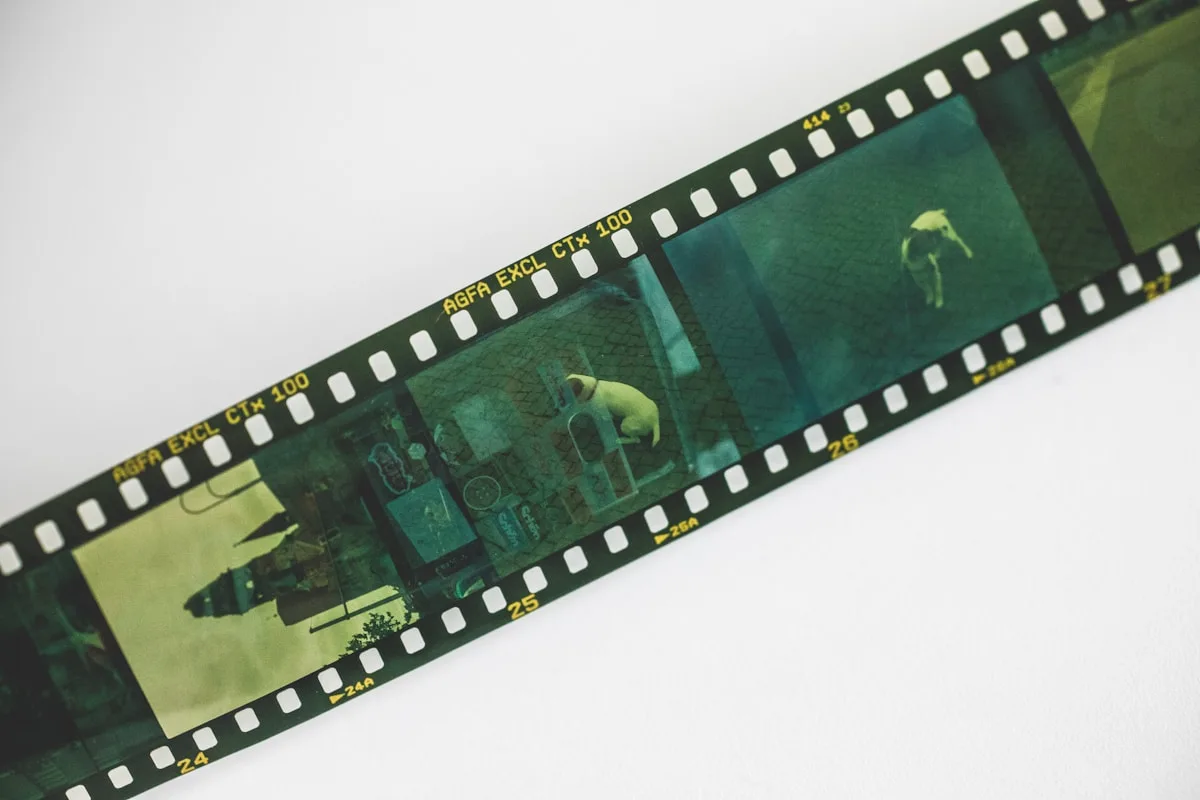
On March 15, 2026, the 98th Academy Awards confirmed what cinematographers have been saying for years: film is not a relic. Six of the ten Best Picture nominees were shot on photochemical film — 65mm IMAX, VistaVision, and 35mm — and the evening's biggest technical honor, Best Cinematography, went to Sinners, captured on IMAX 65mm film. Autumn Durald Arkapaw became the first woman ever to win the award, and she did it on celluloid. For still photographers who shoot film, the message from Hollywood couldn't be clearer: analog is not nostalgia. It's a deliberate creative choice — and the world's most prestigious film awards just validated it back-to-back.
Six of ten Best Picture nominees were shot on film. The Best Cinematography winner was captured on IMAX 65mm. Hollywood isn't returning to film out of sentiment — it's choosing it for the look.
The Numbers: Film's Dominance at the 98th Oscars
Let the lineup speak for itself. Of the ten films nominated for Best Picture, six were shot on photochemical film stock. VistaVision alone appeared in three nominees — a format originally developed by Paramount in the 1950s, now experiencing a genuine production renaissance. The variety of film formats represented is just as striking: IMAX 65mm for Sinners, VistaVision for several others, and 35mm Kodak negative for entries like Sentimental Value.
The cameras tell their own story. Sentimental Value was shot on the ARRICAM LT loaded with 35mm Kodak stock. Bugonia used the rare Wilcam W11, a VistaVision camera that produces an image area roughly three times the size of standard 35mm. Jay Kelly relied on the Panavision Panaflex Lightweight II, a camera that first shipped in the 1980s and still delivers images that digital sensors struggle to replicate. These are not museum pieces pressed into service for effect — they are working tools chosen because they produce a specific visual result.
This wasn't a one-off, either. At the 2025 Oscars, films shot on photochemical stock also won Best Picture and Best Cinematography. Two consecutive years of film dominance at the highest level of the industry is not a trend. It's a statement.
Autumn Durald Arkapaw and the IMAX 65mm Look
Autumn Durald Arkapaw's win for Sinners is significant on multiple levels. She is the first woman to receive the Best Cinematography Oscar in the award's 98-year history — a milestone that speaks to long-overdue change in the industry. But the technical dimension matters too. She chose IMAX 65mm film, one of the most demanding formats in existence.
Shooting IMAX 65mm means working with cameras that weigh over 45 kilograms, magazines that hold only a few minutes of film, and a negative so large that it resolves detail no digital sensor currently matches. Every reload is a production event. Every frame costs real money. The format demands absolute precision from the entire camera department — and it rewards that precision with an image quality that audiences can feel even if they can't articulate why.
Durald Arkapaw's choice to shoot Sinners on this format, and the Academy's decision to honor that work, reinforces a point that film photographers understand intuitively: constraints produce better art. When every frame costs something, you make every frame count.
Track this in the app: Film Roll Tracker
VistaVision's Unlikely Comeback
Perhaps the most surprising subplot of the 2026 Oscars is VistaVision's presence in three Best Picture nominees. The format runs standard 35mm film horizontally through the camera gate, producing a negative roughly 37mm × 25mm — about three times the area of a conventional 35mm frame. The result is dramatically finer grain, richer tonal gradation, and a depth of detail that approaches medium format still photography.
Paramount developed VistaVision in 1954 as a widescreen competitor. It faded from mainstream use by the early 1960s, surviving primarily in visual effects work. But a handful of cinematographers have revived it for principal photography, attracted by the format's unique combination of 35mm workflow convenience and large-format image quality. The Wilcam W11, used on Bugonia, is one of the few cameras still capable of shooting VistaVision, making these productions technically rare as well as artistically distinctive.
For still photographers, VistaVision's comeback is a useful analogy. It demonstrates that older, overlooked formats can deliver results that newer technology doesn't automatically surpass. Anyone who has held a 6x7 medium format transparency up to a lightbox knows this feeling already.
Why This Matters for Still Photography
Here is the connection most coverage misses: movie film and still photography film share the same chemistry. The 35mm format is physically identical — the same 135 cartridge width, the same perforations, the same emulsion technology. The primary difference between motion picture stock and still photography stock is the remjet backing that cinema film uses for anti-static and anti-halation purposes. Strip that layer away (as CineStill does with Kodak Vision3 stocks), and you can shoot motion picture emulsions in any 35mm still camera.
The shared chemistry goes deeper than format. Kodak Vision3 500T, the stock used in countless Hollywood productions, is the same emulsion base that CineStill 800T is built on. When a cinematographer chooses Kodak film for a Best Picture nominee, they are validating the same chemical science that produces your Portra 400 or Ektar 100. The silver halide crystals don't know whether they're inside a Panavision camera or your Nikon FM2.
Hollywood's continued investment in photochemical acquisition also supports the manufacturing ecosystem that still photographers depend on. Film production is a volume business — Kodak needs motion picture demand to justify keeping coating machines running, and those same machines produce the still photography stocks the analog community relies on. Every major film shot on celluloid is indirect support for the continued availability of Portra, Tri-X, and Ektachrome.
Not Nostalgia — Intentionality
The easy narrative is that film is a retro trend, a sentimental throwback driven by aesthetics and social media appeal. The Oscars tell a different story. Cinematographers like Durald Arkapaw aren't choosing IMAX 65mm because it's fashionable. They're choosing it because no other acquisition medium delivers the same image. The tonal response of silver halide emulsions, the way film handles highlights without clipping, the organic grain structure that adds texture without noise — these are measurable, reproducible qualities that digital processing can approximate but not duplicate.
The same logic applies to still photography. When you load a roll of Portra 800 into a mechanical camera, you are not performing nostalgia. You are choosing a medium with specific characteristics: a fixed number of exposures that demand intentionality, a tonal curve that handles mixed lighting gracefully, and a workflow that separates capture from review. These are the same reasons Hollywood keeps coming back to film, and they are the same reasons the analog still photography community continues to grow.
Two consecutive years of film dominance at the Academy Awards is more than a cultural moment. It is industrial validation of a medium that critics have been declaring dead since the early 2000s. Film is not dying. It is, by every available metric, thriving — and the most competitive creative environment on the planet just proved it.
Track Every Frame That Counts
The cinematographers who won Oscars on film don't guess their exposure settings. They meter meticulously, log every camera setup, and maintain detailed records of stock, lighting ratios, and lens choices. That discipline is what separates a good image from a great one — and it applies to still photography just as much as it applies to motion pictures.
Pellica brings that same rigor to your film photography workflow. The film roll tracker lets you log every exposure — aperture, shutter speed, lens, lighting conditions, and notes — so that when your negatives come back from the lab, you know exactly what produced each frame. The built-in light meter helps you nail exposure in the field, whether you're shooting Portra in open shade or pushing Tri-X under tungsten.
Hollywood's best cinematographers treat every frame of film as precious. Your photography deserves the same attention. Start tracking what you shoot, and watch your craft improve.