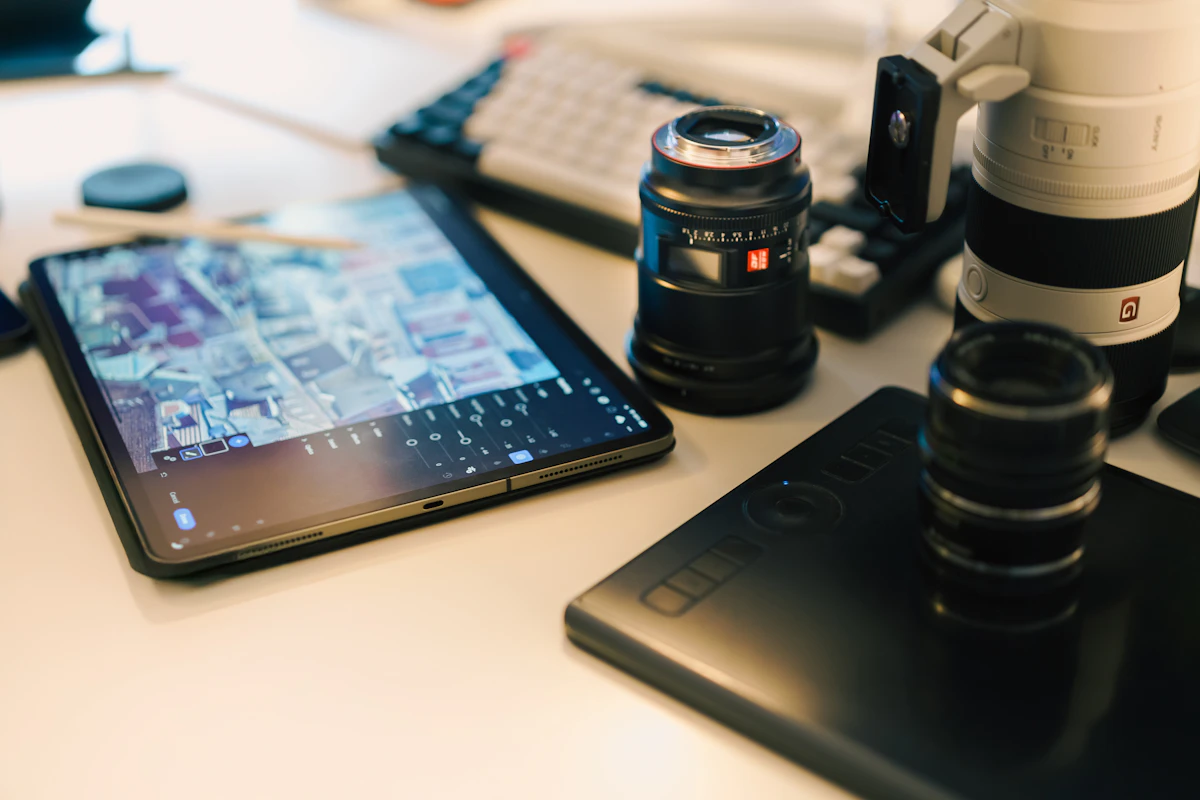
VSCO just did something nobody expected them to do in 2026: they brought back their Lightroom film presets. If you weren't shooting digital back in 2013–2018, you might not understand why this is a big deal. VSCO Film was the gold standard for digital film emulation — meticulously profiled presets that attempted to replicate the look of real film stocks in Adobe Lightroom. When VSCO discontinued the pack in 2019 to focus on their mobile app, photographers were furious. Forum threads turned into eulogies. People hoarded installer files like contraband. Seven years later, the presets are back, and the new pack includes emulations of film stocks that no longer exist.
Digital photographers pay to make their photos look like film. Film photographers already have the real thing. The irony has never been sharper.
What's Actually in the New Pack
The 2026 VSCO Film collection includes profiles for stocks that were already rare or discontinued when the originals shipped — and several that are now completely gone. Fujifilm Neopan 1600, discontinued in 2015, gets a dedicated profile. There are multiple Kodak Portra variants (160, 400, and 800), all three of Kodak's Ektar renditions, and a handful of classic black & white emulations including Ilford HP5+, Kodak Tri-X, and Fuji Acros. The pack also adds newer profiles for stocks like Kodak Gold 200 and Fujifilm Superia, which have become the entry points for new film shooters.
Technically, the profiles have been rebuilt from scratch. VSCO says they re-profiled each stock against modern camera sensors (the original presets were calibrated for DSLRs from a decade ago), so the color science should be tighter on current mirrorless bodies. They're shipping as both Lightroom Classic profiles and Lightroom CC presets, with Camera Raw support. Pricing sits at around $59 for the full bundle — significantly cheaper than the original packs, which sold individually at $59–$119 each.
The Irony Nobody's Talking About
Here's what strikes me about this whole thing. VSCO built a business emulating the look of film stocks like Neopan 1600. That stock was discontinued. Fujifilm no longer makes it. The chemistry, the specific silver halide crystal structure, the unique spectral sensitivity of that emulsion — gone. And now VSCO is selling a digital approximation of a product that can't be made anymore. They're emulating a ghost.
This isn't a criticism of VSCO — they're responding to genuine demand, and the presets are well-made tools. But it highlights an uncomfortable truth about where the photography industry stands: the aesthetic standard, the reference point for “good” color and tone, remains film. Not digital. Digital photographers don't buy presets that make their photos look more digital. They buy presets that make their photos look like Portra 400 or Tri-X 400.
Meanwhile, if you're shooting actual film, you already have the real thing. No profile needed. Load a roll of Portra 400 into your camera, meter correctly, and the results are Portra 400 — not an approximation, not an emulation, the actual photochemical process that everyone else is trying to fake.
Why the Film Look Can't Be Fully Replicated
If you've ever compared a VSCO preset to a real film scan, you already know the gap exists. The question is why. It comes down to physics. Film captures light through a chemical reaction in layered silver halide emulsions. Each grain is three-dimensional, randomly distributed, and responds to light in a non-linear way. Highlights compress gradually (the famous “shoulder” of the characteristic curve). Shadows retain detail with a gentle roll-off. The reasons film looks different from digital are baked into the medium itself.
A digital sensor captures light on a flat grid of photodiodes. The response is linear until it clips — highlights hit a wall and blow out hard. Noise is grid-aligned and uniform, not random and organic like grain. A Lightroom preset can bend the tone curve, shift colors, and add simulated grain, but it's applying those adjustments to a fundamentally different capture. It's makeup, not genetics.
That said, presets have gotten remarkably good. The new VSCO profiles nail the general color palette and tonal feel of their target stocks. For social media and web use, most viewers won't notice the difference. But print a VSCO Portra preset next to a real Portra scan at 11x14 inches, and the distinction is obvious. The digital file looks processed. The film scan just looks like a photograph.
Presets as Learning Tools
I don't want to be dismissive of presets entirely, because they serve a genuine purpose beyond imitation. For photographers curious about film but not yet ready to commit, presets offer a way to explore what different stocks look like. Slapping VSCO's Tri-X emulation on a digital file teaches you something about contrast, grain structure, and tonal range — it shows you the ballpark, even if it doesn't take you all the way there.
Presets also help digital photographers develop an eye for color. When you toggle between Portra 160 and Portra 400 emulations, you start noticing how warmth, saturation, and highlight handling differ. That awareness transfers directly to real film when you eventually try it. Many photographers I know started with VSCO presets, fell in love with the Portra look, and then bought an actual camera and a five-pack of Portra because they wanted the real version of what they'd been faking.
So yes, presets can be a gateway. The problem is when the gateway becomes the destination — when photographers treat the emulation as equivalent to the real thing and never take the next step.
Film Grain Searches Up 31% — What the Data Says
The VSCO relaunch isn't happening in a vacuum. Envato recently reported that searches for “film grain” assets on their platform increased 31% year-over-year. Film-style LUTs for video editing are among the top-selling creative assets. Adobe's own data shows film simulation presets consistently ranking in the top search terms inside Lightroom's Discover panel.
The demand for the film aesthetic isn't declining. It's accelerating. And it's no longer confined to still photography — filmmakers, content creators, and even brand designers are chasing the organic, textured look that film provides naturally. The entire creative industry is telling you something: film's visual language won the argument. Decades after digital cameras replaced film bodies, the look that everyone wants is still analog.
This Isn't a Fad
Every few years, someone declares the film revival over. They point to price increases, discontinuations, or supply constraints as evidence that analog photography is dying again. And every few years, the numbers prove them wrong. Kodak has restarted production lines. Ilford is expanding. New film stocks are being launched by smaller manufacturers. Camera companies are prototyping analog-inspired digital bodies. And now VSCO, seven years after walking away from film presets, has come back to them.
When digital companies build their products around emulating film, that tells you where the aesthetic authority lies. Film isn't a trend cycling through. It's the reference standard that digital tools keep trying to reach. The VSCO relaunch doesn't threaten film photography — it validates it.
When the entire digital editing industry builds products around making photos look like film, that tells you exactly where the aesthetic authority lies.
Track What the Presets Can't Replicate
VSCO can approximate the color palette of Portra 400, but it can't give you the experience of shooting it. The discipline of 36 frames per roll. The weight of a manual-focus lens. The moment between pressing the shutter and seeing the result, where the image exists only in your memory and your notes.
Pellica's film roll tracker captures the data that makes that experience meaningful — which stock you loaded, your exposure settings, GPS coordinates, and shooting notes for every frame. When your scans come back from the lab, you can match each image to the decisions that created it. That feedback loop is how you learn what Portra actually does at golden hour, or how Tri-X handles fluorescent light — things no preset can teach you.
Film's look will always be worth emulating. But film's process — the intentionality, the limitation, the direct connection between photographer and material — that's worth experiencing firsthand.