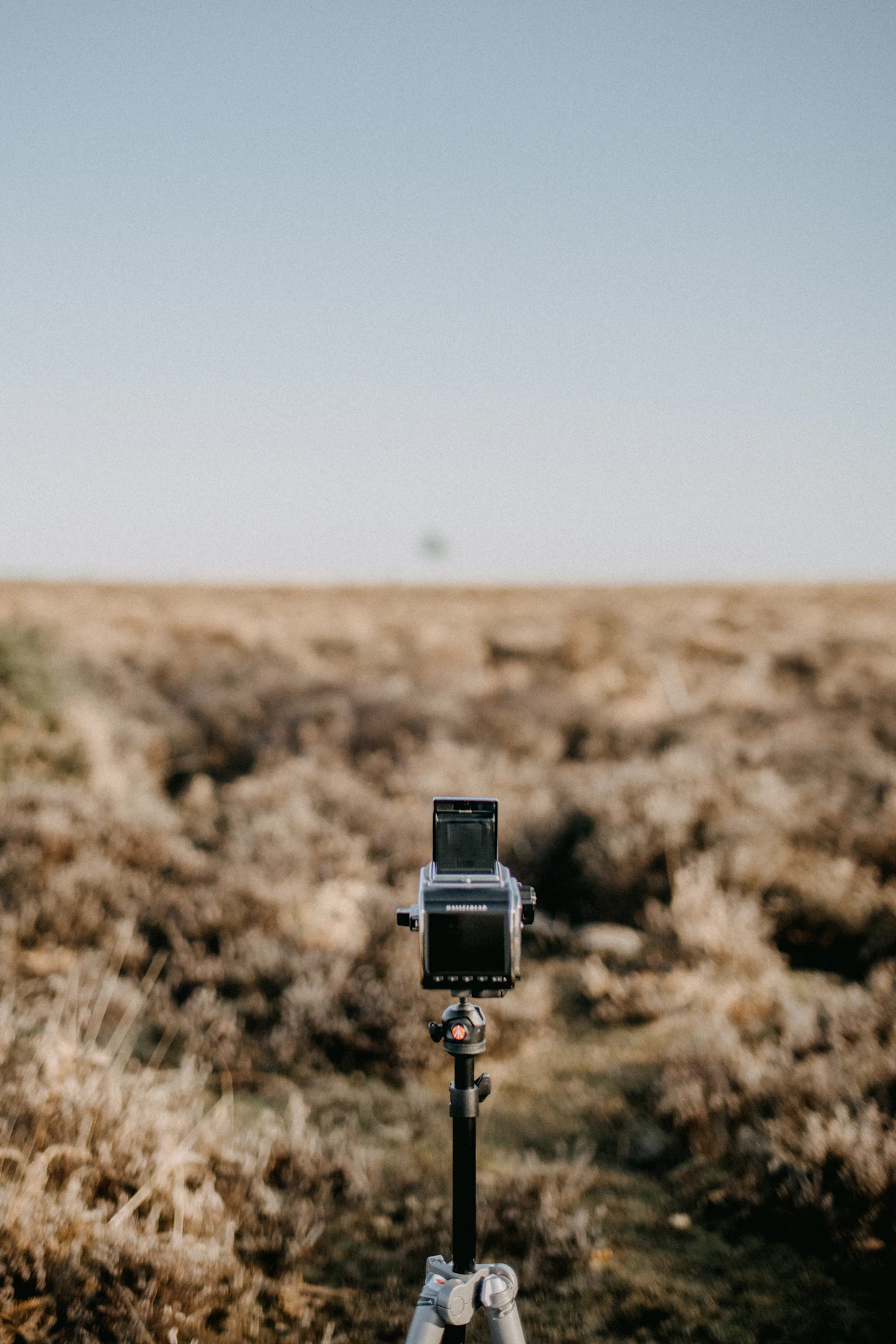
The big camera manufacturers have spent the last decade ignoring film photographers. Canon showed a concept at CP+, Pentax released the 17, and that's about it for major brands taking analog seriously. But while Nikon and Sony have zero interest in film bodies, a different kind of maker has stepped in: independent engineers and designers running Kickstarter campaigns to build cameras that the industry won't. Two projects launching in early 2026 are particularly worth watching — not because they're perfect, but because they're solving problems nobody else is even attempting.
Indie makers are building the cameras that major brands refuse to. Two Kickstarter projects are pushing film formats in directions nobody expected.
BeerPAN: A 35mm Panoramic SLR
The BeerPAN launched on Kickstarter in February 2026 with a premise that sounds like a fever dream: a panoramic SLR camera that shoots on standard 35mm film and accepts Bronica Zenza ETR medium format lenses. Yes, you read that correctly. Medium format glass on a 35mm body, producing true panoramic images across the full width of the film strip.
The concept makes more sense than it initially sounds. By using a wider-than-normal gate on the 35mm film plane and pairing it with lenses designed to cover a much larger image circle (the Bronica ETR system was designed for 6x4.5 medium format), the BeerPAN captures a panoramic frame that extends beyond the standard 24x36mm area. The result is a true in-camera panoramic image — no cropping, no stitching, no software. The panorama is baked into the negative.
At a base price of approximately €660, the BeerPAN is not cheap by Kickstarter camera standards, but it's remarkably affordable for what it claims to deliver. A Hasselblad XPan — the gold standard for 35mm panoramic photography — routinely sells for $4,000 to $6,000 on the used market, and those prices keep climbing. If the BeerPAN delivers even 70% of the XPan experience at 15% of the cost, it fills a genuine gap.
Who Is This For?
Landscape photographers, primarily. The panoramic format naturally suits wide vistas, cityscapes, and environmental portraits. Street photographers who want a wider perspective without the distortion of ultra-wide lenses could find it interesting too. And anyone who has lusted after an XPan but couldn't justify the price now has a realistic entry point into panoramic film photography.
The Bronica ETR lens compatibility is a smart choice. ETR lenses are well-regarded optically, widely available on the used market, and reasonably priced. A good Zenzanon MC 75mm f/2.8 can be found for under $200. That said, you're working with manual focus lenses designed for medium format, which means they're larger and heavier than typical 35mm glass. The BeerPAN is not going to be a pocket camera.
The Risks
Shipping is estimated for December 2026, which in Kickstarter terms means “sometime in 2027 if things go well.” Manufacturing a precision optical instrument — which is what a camera with a proper lens mount and film transport mechanism is — involves tolerances that are easy to design on a computer and notoriously difficult to hold in production. Film flatness across a wider-than- normal gate, lens registration distance accuracy, light seal integrity — these are all potential failure points.
The project creators appear to have working prototypes, which is more than many Kickstarter camera projects can claim. But prototype-to- production is where most hardware campaigns struggle. Back this if the concept excites you and you can afford to wait — and potentially lose — your investment. Do not back it if you need a reliable panoramic camera by a specific date.
VZ-6617: The Camera That Changes Format Mid-Roll
If the BeerPAN is ambitious, the VZ-6617 by Exposing Engineering is audacious. Launching on Kickstarter on April 14, 2026, it's a medium format camera with a 3D-printed variable zone film gate that can switch between 6x6 and 6x17 formats on the same roll of 120 film. Mid-roll. Without rewinding. Without wasting frames.
Let that sink in. You're shooting square 6x6 frames through the streets of Lisbon, you turn a corner and see a riverfront panorama that demands a wider canvas, and you switch the camera to 6x17 mode right there. The next frame is a panoramic spanning nearly three times the width of the previous one. Then you switch back to 6x6 for the next shot. All on the same roll.
The mechanism is a variable-width film gate — essentially a physical mask in front of the film plane that can expand or contract to change the exposed area. The 3D-printed construction keeps manufacturing costs down while allowing the precision needed for consistent frame spacing. It's a genuinely clever piece of engineering that solves a real problem: medium format photographers have always had to commit to a format for an entire roll (or carry multiple film backs, which is expensive and bulky).
Switch from 6x6 to 6x17 panoramic mid-roll, on the same camera, without wasting a frame. That's the kind of innovation only indie makers are attempting.
The Format Flexibility Angle
The ability to mix formats on a single roll isn't just a novelty — it changes how you think about a shoot. With a traditional medium format camera, you choose your format before loading film. Shooting 6x6? You get 12 frames per roll of 120. Shooting 6x17? You get 4. That trade-off forces you to plan ahead and sometimes means carrying two bodies or backs.
The VZ-6617 eliminates that constraint. A roll of 120 becomes a flexible canvas where you allocate frames to formats based on what the scene demands, not what the camera dictates. Three 6x17 panoramics and six 6x6 squares on the same roll? Possible. The frame count per roll becomes variable depending on your mix of formats.
For travel photographers especially, this is compelling. Instead of packing a Hasselblad for square portraits and a separate panoramic body for landscapes, you carry one camera that does both. Fewer bodies means less weight, less bulk, and less time fumbling with gear when the light is perfect.
What We Don't Know Yet
The VZ-6617 hasn't launched its Kickstarter yet as of this writing (campaign date is April 14, 2026), so pricing, lens compatibility, and detailed specifications are still forthcoming. Exposing Engineering has shared prototype images and mechanical demonstrations, but production details — build materials beyond the 3D-printed gate, lens mount options, viewfinder design — remain to be confirmed.
The 3D-printed film gate is both the camera's most innovative feature and its biggest question mark. 3D printing has come a long way, but film cameras demand specific tolerances for light-tightness, flatness, and durability. Will a 3D-printed gate maintain consistent performance after thousands of actuations? Will it stay light-tight under temperature variations? These are engineering questions that prototypes alone can't fully answer.
The Kickstarter Reality Check
Both of these cameras deserve excitement. They represent exactly the kind of creative engineering that the film photography community needs — solving real problems that no major manufacturer will touch. But Kickstarter is Kickstarter, and hardware campaigns carry inherent risks that you should understand before backing either project.
- Delays are the norm, not the exception. Hardware campaigns routinely ship 6 to 18 months late. Manufacturing challenges, supply chain issues, and quality control problems multiply when you scale from prototype to production.
- First-run quality varies. Early production units often have issues that get resolved in later batches. Light leaks, film transport inconsistencies, mechanical wear — all common in first-generation products from small manufacturers.
- Support and parts are limited. A small team building a niche camera won't have Canon's service network. If something breaks, turnaround times for repairs could be weeks or months.
- Some campaigns fail entirely. Not every Kickstarter delivers. Funds can run out, designs can prove unmanufacturable at the pledged price, teams can dissolve. This is a real risk you accept with every pledge.
None of this means you shouldn't back these projects. It means you should back them with open eyes, realistic timelines, and money you can afford to have locked up for a while. The potential upside — genuinely innovative film cameras that push the medium in new directions — is worth the calculated risk for many photographers.
Why This Matters Beyond These Two Cameras
The BeerPAN and VZ-6617 are interesting on their own merits, but they also represent something bigger: proof that the film photography market is large enough and passionate enough to support independent hardware development. Ten years ago, the idea of crowdfunding a new film camera would have been absurd. Today, these projects attract serious funding from a community that's willing to invest in the tools they want.
This is how niche markets evolve. Major manufacturers follow demand at scale. Independent makers serve the edges — the panoramic format, the variable frame size, the specific creative need that doesn't justify a factory production run but absolutely justifies a Kickstarter campaign. Every successful project makes the next one more credible and lowers the barrier for future innovation.
Track Every Format, Every Frame
Whether you're shooting panoramic 35mm on a BeerPAN, switching between 6x6 and 6x17 on a VZ-6617, or working with any other format, the fundamentals don't change: you need to know what you shot, how you shot it, and what worked. Especially with new and unfamiliar equipment, systematic logging is the difference between learning from your results and just hoping for the best.
Pellica's film roll tracker handles exactly this. Log your camera, lens, film stock, and exposure settings for each frame as you shoot. When your scans come back, match them to your data. Over time, you build an understanding of how each camera and format combination performs — knowledge that transforms experimental gear into reliable creative tools.
That's the real promise of these Kickstarter cameras: not just new hardware, but new creative possibilities. The gear opens the door. What you learn by using it deliberately — and tracking what you learn — is what makes the difference.