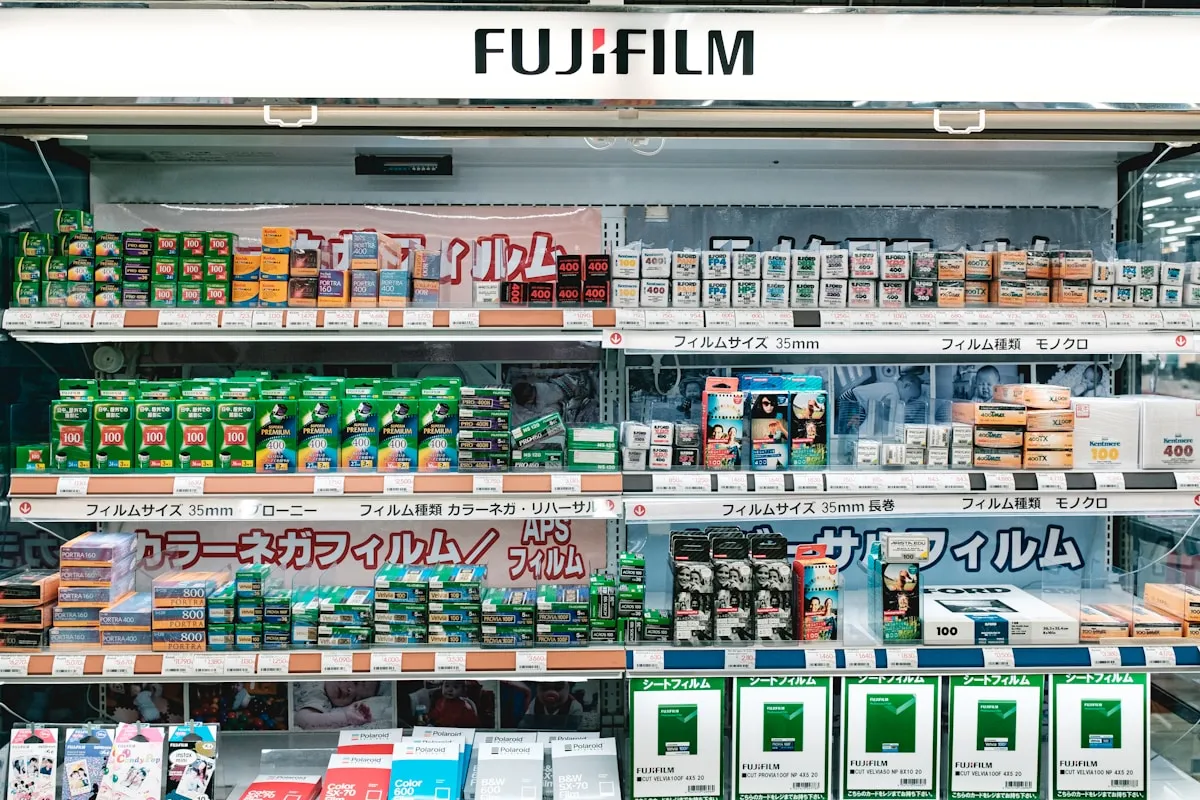
While Kodak is investing $60 million in new coating equipment and Lucky Film is launching fresh emulsions, Fujifilm is quietly heading in the opposite direction. Stock by stock, format by format, the company that gave us Velvia, Provia, and Pro 400H is shrinking its film lineup to a bare minimum. If you shoot Fuji film, here is what you need to know — and what to do about it.
In the US market, Fujifilm's film lineup has shrunk to just five products. A decade ago, they offered more than twenty.
What Fujifilm Still Makes (as of March 2026)
The remaining Fujifilm film products available in the US market:
- Fujichrome Velvia 50 — 35mm and 120 format. The legendary slide film known for hyper-saturated colors and razor-sharp resolution. A favorite of landscape photographers for three decades.
- Fujichrome Provia 100F — 35mm, 120, and sheet film. The more neutral counterpart to Velvia, offering accurate colors and fine grain. The go-to professional slide film.
- Neopan 100 Acros II — 35mm and 120. Fuji's sole surviving black-and-white stock. Known for exceptionally fine grain and excellent reciprocity characteristics for long exposures.
- Fujicolor C200 — 35mm only. The budget color negative option. Produces pleasant, slightly cool-toned images with moderate grain.
- Fujicolor Superia X-Tra 400 — 35mm only. The higher-speed consumer stock. Good for everyday shooting in mixed lighting conditions.
That is five products. A decade ago, Fujifilm offered more than twenty film stocks across consumer, professional, and specialty lines. The contraction has been dramatic and accelerating.
What Was Recently Discontinued
The recent losses hit particularly hard for medium and large format shooters:
- Fujicolor Pro 160NS in 120 format — a professional color negative stock with beautiful skin tones and fine grain. Gone.
- Fujichrome Velvia 50 in large format — the 4x5 and 8x10 sheet film versions of Velvia have been discontinued. Large format landscape photographers who built their entire workflow around Velvia sheets are left without an equivalent option.
- Pro 400H — discontinued in 2021, this was perhaps the most painful loss. Pro 400H was beloved by wedding and portrait photographers for its unique pastel rendering and exceptional highlight handling. Nothing else on the market quite replicates its look.
The Supply Problem
Beyond outright discontinuations, Fujifilm has been struggling with supply of its remaining stocks. The company has warned of shortages in 120-format Provia and Velvia due to raw material supply issues. In Japan, Fujifilm previously suspended domestic sales of all remaining 35mm color negative and slide films entirely due to material shortages.
The Superia Premium 400 — a Japan-exclusive stock that film photographers worldwide import — triggered discontinuation fears before Fujifilm denied it. But the pattern is clear: availability is inconsistent, prices are volatile, and the company's public statements about film production are cautious at best.
Meanwhile, Fujifilm's digital camera division is thriving. The X100VI had a demand-to-supply ratio that made it nearly impossible to buy at retail for months. The irony is not lost on film photographers: the company that made some of the most legendary film stocks in history is now primarily known for digital cameras that people buy specifically to simulate the look of film.
What to Stock Up On (and What to Switch To)
If Fuji film stocks are central to your work, here is a practical action plan:
Stock Up Now
- Velvia 50 in 120: if you shoot medium format landscapes, buy what you can afford to store properly. This format is most at risk given the large format discontinuation precedent.
- Provia 100F in 120: same logic. If 120-format slide film matters to your workflow, do not assume it will be available indefinitely.
- Neopan Acros II: as Fuji's only B&W stock, it is niche enough to be vulnerable. Alternatives exist, but nothing matches Acros's specific reciprocity profile.
Know Your Alternatives
- For Velvia (saturated slides): Kodak Ektachrome E100 is the only real alternative for color slide film. It is less saturated than Velvia but produces excellent results. Some photographers push it one stop for more punch.
- For Provia (neutral slides): Ektachrome E100 at box speed is actually a closer match to Provia than to Velvia. Neutral color rendering, fine grain, good skin tones.
- For C200/Superia (consumer color negative): Kodak Gold 200 and UltraMax 400 are the obvious alternatives. Kodak ColorPlus 200 is the budget pick. Lucky C200 is emerging as an even cheaper option if you can find it.
- For Acros II (fine grain B&W): Ilford Delta 100 offers similar fine grain characteristics. Kodak TMax 100 is another excellent option with slightly different tonal rendering.
Why Fujifilm Is Pulling Back
Fujifilm has never publicly said “we are exiting the film business,” but the trajectory speaks clearly. The company's strategy since the mid-2000s has been diversification away from photography entirely — into healthcare, materials science, cosmetics, and semiconductor materials. Film is a tiny fraction of Fujifilm's $20+ billion annual revenue, and unlike Kodak, they have not signaled any renewed commitment to analog photography.
The raw material issue is also real. Some chemicals and substrates used in film manufacturing come from a shrinking number of suppliers. When a supplier exits or reduces production, it can make an entire emulsion uneconomical to produce — especially one with limited sales volume like a specialty slide film in large format.
Track Your Remaining Fuji Stock with Pellica
If you are stockpiling Fuji film or transitioning to alternatives, good record-keeping becomes critical. With Pellica, you can tag each roll with the specific stock, batch number, and expiration date. When you shoot a roll of your hoarded Velvia 50 in 2027, you will want to know exactly when it expired and how it was stored.
The film roll tracker is especially useful during transitions. Log rolls of both your departing Fuji stock and the Kodak or Ilford alternative you are testing. Compare the results side by side in your shooting history. This turns the frustration of a forced switch into a structured experiment that makes you a better photographer.
And for the stocks that are still available — shoot them. Do not just freeze them. Film is meant to be exposed, and these emulsions deserve to make images before they become collector items gathering frost in someone's freezer.